You are one aspirant with your own strong and weak areas. Here every previous-year question is linked to its syllabus topic, its explainer and the news behind it, so one question opens up a whole subject. Attempt, see why each option is right or wrong, and find exactly where you need work.
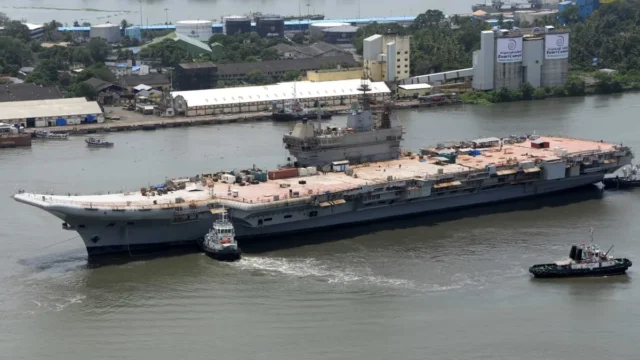
At a curtain raiser on 19 October 2026, Vice Chief of the Naval Staff Vice Admiral Ajay Kochhar announced the fifth edition of Swavlamban, the Navy’s flagship innovation and indigenisation seminar. It will be held on 26–27 October at the Manekshaw Centre, New Delhi, where the Navy will release the NAUSETU interface standards and a technology compendium.
In a judgment of 16 October 2026, a Supreme Court Bench of Justices S.V.N. Bhatti and N.V. Anjaria held that investigating a bribe demand by a public servant does not need prior approval under Section 17A of the Prevention of Corruption Act. Asking for a bribe, the court said, is not part of discharging official duties.
A PIB backgrounder of 19 October 2026 explains how pumped storage projects (PSPs) will store solar and wind power for India’s grid. India runs 7.43 GW of pumped storage today, is building 15.87 GW more and has an assessed potential of 345.38 GW. A roadmap aims to add about 100 GW between 2025-26 and 2035-36.
Consider the following statements about the provisions pertaining to the Scheduled Castes and the Scheduled Tribes in India :
1. Provisions regarding the administration of the Tribal Areas in the States of Assam, Meghalaya, Tripura and Mizoram are given in the Fifth Schedule of the Constitution of India.
2. Some tribes of India are entitled to exemption from paying Income Tax on certain incomes.
3. The Constitution of India provides for reservation of seats in Panchayats for women belonging to the Scheduled Castes and the Scheduled Tribes.
Which one of the following conclusions based on the above statements is correct ?
Answer (a) & explanation
Two statements, including statement 2, are correct (a). Statement 1 is wrong: tribal areas of Assam, Meghalaya, Tripura and Mizoram are governed by the Sixth Schedule, with Autonomous District Councils; the Fifth Schedule covers Scheduled Areas in other States. Statement 2 is right: Section 10(26) of the Income-tax Act exempts certain income of ST members living in specified north-eastern areas and Ladakh. Statement 3 is right: Article 243D reserves Panchayat seats for SCs and STs, with at least one-third of them for SC and ST women. So options (b), (c) and (d) fail.
Notice the memory trick for the Sixth Schedule: "AMTM". The Fifth Schedule's Tribes Advisory Council and Governor's special powers apply in States like Jharkhand and Odisha.
Trap
Fifth and Sixth Schedule swapped. In class I say: Sixth is for the four north-east states, ATMM (Assam, Tripura, Meghalaya, Mizoram).
Polity: questions per year (UPSC Prelims, 2011–2026)
Top repeated subtopics
Where Polity questions cluster
Practice from the news
Original MCQs from recent current affairs.
Practice · UPSC
Consider the following statements:
1. Swavlamban is organised by the Naval Innovation and Indigenisation Organisation.
2. Swavlamban 2026 is the first edition of the seminar.
3. NAUSETU is a set of interface standards.
How many of the statements given above are correct?
Answer (b) & explanation
Statements 1 and 3 are correct. Swavlamban 2026 is the fifth edition (PIB).
With reference to the Prevention of Corruption Act, 1988, consider the following statements:
1. Section 17A requires prior approval before investigating any offence by a public servant.
2. Section 19 deals with sanction for prosecution.
Which of the statements given above is/are correct?
Answer (b) & explanation
Section 17A applies only to offences relatable to decisions or recommendations made in discharge of official duties, as the Supreme Court reiterated on 16 Oct 2026.