
UPSC Mains 2016 GS Paper 2 Q15: model answer
Examine the main provisions of the National Child Policy and throw light on the status of its implementation.
What the question wants
Examine the main provisions of the National Policy for Children and assess how well it has been implemented.
How to structure it
Provisions + status: four priority areas, then implementation evidence.
- Policy
- Provisions
- Implementation
- Gaps
- Way forward
How to think it through
The 2013 policy replaced the 1974 one. It defines a child as anyone below 18 and lists four priorities. Then use data: NFHS-5, child labour, child marriage, NCRB crimes against children, and laws like POCSO and the JJ Act.
Model answer
The National Policy for Children, 2013 replaced the 1974 policy and, for the first time, defined a child as anyone below 18. It treats children as holders of rights, not objects of charity.
Main provisions
- Survival, health and nutrition: reduce infant and child mortality, malnutrition and anaemia.
- Education and development: universal, free and compulsory education, early childhood care.
- Protection: from abuse, trafficking, child labour and child marriage.
- Participation: children's voices in decisions that affect them.
- A National Plan of Action for Children (2016) set targets for each area.
Status of implementation
- Survival: infant mortality has fallen sharply, but NFHS-5 (2019–21) found 35.5% of under-five children stunted and 67% anaemic.
- Education: near-universal enrolment under the RTE Act; learning levels remain low.
- Protection: laws such as POCSO (2012), the Juvenile Justice Act (2015) and the Child Labour Amendment (2016); NCRB data still record over a lakh and a half crimes against children a year.
- Child marriage: 23% of women aged 20–24 were married before 18 (NFHS-5), down from 27%.
- Participation: weakest area; child panchayats exist in a few states only.
Gaps
Low spending on children, poor coordination across ministries, weak child protection units in districts, and limited data on children with disabilities.
Way forward
A child budget statement in every State, stronger district child protection units, convergence through Mission Vatsalya, and child participation in gram sabhas.
The policy is sound; implementation is uneven, especially for nutrition and protection.
Draw: Four pillars (survival, development, protection, participation), each shaded by how far it has been achieved.
Keywords, cases and data to drop in
National Policy for Children 2013, NPAC 2016, POCSO 2012, JJ Act 2015, Child Labour Amendment 2016, Mission Vatsalya, NFHS-5, NCRB, child budgeting.
Where most answers lose marks
- Writing about schemes without linking them to the policy's provisions.
Related Mains PYQs
- Can the constitutional mandate of rights-based welfare be effectively realised in the context of non-integrated governance and minimal public investment? Examine. UPSC 2026 · GS-II
- Civil Society Organizations are often perceived as being anti-State actors than non-State actors. Do you agree? Justify. UPSC 2025 · GS-II
- The National Commission for Protection of Child Rights has to address the challenges faced by children in the digital era. Examine the… UPSC 2025 · GS-II
- Public charitable trusts have the potential to make India’s development more inclusive as they relate to certain vital public issues. Comment. UPSC 2024 · GS-II
Fresh examples from current affairs
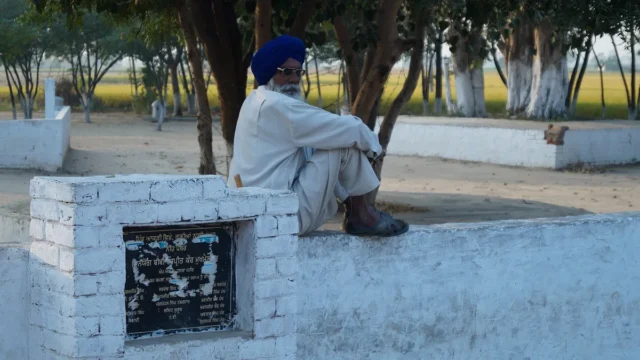
Cabinet extends NSAP to 2030-31 and renames it Pradhan Mantri Samajik Sahayata Yojana
On 14 October 2026 the Union Cabinet extended the National Social Assistance Programme for five years, 2026-27 to 2030-31, with Rs. 53,428 crore. It is renamed Pradhan Mantri Samajik Sahayata Yojana. The disability pension now needs 40% benchmark disability instead of 80%, starts from birth, and pays Rs. 375 or Rs. 625 a month.
UPSC angle: Prelims: launch date, new names, outlay, 40% benchmark, Article 41. · Mains GS-II: welfare schemes for vulnerable sections; DPSPs; rights of persons with disabilities.
14 Oct 2026
EPFO Amnesty Scheme 2026: deadline 28 December for PF Trust regularisation
EPFO is reminding establishments that the Amnesty Scheme, 2026 for retrospective regularisation of Provident Fund Trust exemption status closes on 28 December 2026. It covers trusts recognised under the Income Tax Act but without a formal exemption order under the EPF Act or the Code on Social Security.
UPSC angle: Prelims: Amnesty dates and legal sections. · Mains GS-III: social security and labour compliance.
13 Oct 2026
₹1,423 crore over three years for implementing PCR and SC/ST Atrocities Acts; 217 exclusive special courts
The Centre released ₹1,423.30 crore to States and UTs over 2022-23 to 2024-25 to implement the Protection of Civil Rights Act, 1955 and the SC/ST (Prevention of Atrocities) Act, 1989. States report 217 Exclusive Special Courts in 15 States and UTs. Yet 65,646 cases were registered in 2024 and 3,92,006 were pending trial at year end.
UPSC angle: Prelims: PCR Act year; Art. 17. · Mains: Why do atrocity cases see low conviction?
1 Oct 2026
PM-AJAY backgrounder: one merged scheme for Scheduled Caste development
Pradhan Mantri Anusuchit Jaati Abhyuday Yojana (PM-AJAY) is a 100 per cent centrally sponsored scheme of the Social Justice Ministry, launched in 2021-22. It merges three older schemes and works through Adarsh Gram, grants-in-aid and hostels. By 8 September 2026, 18,093 villages had been declared Adarsh Grams.
UPSC angle: Prelims: funding pattern; merged schemes.
28 Sep 2026Learn the concept
Question text as printed in the official UPSC Civil Services (Main) question paper. The model answer is original Battle IAS work; use it to learn structure, not to memorise.
Want every PYQ in one place? See the Battle IAS PYQ Book.