
U.P. Chief Electoral Officer orders recheck of voter forms fed by computer operators after SIR errors
Uttar Pradesh’s Chief Electoral Officer has ordered reverification of every electoral-roll entry made by computer operators since the post-SIR final rolls of April 10. From now, only booth-level officers may digitise forms, through the BLO App. For you, this connects Forms 6, 7 and 8, Section 32 of the 1950 Act and the Election Commission’s machinery.
- Order by
- U.P. Chief Electoral Officer Navdeep Rinwa
- Covers
- All entries by computer operators since final rolls of April 10, 2026
- New rule
- Only booth-level officers to file forms, via the BLO App
- Daily review
- Pending Form 6, 7 and 8 applications, by EROs
- Allegation
- Congress: 13,150 voters’ details changed in Pilibhit; 16,554 irregular entries
- Warning
- Section 32, Representation of the People Act, 1950
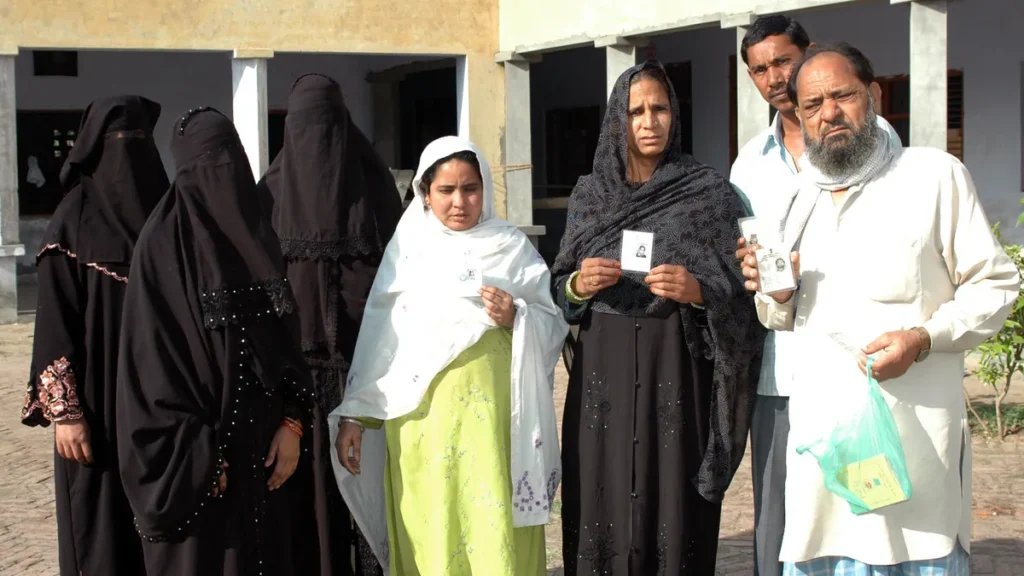
The U.P. electoral roll recheck: what happened?
After a Special Intensive Revision (SIR), the rolls are meant to be clean. In Uttar Pradesh, complaints from parties and on social media showed changes slipping in through outsourced computer operators who had official logins. The State’s top election officer has now pulled that door shut.
- Uttar Pradesh’s Chief Electoral Officer ordered reverification of all entries made by computer operators since the post-SIR final electoral rolls were published on April 10.
- Future digital applications will be filed only by booth-level officers (BLOs) through the BLO App, not by outsourced computer operators. Electoral Registration Officers must review pending Form 6, Form 7 and Form 8 applications daily.
- The measures were announced at a virtual meeting on the special summary revision with Divisional Commissioners, District Election Officers and registration officers. Officials must not share their ERONET login and password.
- On October 21, Congress leaders alleged that details of 13,150 voters in Pilibhit were changed while their EPIC numbers stayed the same, and claimed 16,554 irregular entries in all.
Who prepares the electoral roll?
| Level | Officer | Role |
|---|---|---|
| National | Election Commission of India | Superintendence, direction and control (Article 324) |
| State | Chief Electoral Officer | Supervises roll work in the State (Section 13A, RPA 1950) |
| District | District Election Officer | Coordinates roll work in the district |
| Constituency | Electoral Registration Officer | Decides claims and objections; prepares the roll |
| Polling station | Booth-level officer | Field verification; now sole filer of digital forms in U.P. |
Which legal provisions apply?
- Article 324: Election Commission controls preparation of rolls.
- Article 326: adult suffrage.
- Section 32, Representation of the People Act, 1950: breach of official duty in connection with the preparation of electoral rolls is punishable.
- Articles 243K and 243ZA: State Election Commissions, not the ECI, conduct panchayat and municipal elections.
Why does the U.P. electoral roll recheck matter?
| Angle | What to note |
|---|---|
| Integrity of rolls | Errors after an intensive revision weaken faith in the whole exercise. |
| Accountability | Only an identifiable official (the BLO) can now enter data. |
| Cyber hygiene | Shared logins are a security weakness; ERONET credentials must stay personal. |
| Federal machinery | Shows how the ECI works through State and district officers. |
What are the challenges in the U.P. electoral roll recheck?
- Outsourcing risk: private operators with official logins.
- Volume: daily review of pending Forms 6, 7 and 8 across a very large State.
- Trust: allegations from parties keep the rolls under a cloud until the recheck ends.
What should be done next on the U.P. electoral roll recheck?
- Keep an audit trail of every change with the officer’s identity.
- Publish change lists for public scrutiny before the final roll.
- Act under Section 32 against officials who misuse access.
What can Prelims ask on the U.P. electoral roll recheck?
- Form 6: inclusion; Form 7: objection/deletion; Form 8: correction or shifting.
- Chief Electoral Officer: Section 13A, RPA 1950.
- Section 32, RPA 1950: breach of official duty in roll preparation.
- Municipal and panchayat polls: State Election Commission (Articles 243K, 243ZA).
- First CEC: Sukumar Sen; first woman CEC: V.S. Ramadevi.
How to write about the U.P. electoral roll recheck in Mains
Practice question (10 marks, 150 words): Errors in electoral rolls after an intensive revision show that roll integrity is as much about data governance as about field verification. Discuss with reference to recent developments in Uttar Pradesh.
- Intro: the CEO’s order after the Pilibhit allegation.
- Machinery: ECI, CEO, ERO, BLO; Forms 6/7/8.
- Problem: outsourced logins, weak audit.
- Fix: BLO-only entry, audit trails, Section 32 action, public change lists.
- Conclusion: clean rolls are the base of free and fair elections.
Ready lines for your answer
- "Under no circumstances should the feeding of physical application forms be handled by computer assistants" (U.P. Chief Electoral Officer's statement).
- Roll integrity needs access control: data entry only by an accountable official, a full audit trail, and action under Section 32 of the 1950 Act for misuse.
Quotable data pointCongress alleged 16,554 irregular entries in Pilibhit, including changes to 13,150 voters' details.
What should UPPCS aspirants note?
- The order covers all U.P. entries by computer assistants from April 10, 2026 to date.
- Pilibhit: Congress alleged 13,150 voters’ details changed with EPIC numbers unchanged.
- U.P. Chief Electoral Officer: Navdeep Rinwa.
Exam angle
Prelims: Forms 6/7/8, Chief Electoral Officer, Section 32 RPA 1950, State Election Commission vs ECI. · Mains GS-II: electoral reforms and integrity of rolls.
Practice MCQs
Original practice questions (not PYQs).
Consider the following pairs relating to electoral roll forms:
1. Form 6 : Inclusion of name of a new elector
2. Form 7 : Objection to inclusion or deletion of a name
3. Form 8 : Correction of entries or shifting of residence
How many of the pairs given above are correctly matched?
Answer (c) & explanation
All three pairs are correct; U.P.'s CEO ordered daily review of pending Form 6, 7 and 8 applications.
Elections to municipal bodies in Uttar Pradesh are conducted by:
Answer (c) & explanation
Article 243ZA vests municipal elections in the State Election Commission.
Questions students ask about this
What has the U.P. CEO ordered?
Reverification of all roll entries made by computer operators since April 10, and BLO-only filing of digital forms from now on.
What are Forms 6, 7 and 8?
Form 6 for new enrolment, Form 7 for objection or deletion, Form 8 for correction, shifting or a replacement voter ID.
What does Section 32 of the 1950 Act cover?
Breach of official duty in connection with the preparation of electoral rolls.
Who conducts municipal elections in U.P.?
The State Election Commission, not the Election Commission of India.