
Agniveers get two-year extension and path to regular service
The Union Cabinet has changed the Agnipath scheme after four years. 25% of Agniveers will still become regular soldiers after four years. The other 75% can now serve two more years, and all who qualify after that may join as regulars. Read it to revise the Agnipath scheme, Seva Nidhi and the role of the Chief of Defence Staff.
- Early regular entry
- 25% after four years
- Extra tour
- 2 years for the other 75%
- Pay in extra tour
- ₹43,500 (year 5), ₹47,500 (year 6)
- Seva Nidhi
- Government share up to 70%
Agnipath changes: what happened?
Four years ago, three out of four Agniveers were to go home after their tour. Now they get two more years and a fresh chance to stay.
- The Union Cabinet tweaked the Agnipath scheme after four years of feedback.
- On merit, 25% will still join as regular soldiers after four years.
- The other 75% can serve two more years; after that, all who qualify may join as regular soldiers.
- Pay in the extra tour is about ₹43,500 in year five and ₹47,500 in year six, up from a starting ₹30,000.
- For those who leave after the extra tour, the government’s share in Seva Nidhi rises to 70% (from 50-50).
What is the Agnipath scheme?
Agnipath is the recruitment scheme for soldiers, sailors and airmen below officer rank. Recruits are called Agniveers and serve a four-year tour.
Under the original design, only 25% were kept as regular soldiers after four years. The rest left with a lump sum called Seva Nidhi.
Over three lakh Agniveers are in training across the three services, about 2.8 lakh of them in the Army. Various branches are open to women Agniveers.
Old design vs new design
| Point | Before | Now |
|---|---|---|
| Tour | 4 years | 4 years + 2 more for the 75% |
| Regular entry | 25% only | 25% early; all who qualify after the extra tour |
| Seva Nidhi share | 50-50 | Government 70% after extra tour |
| Pay | Starts ₹30,000 | Up to ₹47,500 in year six |
Which laws and Articles apply?
- Article 246 and Seventh Schedule: defence is in the Union List (Entry 1-2).
- Article 33: Parliament can limit Fundamental Rights of members of the armed forces.
- The Chief of Defence Staff heads the Department of Military Affairs in the Ministry of Defence.
- Agnipath is an executive scheme of the Ministry of Defence, not a law of Parliament.
Why does the Agnipath changes matter?
| Angle | What to note |
|---|---|
| Defence | A younger, fitter army and trained manpower. |
| Jobs | Lakhs of young people from villages join each year. |
| Welfare | Seva Nidhi and pay decide life after service. |
| Morale | Job security affects unit bonding. |
What are the problems with the Agnipath changes?
- The extra tour still does not promise a regular job to everyone.
- Training time for a short tour is limited.
- Many youths worried about life after four years.
- States must still create jobs for those who leave.
What should be done next on the Agnipath changes?
- Publish clear merit rules for the second selection.
- Give reserved seats in police and paramilitary forces to former Agniveers.
- Link Seva Nidhi with skill and degree courses.
- Review the scheme again after the first extra tour ends.
What can Prelims ask on the Agnipath changes?
Prelims probability: High: a fresh, big policy change to Agnipath, a scheme UPSC has asked about since 2022, with crisp facts (four-year tour, 25% retention, Seva Nidhi) ready for a statement question.
- Agnipath: four-year tour below officer rank.
- 25% kept as regulars after four years on merit.
- Seva Nidhi: lump sum paid on exit.
- Chief of Defence Staff heads the Department of Military Affairs.
- Defence is a Union List subject.
How to write about the Agnipath changes in Mains
Practice question (15 marks, 250 words): Examine how the recent changes to the Agnipath scheme try to balance military needs with the welfare of young recruits.
- Intro: Cabinet tweak after four years.
- Original design and criticism.
- New features: extra tour, pay, Seva Nidhi.
- Gains and remaining concerns.
- Conclusion: a young army needs a secure future too.
Ready lines for your answer
- A young army is strong only when its soldiers trust their future.
- Reform that listens to feedback makes policy stronger.
Quotable data pointAbout 2.8 lakh of the over three lakh Agniveers are in the Army.
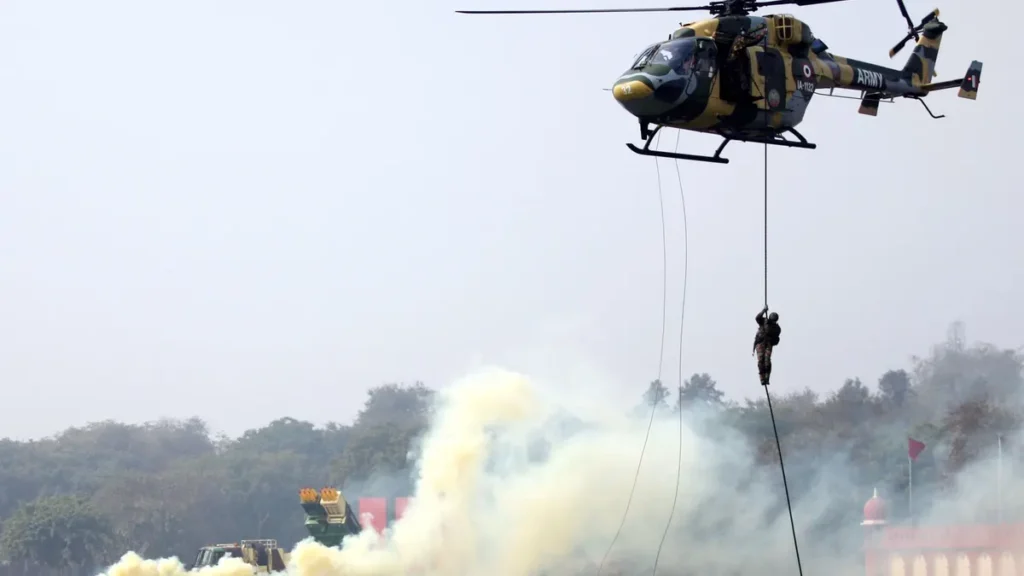
Photo: Ministry of Defence, Government of India, GODL-India, via Wikimedia Commons
Exam angle
Prelims: Agnipath, Seva Nidhi, Chief of Defence Staff. · Mains GS-III: defence reforms.
Practice MCQs
Original practice questions (not PYQs).
Consider the following statements:
1. Under the original Agnipath design, 25% of Agniveers were to be retained as regular soldiers after four years.
2. The new Cabinet decision offers the remaining 75% a further two-year engagement.
3. After that second engagement, all Agniveers are automatically enrolled as regular soldiers with no selection test.
How many of the above statements are correct?
Answer (b) & explanation
Statements 1 and 2 are correct. Final regular enrolment still requires willingness and meeting selection criteria.
Seva Nidhi under Agnipath is best described as:
Answer (d) & explanation
Seva Nidhi is the contributory package paid when an Agniveer exits; the second tour raises the government's share to 70%.
Questions students ask about this
What change did the Cabinet make to Agnipath?
The 75% not kept after four years can serve two more years, and all who qualify after that may join as regular soldiers.
How many Agniveers become regulars after four years?
25%, on merit.
What is the pay in the extra tour?
About ₹43,500 in year five and ₹47,500 in year six.
What is Seva Nidhi?
A lump-sum fund paid to Agniveers when they leave; the government's share now rises to 70% after the extra tour.