
UPSC Mains 2026 GS1 Q9: model answer
How do you understand disability? Substantiate the need for inclusive policy framework in India in this regard.
What the question wants
Define disability using the social and rights-based model, then argue with data and gaps why an inclusive framework is needed.
How to structure it
Intro: medical vs social model. Body: Indian data and laws; gaps; what inclusive policy means. Conclusion.
- 1Indian data and laws
- 2Gaps
- 3What inclusive policy means
Model answer
The medical model sees disability as a defect in the body. The social model, adopted by the UN Convention on the Rights of Persons with Disabilities (2006), sees it as the result of barriers: a wheelchair user is disabled by stairs, not by her legs.
India's framework
- The RPwD Act, 2016 raised recognised disabilities from 7 to 21, set 4% reservation in government jobs and 5% in higher education.
- Accessible India Campaign (2015); UDID cards.
Why inclusion is still needed
- Census 2011 counted 2.68 crore persons with disabilities, widely seen as an undercount.
- Many public buildings and websites remain inaccessible.
- Low school completion and employment, especially for women with disabilities.
- Stigma: 'divyang' language has not removed exclusion.
Inclusive policy means universal design in all infrastructure, inclusive classrooms under NEP 2020, sign-language and screen-reader access in services, and disaggregated data.
The Supreme Court in Vikash Kumar (2021) called reasonable accommodation a right. Policy must make that the default.
Keywords, cases and data to drop in
social model UNCRPD RPwD Act 2016 reasonable accommodation universal design
Where most answers lose marks
- Only listing schemes
- Not defining disability
Fresh examples from current affairs
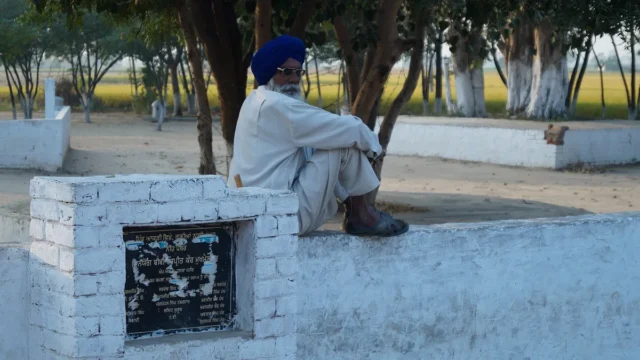
Cabinet extends NSAP to 2030-31 and renames it Pradhan Mantri Samajik Sahayata Yojana
On 14 October 2026 the Union Cabinet extended the National Social Assistance Programme for five years, 2026-27 to 2030-31, with Rs. 53,428 crore. It is renamed Pradhan Mantri Samajik Sahayata Yojana. The disability pension now needs 40% benchmark disability instead of 80%, starts from birth, and pays Rs. 375 or Rs. 625 a month.
UPSC angle: Prelims: launch date, new names, outlay, 40% benchmark, Article 41. · Mains GS-II: welfare schemes for vulnerable sections; DPSPs; rights of persons with disabilities.
14 Oct 2026
BIS publishes six standards for priority assistive products
The Bureau of Indian Standards has published standards for priority assistive products listed in ICMR's National List of Essential Assistive Products (NLEAP). They cover elbow crutches, walking sticks, multi-leg sticks, tactile guide maps, braille on signage and portable ramps. Two, on walking sticks and portable ramps, are indigenous standards.
UPSC angle: Prelims: RPwD Act.
1 May 2026
UDID card holders can travel in unreserved Divyangjan coaches
Indian Railways clarified that persons with disabilities holding a valid Unique Disability ID (UDID) card can travel in unreserved Divyangjan coaches (SLRD/LSLRD) of Mail/Express trains if they hold valid travel authority. Those with railway concessional-fare facility are similarly treated as bona fide passengers. Unauthorised use will draw action under the Railway Act, 1989.
UPSC angle: Prelims: UDID.
20 Apr 2026
Purple Fest: accessibility tools for persons with disabilities
Accessible exam prep opens global education routes that were closed to many.
UPSC angle: Mains: inclusion of PwDs.
12 Oct 2025Question text as printed in the official UPSC question paper: https://www.upsc.gov.in/sites/default/files/QP-CSM-26-010926-GENERAL%20STUDIES%20PAPER%20-%20I.pdf The model answer is original Battle IAS work; use it to learn structure, not to memorise.