
Agricultural Marketing in India: APMC System, Model Acts, e-NAM, FPOs, Warehousing, the 2020 Farm Laws and Reform Options (UPSC Notes + PYQs)
Why marketing matters
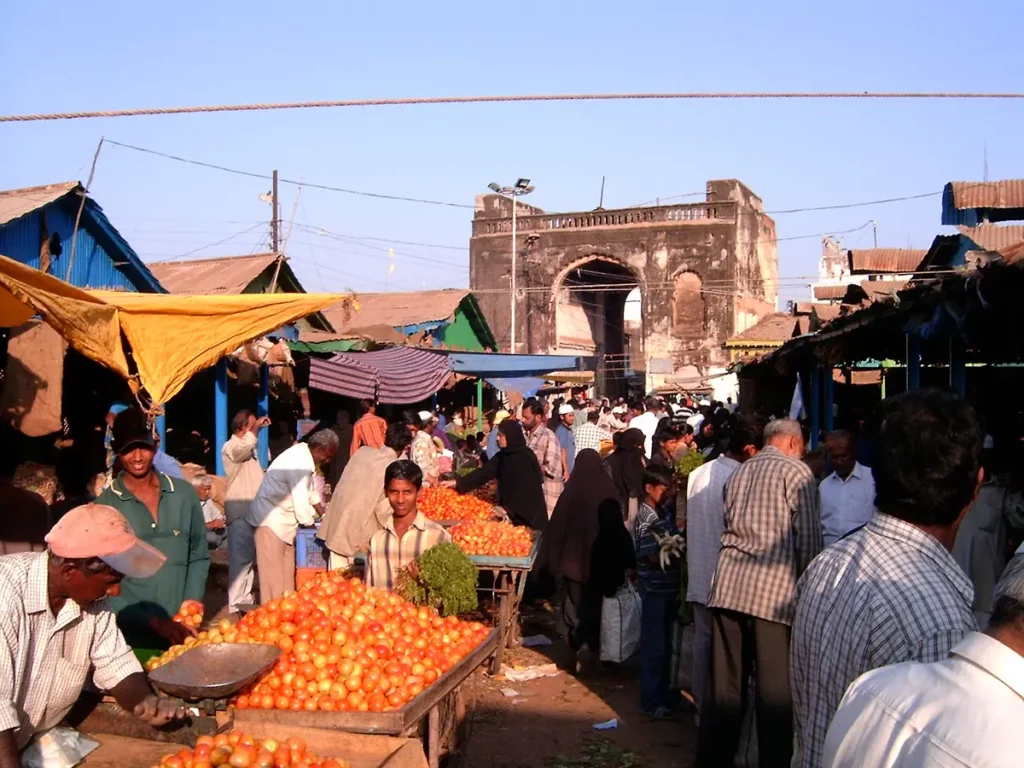
A farmer’s income depends as much on the price received as on the yield. Indian farmers, most of them with less than two hectares, sell small lots soon after harvest, often to a local trader who also lends them money. Price information is poor and storage is scarce. Studies by the RBI (2024) found that farmers received only about a third of the consumer rupee for tomato, onion and potato, while they get a much larger share for milk, where cooperatives such as Amul run the chain.
The APMC system
After independence, States passed Agricultural Produce Market Committee (APMC) Acts, mostly in the 1960s and 1970s, to protect farmers from exploitation by money-lenders and traders. Each Act set up market yards (mandis) run by an elected committee; first sale of notified produce had to happen in the mandi through licensed commission agents (arhtiyas), with open auction and prompt payment.
Over time the system developed problems: too few mandis (an average regulated market serves several hundred square kilometres, while the National Commission on Farmers suggested a market within 5 km reach); licences restricted to a closed group of traders; high market fees and commissions, especially in Punjab; delayed payments; and cartels. Bihar repealed its APMC Act in 2006, and Kerala never had one, though private markets did not automatically appear in either.
- Few mandis within reach
- Small lots and urgent cash needs
- Many intermediaries and fees
- Little storage or grading
Reform steps
- Model APMC Act, 2003: private markets, direct purchase from farmers, contract farming.
- Model APLM (Agricultural Produce and Livestock Marketing) Act, 2017: whole State as one market, deregulated fruit and vegetables, single licence.
- Model Contract Farming Act, 2018.
- e-NAM (14 April 2016): an online platform run by the Small Farmers’ Agribusiness Consortium linking over 1,400 mandis in most States, with online bidding and payment.
- GrAMs (Gramin Agricultural Markets): upgrading rural haats as first points of sale (Budget 2018-19).
- 10,000 FPOs scheme (2020): support for farmer companies to buy inputs and sell together.
- Warehousing (Development and Regulation) Act, 2007: negotiable warehouse receipts so that farmers can store and borrow instead of distress selling; electronic receipts (e-NWR) now.
- Operation Greens (2018) for tomato, onion, potato, later extended; Kisan Rail (2020) for perishables.
- A draft National Policy Framework on Agricultural Marketing was released in late 2024 for comments.
- e-NAMOnline trade
- FPOsCollective sale
- e-NWRStorage credit
- GrAMsRural haats
- Model APLM ActOne State market
The 2020 farm laws
In 2020 Parliament passed three laws: the Farmers’ Produce Trade and Commerce Act (trade outside APMC yards without State fees), the Farmers (Empowerment and Protection) Agreement on Price Assurance and Farm Services Act (contract farming), and an amendment to the Essential Commodities Act (stock limits only in extreme price rises). Farm unions, mainly from Punjab, Haryana and western UP, protested at Delhi’s borders for over a year, fearing the end of mandis and MSP procurement; States objected that agriculture and markets are State subjects. The Supreme Court stayed the laws in January 2021, and Parliament repealed them through the Farm Laws Repeal Act, 2021.
Way forward
- Strengthen FPOs with working capital and professional management.
- More mandis and rural haats; inter-operable e-NAM with quality assaying so remote buyers trust lots.
- Cold chains and warehouses near farms; pledge loans on e-NWRs.
- Futures and options for hedging, with safeguards.
- Cooperative-federal approach: the Centre offers model laws and money, States choose reforms.
Market infrastructure and storage
India has about 7,000 regulated wholesale markets, but one market serves on average more than 400 sq km, far above the 80 sq km the National Commission on Farmers suggested. Small farmers therefore sell to village traders at lower prices. Storage gaps add to the problem: fruits and vegetables lose a significant share between farm and plate, because cold chains are thin and concentrated in a few States, with potatoes taking most cold-storage capacity. The Agriculture Infrastructure Fund (2020), a ₹1 lakh crore financing facility with interest subvention, supports warehouses, cold storage, sorting and grading units at the farm gate. The Gramin Agricultural Markets plan aimed to upgrade 22,000 rural haats into markets with basic facilities, exempt from APMC regulation so that farmers can sell directly. Warehouse receipts registered with the Warehousing Development and Regulatory Authority let farmers store produce and borrow against it instead of selling in a glut at harvest.
Farmer producer organisations
A single small farmer has little bargaining power. Pooling produce through a farmer producer organisation (FPO) lets members buy inputs in bulk, grade and store produce, and sell directly to processors, retailers and e-NAM buyers. The Central Sector Scheme for the formation of 10,000 FPOs, launched in 2020, offers each FPO handholding support for five years, equity grants matching members’ contributions and a credit guarantee through NABARD and SFAC. Successes such as grape and onion FPOs in Maharashtra show the model can work, but many FPOs are weak on business skills, working capital and professional management. Linking FPOs with e-NAM, warehouse receipts and export markets is the most practical way to raise farmers’ share of the consumer rupee.
Price spread and the value chain
The gap between what the farmer gets and what the consumer pays is called the price spread. It covers real costs (transport, storage, grading, packaging, losses, retail rent) and margins of traders and commission agents. Perishables suffer most: tomatoes and onions lose weight and value every day they are not sold, so farmers cannot wait for a better price. Post-harvest losses are large; a NABCONS study for the Ministry of Food Processing Industries (2022) estimated annual losses of about ₹1.5 lakh crore across crops, fruits, vegetables, fish and livestock products.
Shorter, organised chains raise the farmer’s share. Milk is the best Indian example: under Operation Flood (1970-96) the cooperative model built by Verghese Kurien let dairy farmers capture most of the consumer price. Similar models for fruits and vegetables include Maharashtra’s grape and pomegranate FPOs exporting to Europe, the Apni Mandi farmers’ markets of Punjab, Rythu Bazars of Andhra Pradesh and Telangana, and Uzhavar Sandhai of Tamil Nadu, where farmers sell directly to consumers in State-run markets.
Committees and data
- Committee on Doubling Farmers’ Income (Ashok Dalwai, 2017-18): treated marketing as the key to income; proposed a national network of markets and the Model APLM Act.
- Shanta Kumar Committee (2015): only about 6% of farmers sell to procurement agencies.
- Standing Committee on Agriculture (2018-19) recommended developing GrAMs and a market within reach of every village cluster.
- AGMARK: quality certification under the Agricultural Produce (Grading and Marking) Act, 1937, by the Directorate of Marketing and Inspection.
- Agriculture Infrastructure Fund (2020): ₹1 lakh crore financing facility with interest subvention for warehouses, cold storage and pack houses.
Uttar Pradesh is a major case: it has many regulated mandis under the UP Rajya Krishi Utpadan Mandi Parishad, one of the largest numbers of e-NAM mandis, and large potato cold-storage capacity in districts such as Agra, Farrukhabad and Kannauj, where price crashes in glut years are a recurring news item.
PYQ trend
Prelims asks e-NAM, AGMARK, warehouse receipts and APMC basics. Mains GS-III asks reforms in agricultural marketing, the role of FPOs, and price spreads.
Agricultural Marketing: UPSC angle
For UPSC CSE
Prelims: e-NAM, APMC, warehouse receipts, AGMARK. Mains GS-III: marketing reforms, FPOs, farm laws debate.
Agricultural Marketing UPSC PYQs (Prelims)
Questions UPSC has actually asked, from the official papers. Pick an option to check yourself.
No Prelims question in the Battle IAS bank is directly on this topic yet.
Mains PYQs on this topic
No UPSC Mains question from 2023-2026 is directly on this topic. Older papers (2013-2022) will be added as the Mains bank grows.
Quick quiz
e-NAM is implemented by
Small Farmers’ Agribusiness Consortium.Answer (b)
Which State repealed its APMC Act in 2006?
Bihar.Answer (b)
Negotiable warehouse receipts are regulated by
Warehousing Development and Regulatory Authority.Answer (b)
FAQs
Is agricultural marketing a State subject?
Yes; markets and agriculture are in the State List, though inter-State trade is a Union subject.
What is an FPO?
A company or cooperative of farmers that buys inputs and sells produce collectively.
Why were the farm laws repealed?
After year-long protests by farmer unions fearing loss of mandis and MSP.
What is e-NWR?
An electronic negotiable warehouse receipt against which farmers can borrow.
Does e-NAM replace mandis?
No. It links existing mandis online.
What is the difference between a regulated market and a private market?
A regulated market (mandi) is set up and run by an APMC under State law, which collects market fees and licenses traders. A private market is owned by a company or trader and is allowed only where the State law permits it, as the Model APLM Act of 2017 proposed. Both can be linked to e-NAM if the State agrees.
How do FPOs help small farmers?
By pooling produce, FPOs can sell in larger lots, grade and pack it, bargain with bulk buyers and exporters, buy seeds and fertiliser more cheaply, and get credit. They need professional managers and working capital; many young FPOs struggle without them, which is why the 2020 scheme gives equity grants and credit guarantees for five years.
Spotted an error? Tell us. We correct within 48 hours.
Image: https://commons.wikimedia.org/wiki/File:Market_Hyderabad.jpg
How to use this in Mains
If asked: Better marketing, not just higher yields, is key to farmers' income. Discuss. (GS-III)
Quote: “A farmer’s income depends as much on the price received as on the yield.”
Use it: Perfect intro line; then discuss APMC, e-NAM and FPOs.
In the news
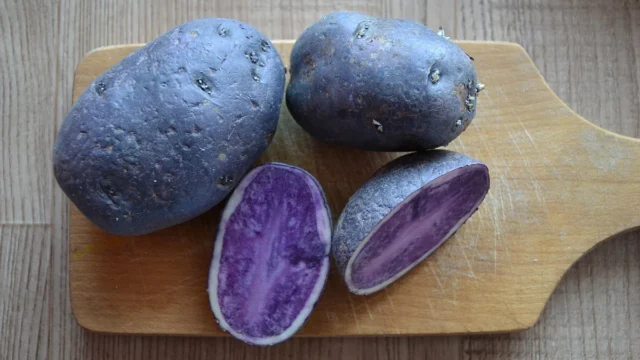
Kufri Jamunia: ICAR-CPRI’s purple potato to fight hidden hunger
A PIB backgrounder of 18 October 2026 puts the spotlight on Kufri Jamunia, a purple-fleshed potato bred by ICAR’s Central Potato Research Institute and released in 2024. It has nearly twice the Vitamin C of a common potato and several times more zinc and iron, along with antioxidants called anthocyanins. The idea is clever: instead of asking people to change what they eat, make the food they already eat more nutritious. That is biofortification.
18 Oct 2026
Oil companies bar sugar-based ethanol for 2026-27; maize incentive cut to ₹2.79 a litre
The oil marketing companies have kept sugar out of India’s ethanol programme for the coming year. The tender issued on 16 October 2026 seeks about 11 billion litres of ethanol for the 2026-27 supply year, but asks for none made from sugarcane juice, sugar syrup or B-heavy molasses, because the Government wants sugar diversion for ethanol cut to zero. Grain must now carry the load, and even the maize incentive has been cut. Read this as a live example of the food-versus-fuel trade-off.
18 Oct 2026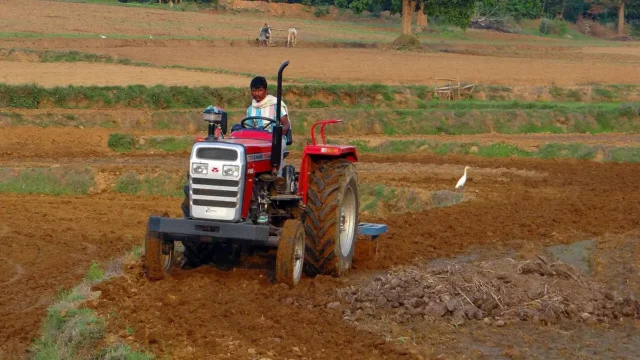
Khet Bachao Abhiyan: Centre reviews 22 October to 30 November farm campaign with States
On 17 October 2026 Union Agriculture Minister Shivraj Singh Chouhan reviewed preparations for the Khet Bachao Abhiyan with agriculture ministers of 11 States and UTs. The campaign runs from 22 October to 30 November 2026. About 4,150 teams of Krishi Vigyan Kendra and ATMA staff, with over 12,000 scientists and officials, plan around 1.5 lakh meetings with farmers on soil health, crop residue, balanced fertiliser use and key schemes.
17 Oct 2026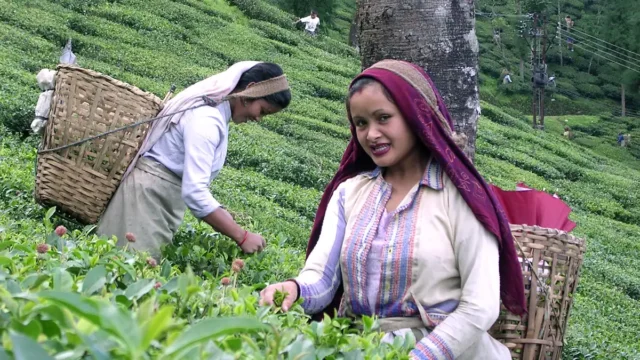
FSSAI proposes residue limits for acetamiprid and imidacloprid in tea
On 17 October 2026 FSSAI explained draft limits for two insecticides in tea: 20 ppm for acetamiprid and 50 ppm for imidacloprid. The draft, published in the Gazette on 16 October, amends the rules on contaminants, toxins and residues. India’s proposed acetamiprid limit is lower than Japan’s 30 ppm and the USA’s 50 ppm.
17 Oct 2026