
Remembrance Day: India’s forgotten sacrifice in the World Wars
Today, 11 November, is Remembrance Day: at the 11th hour of the 11th day of the 11th month, Commonwealth nations fall silent for two minutes for those who died in the two World Wars; in India it passes mostly unnoticed. Undivided India sent 1.5 million men to the First World War, of whom 74,000 never returned; in the Second it raised the largest volunteer army, 2.5 million, and about 87,000 to 89,000 died. Read it to revise the Indian National Army, Cripps, Quit India and the battles of Imphal and Kohima.
- Remembrance Day
- 11 November; two minutes’ silence at 11 a.m.
- First World War
- 1.5 million men from undivided India; 74,000 never returned
- Second World War
- Largest volunteer army, 2.5 million; about 87,000–89,000 died
- Burma campaign
- Indians made up 87% of the troops
UPSC has already asked about this. Read the story with these questions in mind.
Remembrance Day: what is in the news?
The two minutes’ silence is observed across the Commonwealth — except, too often, in the country that sent millions to those wars.
- Today, 11 November, is Remembrance Day: at the 11th hour of the 11th day of the 11th month, Commonwealth nations fall silent for two minutes for those who died in the two World Wars; in India it passes mostly unnoticed.
- Undivided India sent 1.5 million men to the First World War, of whom 74,000 never returned; in the Second it raised the largest volunteer army, 2.5 million, and about 87,000 to 89,000 died.
- The war reached India: Japanese aircraft bombed Vizag in April 1942 and Kolkata in 1942 and 1943, and Japan tried to invade from Myanmar in March 1944; Indians made up 87% of the troops in the Burma campaign.
- An opinion piece in The Hindu notes that India’s unease comes from colonial rule and the story of the Indian National Army, which fought with Japan; yet the army forged in that war has defended India since 1947.
How did the World Wars shape the freedom movement?
The First World War raised hopes of self-government after India’s huge contribution. Disappointed expectations fed the post-war national movement.
In 1942 the Cripps Mission offered India Dominion status after the Second World War. The offer was rejected, and the All India Congress Committee passed the Quit India Resolution on 8 August 1942 in Bombay.
Subhas Chandra Bose led the Indian National Army (Azad Hind Fauj), which included the Rani Jhansi Regiment, a women’s unit. The INA’s trials later stirred nationalist feeling, even as other Indians fought in the British Indian Army against Japan.
Japan’s attempt to invade India was stopped in the battles of Imphal and Kohima in 1944. Premindra Singh Bhagat was the first Indian Victoria Cross winner of the Second World War.
Scale of sacrifice
| War | What to remember |
|---|---|
| First World War | 1.5 million men; 74,000 never returned |
| Second World War | 2.5 million volunteer army; about 87,000–89,000 died |
| War comes home | Vizag and Kolkata bombed; Imphal and Kohima, 1944 |
| Freedom movement | Cripps, Quit India, Indian National Army |
Which landmarks should you revise?
- Remembrance Day: 11 November, two minutes’ silence at the 11th hour.
- Cripps Mission, 1942: Dominion status after the war.
- Quit India Resolution: 8 August 1942, Bombay.
- Indian National Army and the Rani Jhansi Regiment; battles of Imphal and Kohima, 1944.
Why does India’s role in the World Wars matter?
| Angle | What to note |
|---|---|
| History | Links the World Wars to the national movement, not only to European memory. |
| Society | Asks why India’s own sacrifice is so little remembered at home. |
| Security | The army forged in 1939–45 became the army of independent India. |
| Prelims | Cripps, 8 August 1942, INA, Imphal–Kohima, Remembrance Day. |
What are the problems with India’s role in the World Wars?
- Public memory in India often skips the World Wars because they were fought under colonial rule.
- The INA story and the British Indian Army story are still taught as if they cannot sit together.
- Casualty figures for the Second World War are given as a range, not a single official total.
- War memorials exist, but the day itself is little marked in school and civic calendars.
What should be done next on India’s role in the World Wars?
- Teach both the battlefield contribution and the freedom-movement politics of the wars.
- Mark Remembrance Day alongside INA and Quit India in a single honest narrative.
- Care for war graves and memorials in India and overseas.
- Use 11 November as a hook for map work on Imphal, Kohima, Vizag and the Burma campaign.
What can Prelims ask on India’s role in the World Wars?
Prelims probability: High. Trend: Indian National Army officers (2021; the State 2023), Cripps (2016), 8 August 1942 (2021). Freshness: Remembrance Day. Static link: the war and the freedom movement. Testable fact: first Indian Victoria Cross winner of the Second World War, Premindra Singh Bhagat.
- Remembrance Day: 11 November, 11th hour, two minutes’ silence.
- WW1: 1.5 million men, 74,000 never returned; WW2: 2.5 million, about 87,000–89,000 died.
- Quit India: 8 August 1942, Bombay; Cripps offered Dominion status after the war.
- Rani Jhansi Regiment: women’s unit of the Indian National Army.
- Imphal and Kohima, 1944, stopped Japan’s invasion; Indians were 87% of Burma campaign troops.
How to write about India’s role in the World Wars in Mains
Practice question (15 marks, 250 words): India’s contribution to the two World Wars is poorly remembered at home. Discuss this contribution and its links with the national movement.
- Intro: Remembrance Day and the scale of recruitment.
- First World War and post-war politics.
- Cripps, Quit India and the war coming to India’s coast.
- INA, Imphal and Kohima.
- Conclusion: remember both the soldier and the freedom struggle.
Ready lines for your answer
- Silence on 11 November is also a history test.
- The same war produced both the INA and the army of 1947.
Quotable data point1.5 million and 74,000; 2.5 million and about 87,000–89,000; 8 August 1942.
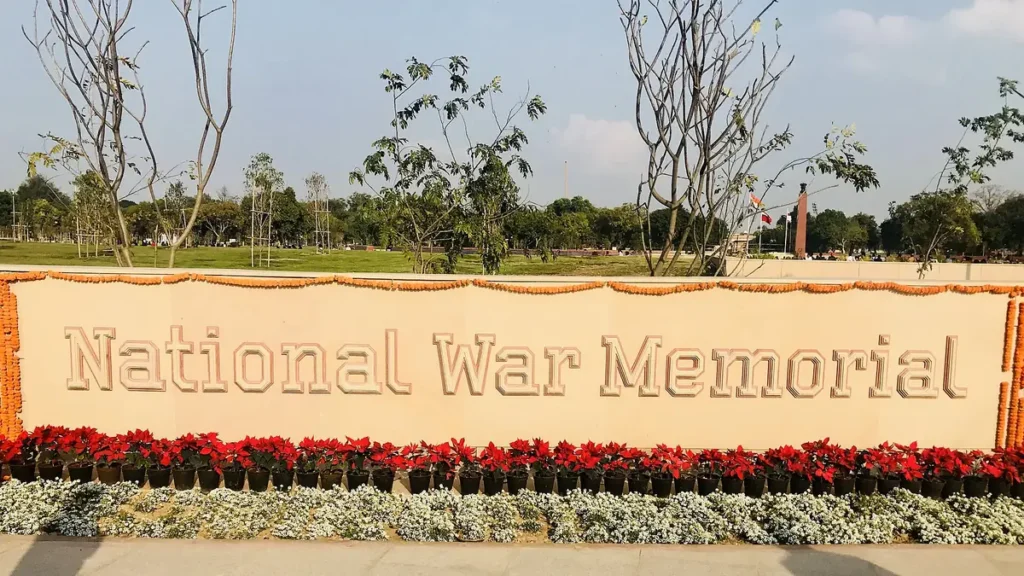
Photo: Sanket Oswal, CC BY-SA 4.0, via Wikimedia Commons
Exam angle
Prelims: Cripps, Quit India, INA, Imphal–Kohima. · Mains GS-I: war and the national movement.
Practice MCQs
Original practice questions (not PYQs).
The Rani Jhansi Regiment was a women's unit of the:
Answer (b) & explanation
Subhas Chandra Bose raised the Rani Jhansi Regiment as part of the Indian National Army (Azad Hind Fauj).
Consider the following statements:
1. The Cripps Mission offered India Dominion status after the Second World War.
2. The Quit India Resolution was passed by the All India Congress Committee on 8 August 1942 in Bombay.
3. Japan's attempt to invade India was stopped in the battles of Imphal and Kohima in 1944.
How many of the above statements are correct?
Answer (c) & explanation
All three are correct.
Questions students ask about this
When is Remembrance Day?
11 November. Commonwealth nations fall silent for two minutes at 11 a.m.
How many Indian troops served in the two wars?
About 1.5 million in the First World War and 2.5 million in the Second, then the largest volunteer army.
What did the Cripps Mission offer?
Dominion status after the Second World War.
What was the Rani Jhansi Regiment?
A women’s unit of the Indian National Army, raised under Subhas Chandra Bose.
Which battles stopped Japan’s invasion of India in 1944?
Imphal and Kohima.