
India seeks a fair climate stocktake at Antalya talks
The 31st Conference of the Parties to the United Nations Framework Convention on Climate Change is under way in Antalya, Türkiye. It ends on Friday. A global stocktake is a review of how far the world has come on the Paris Agreement goals. The second one is now starting. Union Environment Minister Bhupender Yadav said it must be open, transparent and inclusive. It must rest on the best science and on equity. He said rich countries must lead, under the principle of common but differentiated responsibilities and respective capabilities. The review should cover national climate plans, transparency reports, carbon markets under Article 6, adaptation and a just transition. It must also ask why the world may soon cross 1.5°C of warming despite progress. Climate finance and technology transfer have fallen far short of promises. In India’s national statement, he said the Global South cannot be made to pay for two centuries of rich nations’ emissions. Fair access to the remaining carbon budget is “non-negotiable”. He also said sharing of cross-border rivers cannot rest on “archaic mechanisms”. This was seen as a reply to Pakistan on the Indus Waters Treaty, which India has kept in abeyance since the Pahalgam attack. Read it to revise the Paris Agreement, Article 14, nationally determined contributions and climate finance.
- The summit
- The 31st Conference of the Parties, in Antalya, Türkiye, ending on Friday
- The review
- The Second Global Stocktake, a five-yearly review under Article 14 of the Paris Agreement, is starting
- India’s test
- It must be open, transparent and inclusive, rest on the best science and on equity, and rich countries must lead
- The red line
- Fair access to the remaining carbon budget is “non-negotiable”; the Global South cannot be made to pay for two centuries of rich nations’ emissions
What is India asking for at the Antalya climate talks?
A climate summit is also a reckoning. In Antalya, India has said the world’s second official review of the Paris Agreement must be fair, and that the Global South cannot be asked to pay for two centuries of other countries’ emissions.
- The 31st Conference of the Parties to the United Nations Framework Convention on Climate Change is under way in Antalya, Türkiye. It ends on Friday.
- A global stocktake is a review of how far the world has come on the Paris Agreement goals. The second one is now starting. Union Environment Minister Bhupender Yadav said it must be open, transparent and inclusive, and must rest on the best science and on equity.
- He said rich countries must lead, under the principle of common but differentiated responsibilities and respective capabilities. The review should cover national climate plans, transparency reports, carbon markets under Article 6, adaptation and a just transition. It must also ask why the world may soon cross 1.5°C of warming despite progress. Climate finance and technology transfer have fallen far short of promises.
- In India’s national statement, he said the Global South cannot be made to pay for two centuries of rich nations’ emissions. Fair access to the remaining carbon budget is “non-negotiable”. He also said sharing of cross-border rivers cannot rest on “archaic mechanisms”. This was seen as a reply to Pakistan on the Indus Waters Treaty, which India has kept in abeyance since the Pahalgam attack.
What is a global stocktake, and which Paris Agreement rules are in play?
The Paris Agreement, adopted in 2015, asks countries to hold the rise in average global temperature to well below 2°C above pre-industrial levels, and to pursue efforts to limit it to 1.5°C. Each country sets a nationally determined contribution — its climate plan — and is expected to make that plan stronger over time.
Article 14 of the Paris Agreement provides for a global stocktake every five years. It is a collective review, not a country-by-country verdict, of how far the world has come. The first stocktake concluded at the 28th Conference of the Parties. The second is now starting at Antalya.
The principle of common but differentiated responsibilities and respective capabilities is older than Paris. It says all countries share the climate duty, but not in the same way, because they did not cause the problem in the same way and do not have the same means. India has used this to argue that rich countries must lead on cuts, finance and technology.
Article 6 of the Paris Agreement deals with carbon markets and international cooperation on emission cuts. The review, India says, should also cover adaptation and a just transition — the shift away from high-carbon work in a way that does not abandon workers and poorer countries.
India’s tests for the Second Global Stocktake
| Test | What India has said |
|---|---|
| Process | Open, transparent and inclusive; based on the best science and on equity |
| Who should lead | Rich countries, under common but differentiated responsibilities and respective capabilities |
| What to review | National climate plans, transparency reports, Article 6 carbon markets, adaptation and a just transition |
| The hard question | Why the world may soon cross 1.5°C despite progress; finance and technology have fallen short |
| The red line | Fair access to the remaining carbon budget is “non-negotiable” |
Which treaties, articles and principles apply?
- The talks are the 31st Conference of the Parties to the United Nations Framework Convention on Climate Change, in Antalya.
- Article 14 of the Paris Agreement provides for a global stocktake every five years; the second one is now starting.
- Common but differentiated responsibilities and respective capabilities is the equity principle India has invoked for who should lead.
- Article 6 of the Paris Agreement covers carbon markets; nationally determined contributions are the national climate plans under review.
Why does India’s stand on the Second Global Stocktake at Antalya matter?
| Angle | What to note |
|---|---|
| Prelims | Article 14, a five-year stocktake, Antalya, the 1.5°C goal, and common but differentiated responsibilities. |
| Equity | The Global South cannot be made to pay for two centuries of rich nations’ emissions; fair access to the remaining carbon budget is “non-negotiable”. |
| Implementation | Finance and technology transfer have fallen far short of promises. |
| Diplomacy | The line on “archaic mechanisms” for cross-border rivers was seen as a reply on the Indus Waters Treaty. |
What are the problems with India’s stand on the Second Global Stocktake at Antalya?
- A stocktake that is only a statement of principles will not close the gap if finance and technology stay short.
- “Non-negotiable” access to the carbon budget still has to be turned into a rule the talks can adopt.
- A climate summit is a poor place to settle a river-treaty dispute; the Indus Waters Treaty remark will be read politically as well as legally.
- The 1.5°C goal is already under strain; a fair review must also be an honest one about what current plans will actually deliver.
What should be done next on India’s stand on the Second Global Stocktake at Antalya?
- Watch what the Antalya decision texts say on the Second Global Stocktake before the summit ends on Friday.
- Keep the testable facts straight: Article 14, a five-year cycle, Antalya, 1.5°C, and common but differentiated responsibilities.
- Readers should be able to tell Article 14 (the stocktake) from Article 6 (carbon markets).
- Climate finance and technology transfer should be judged against promises, not only against new pledges.
What can Prelims ask on India’s stand on the Second Global Stocktake at Antalya?
Prelims probability: High. Climate talks are asked almost every year: the Paris Agreement goals came in 2016. The summit ends this week. Testable facts: Article 14 stocktake every five years, Antalya venue, 1.5°C goal, common but differentiated responsibilities.
- The 31st Conference of the Parties is under way in Antalya, Türkiye, and ends on Friday.
- The Second Global Stocktake, a five-yearly review under Article 14 of the Paris Agreement, is now starting.
- India wants it to be open, transparent and inclusive, to rest on the best science and on equity, and to have rich countries lead under common but differentiated responsibilities and respective capabilities.
- The review should cover national climate plans, transparency reports, Article 6 carbon markets, adaptation and a just transition, and ask why the world may soon cross 1.5°C.
- Fair access to the remaining carbon budget is “non-negotiable”, India said; the Global South cannot be made to pay for two centuries of rich nations’ emissions.
How to write about India’s stand on the Second Global Stocktake at Antalya in Mains
Practice question (15 marks, 250 words): India has called for an open and equitable Second Global Stocktake at the 31st Conference of the Parties in Antalya. Discuss the purpose of the stocktake under the Paris Agreement and the issues of equity and climate finance.
- Open with the venue, the 31st Conference of the Parties, and the fact that the summit ends on Friday.
- Explain Article 14: a global stocktake every five years of progress towards the Paris goals, including 1.5°C.
- Set out India’s tests: openness, science, equity, and leadership by rich countries under common but differentiated responsibilities and respective capabilities.
- Discuss finance, technology transfer, the remaining carbon budget, and why India calls fair access “non-negotiable”.
- Close with the difference between a fair review and an effective one, if current plans still point above 1.5°C.
Ready lines for your answer
- A stocktake is a review of collective progress, not a scorecard of one country.
- Equity in climate talks is a legal principle, not only a moral appeal.
Quotable data pointPIB PRID 2338141 and reporting of 19 November 2026: 31st Conference of the Parties in Antalya; Second Global Stocktake starting; Bhupender Yadav on equity, 1.5°C, climate finance, the carbon budget, and “archaic mechanisms” for cross-border rivers.
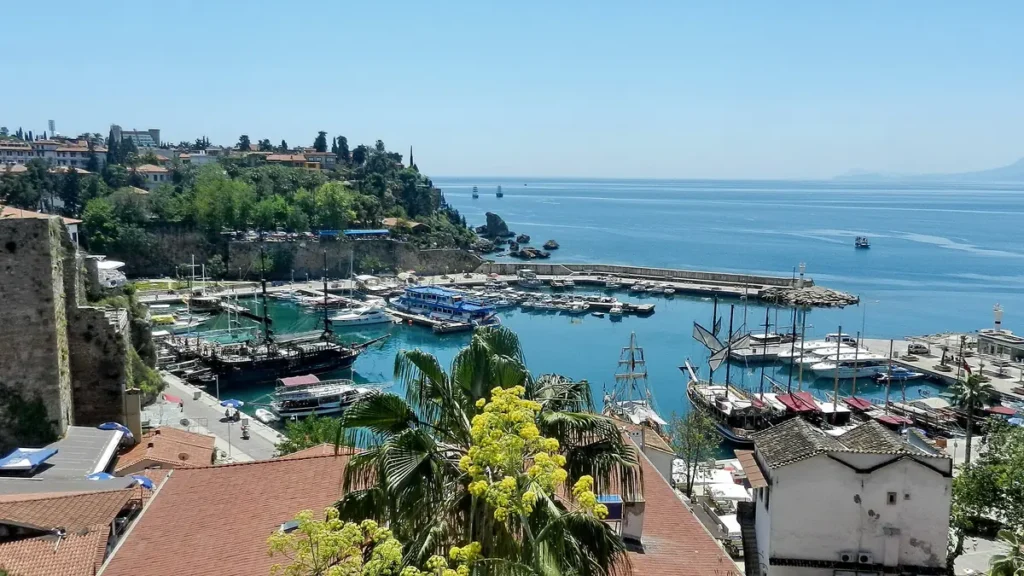
Photo: Tanya Dedyukhina, CC BY 3.0, via Wikimedia Commons
Exam angle
Prelims: Antalya as the venue, Article 14 stocktake every five years, the 1.5°C goal, and common but differentiated responsibilities. · Mains GS-III: equity, the carbon budget, climate finance and technology transfer.
Practice MCQs
Original practice questions (not PYQs).
The global stocktake, held every five years to assess collective progress towards the Paris Agreement goals, is provided for under
Answer (a) & explanation
Article 14 of the Paris Agreement provides for the global stocktake every five years. Article 6 deals with carbon markets and cooperation.
Consider the following statements:
1. The 31st Conference of the Parties to the climate convention is being held in Antalya, Türkiye.
2. The principle of common but differentiated responsibilities was first agreed in the Kyoto Protocol of 1997.
3. The first global stocktake concluded at the 28th Conference of the Parties in Dubai.
How many of the above statements are correct?
Answer (b) & explanation
Statements 1 and 3 are correct. The principle of common but differentiated responsibilities was first agreed in the United Nations Framework Convention on Climate Change at Rio in 1992.
Questions students ask about this
Where is the 31st Conference of the Parties being held, and when does it end?
In Antalya, Türkiye. It ends on Friday.
What is a global stocktake?
A review, under Article 14 of the Paris Agreement, of how far the world has come on the Paris goals. It is held every five years. The second one is now starting.
What test has India set for the review?
It must be open, transparent and inclusive, rest on the best science and on equity, and rich countries must lead under common but differentiated responsibilities and respective capabilities.
What did India say about the carbon budget?
Fair access to the remaining carbon budget is “non-negotiable”. The Global South cannot be made to pay for two centuries of rich nations’ emissions.
What did the Minister say about cross-border rivers?
He said sharing of cross-border rivers cannot rest on “archaic mechanisms”. This was seen as a reply to Pakistan on the Indus Waters Treaty, which India has kept in abeyance since the Pahalgam attack.