
Geographical Indication (GI) Tags in India: Meaning, GI Act 1999, Registration, Benefits, Famous Examples and Issues (UPSC Notes + PYQs)
UPSC has already asked about this. Read the story with these questions in mind.
Background
The idea is old: Champagne, Roquefort cheese and Scotch whisky have long been protected in Europe. The WTO’s TRIPS Agreement (1995) required members to protect GIs (Articles 22-24), with extra protection for wines and spirits. India had a direct reason to act: the US patent on basmati rice lines (RiceTec, 1997) and attempts abroad to patent turmeric and neem uses. The Act was passed in 1999 and took effect on 15 September 2003. Darjeeling tea became the first registered GI in 2004-05.
How registration works
- Applicant: an association of producers, organisation or authority representing producers (not an individual owner).
- The Geographical Indications Registry, Chennai, under the Controller General of Patents, Designs and Trade Marks (Department for Promotion of Industry and Internal Trade, Commerce Ministry), examines the application.
- The application is advertised in the GI Journal; anyone may oppose.
- On registration, the registered proprietor and authorised users (individual producers who register) can use the tag.
- Valid for 10 years, renewable indefinitely.
- Categories: agricultural, natural, manufactured (handicrafts, textiles), and foodstuffs.
- 1Producers' association applies to the GI Registry, Chennai
- 2Examination and consultative group review
- 3Advertised in the GI Journal for opposition
- 4Registered for ten years
- 5Producers register as authorised users
Benefits
- Legal protection against misuse; infringement is an offence under the Act.
- Premium prices and export appeal (Darjeeling tea, Basmati, Alphonso mango).
- Survival of traditional crafts and the communities behind them.
- Rural tourism and brand identity for regions.
- Link to schemes like UP’s One District One Product (2018), later made national.
Famous Indian GIs
| Product | State | Category |
|---|---|---|
| Darjeeling tea | West Bengal | Agricultural (first GI) |
| Banaras brocades and sarees | Uttar Pradesh | Handicraft |
| Kanchipuram silk | Tamil Nadu | Handicraft |
| Tirupati laddu | Andhra Pradesh | Foodstuff |
| Nagpur orange | Maharashtra | Agricultural |
| Mysore silk | Karnataka | Handicraft |
| Kashmir Pashmina | Jammu and Kashmir | Handicraft |
| Chakhao (black rice) | Manipur | Agricultural |
India has registered over 600 GIs. Uttar Pradesh and Tamil Nadu lead the State count; Varanasi alone has dozens of craft GIs, from Banarasi paan to the wooden toys of Varanasi.
Issues
- Low awareness and few authorised users: many artisans never register, so the tag does not reach them.
- Weak enforcement: fakes of Banarasi and Pashmina are common.
- Little marketing support after registration.
- Disputes over boundaries and names: Rasagola (Odisha vs West Bengal, both registered), Basmati (India’s application in the EU opposed by Pakistan).
- Stronger protection exists only for wines and spirits under TRIPS; India wants the same for all GIs.
- Identifies place of origin
- Collective right of a community
- Cannot be sold or licensed
- Valid 10 years, renewable
- Identifies a business's goods
- Owned by one person or firm
- Can be sold or licensed
- Valid 10 years, renewable
Way forward
Register authorised users at scale through cluster drives, use QR-coded GI labels to fight fakes, list GI products on GeM and e-commerce with verification, link GIs with tourism circuits, and push at the WTO for extended protection to all products.
GI, trademark and patent: how they differ
| Feature | Geographical Indication | Trademark | Patent |
|---|---|---|---|
| Protects | A product whose quality or reputation comes from its place of origin | A sign that tells one firm’s goods from another’s | A new, inventive, useful invention |
| Owner | A community of producers (collective right) | One firm or person | Inventor or assignee |
| Duration | 10 years, renewable without limit | 10 years, renewable | 20 years, not renewable |
| Transferable? | No; cannot be sold, licensed or mortgaged | Yes | Yes |
| Indian law | GI Act, 1999 | Trade Marks Act, 1999 | Patents Act, 1970 |
The key exam point is that a GI is a collective right tied to a place. Any producer in the area who meets the standards in the registration can become an authorised user; nobody can sell the tag away. This is why a GI suits crafts and farm produce made by thousands of small producers.
Enforcement and penalties
Only the registered proprietor and authorised users may use a registered GI. Using a false GI, or suggesting that goods come from a place they do not, is an offence. The Act provides imprisonment of six months to three years and a fine of ₹50,000 to ₹2 lakh, with higher penalties for repeat offences. Courts can also grant injunctions and damages. In practice, few criminal cases are filed: the producer associations that hold GIs are often small and poorly funded, so policing markets in distant cities is beyond them. The Tea Board, which holds the Darjeeling tea GI, is an exception; it has used its own logo, a certification system and lawyers abroad to fight blending and false labels, and is often cited as the model to copy.
- 1Producer body files an application with the GI Registry, Chennai
- 2Examination and consultative group review
- 3Advertised in the GI Journal; three months for opposition
- 4Registered for 10 years
- 5Individual producers register as authorised users
The international frame
GIs were first protected under the Paris Convention (1883) as “indications of source”. The Lisbon Agreement (1958), run by WIPO, set up an international register for appellations of origin, and its Geneva Act (2015) extended it to GIs; India is not a party to either. For India the main forum is the WTO. Article 22 of TRIPS gives a basic level of protection to all GIs (misleading use must be stopped), while Article 23 gives wines and spirits a higher level: their names cannot be used even with words like “kind”, “type” or “style”. India, with many developing countries, argues that rice, tea, textiles and crafts deserve the same higher protection. The European Union protects GIs through its own register, and India’s application for Basmati there has been opposed by Pakistan, which registered Basmati as its own GI in 2021.
GIs from Uttar Pradesh
Well-known ones include Banarasi brocades and sarees, Lucknow chikan craft, Malihabadi Dussehri mango, Kalanamak rice of the eastern Terai districts, Moradabad metal craft, Firozabad glass, Bhadohi carpets, Kannauj perfume and Agra durrie. Many of these are also the chosen products of their districts under the One District One Product scheme that UP launched in 2018, so the GI tag and the district scheme work together: the GI gives legal identity, ODOP gives credit, design support and marketing. Varanasi-based facilitation and the State’s use of GI products as official gifts have helped raise their profile.
PYQ trend
Prelims asked why India enacted the GI Act (to meet WTO obligations, 2018) and which products have GI status (2015). New GIs appear in current affairs every month, so Prelims keeps returning to this. Mains links GIs to handicrafts and rural livelihoods.
GI Tags: UPSC angle
For UPSC CSE
Prelims: Act, registry, validity, products in news. Mains GS-I: crafts and culture; GS-III: IPR and rural livelihoods.
GI Tags UPSC PYQs (Prelims)
Questions UPSC has actually asked, from the official papers. Pick an option to check yourself.
India enacted The Geographical Indications of Goods (Registration and Protection) Act, 1999 in order to comply with the obligations to
The TRIPS Agreement of the WTO requires members to protect geographical indications. India passed the GI Act in 1999, in force from 2003. Darjeeling tea was the first Indian GI. Registration is handled by the GI Registry in Chennai. Answer as per the official UPSC key · Battle IAS PYQ bankAnswer (d) & why
Which of the following has/have been accorded ‘Geographical Indication’ status?
– 1. Banaras Brocades and Sarees
– 2. Rajasthani Daal-Bati-Churma
– 3. Tirupathi Laddu
Select the correct answer using the code given below.
Banaras brocades and saris got a GI tag in 2009, and the Tirupati laddu got one the same year. The GI was registered to TTD. Daal-bati-churma is a well-known Rajasthani dish but has no GI tag. The GI Act dates from 1999 and came into force in 2003. Answer as per the official UPSC key · Battle IAS PYQ bankAnswer (c) & why
Mains PYQs on this topic
Questions from the official UPSC Mains papers (2023-2026 in the Battle IAS Mains bank), newest first. Each links to a model answer.
- UPSC Mains 2024 · GS Paper I · Q13 · 15 marks
How far was the Industrial Revolution in England responsible for the decline of handicrafts and cottage industries in India?
Quick quiz
India’s GI Registry is located in
Under the Controller General of Patents, Designs and Trade Marks.Answer (c)
A GI registration is valid for
Renewable.Answer (b)
India’s first GI was
Registered in 2004-05.Answer (b)
FAQs
Who can apply for a GI tag?
An association of producers or an organisation or authority representing their interests.
Can a GI be owned by one company?
No. It is a collective right; producers in the area register as authorised users.
Why did India pass the GI Act?
To meet its obligations under the WTO’s TRIPS Agreement and protect products like basmati and Darjeeling tea.
How long does GI protection last?
Ten years, renewable any number of times.
Which State has the most GIs?
Uttar Pradesh and Tamil Nadu are at the top of the list.
Can a GI tag be sold or licensed?
No. A GI is a collective right of the producers of a region. Unlike a trademark, it cannot be assigned, licensed or mortgaged.
Spotted an error? Tell us. We correct within 48 hours.
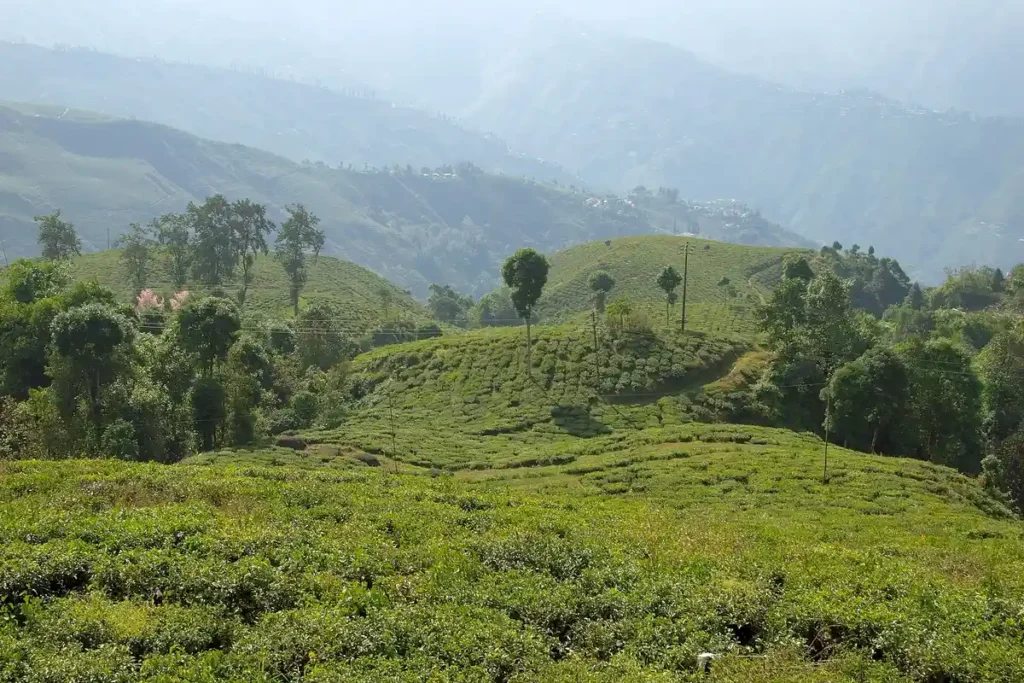
Image: Vyacheslav Argenberg, Wikimedia Commons, CC BY 4.0
How to use this in Mains
If asked: GI tags can protect traditional crafts only if they reach artisans. Discuss. (GS-I/III)
Quote: “Low awareness and few authorised users: many artisans never register, so the tag does not reach them.”
Use it: Your first issue in the body; it makes the answer practical.
In the news

Central Silk Board at 77: target to make India No. 1 in silk
At the 77th Foundation Day of the Central Silk Board in Bengaluru on 20 September 2026, the Textiles Minister said India's silk output has grown from 26,000 metric tonnes in 2014 to 42,000 tonnes now. The target is 60,000 tonnes by 2030-31, and the No. 1 global rank by 2028-29. Karnataka leads India's silk production.
20 Sep 2026
Kalanamak rice output in Siddharthnagar up over five times (2018–2025)
Production of Kalanamak rice in Siddharthnagar, Uttar Pradesh, rose more than five times between 2018 and 2025, the Agriculture Ministry told Lok Sabha on 11 August 2026. Its price rose from ₹40 a kg in 2018 to ₹150 a kg in 2026, and growers rose from 2915 to 23000. Two new dwarf varieties yield 4.5 tonnes a hectare.
11 Aug 2026
Backgrounder: GI tags as global brands
A PIB backgrounder of 4 August 2026 explains how Geographical Indication (GI) tags protect traditional products and lift producers' incomes. India has over 800 registered GI products, with 607 granted since 2014. Uttar Pradesh leads with 81 GIs (December 2025). Darjeeling Tea was India's first GI. The target is 10,000 GI registrations by 2030.
4 Aug 2026
ODOP: 1,244 products across 773 districts
DPIIT's One District One Product initiative has identified 1,244 products across 773 districts, a Commerce Ministry reply said on 24 July 2026. States choose the products. Market access tools include GeM's ODOP storefront, PM Ekta Malls under SASCI, and the PMFME scheme for food-processing ODOP lines.
24 Jul 2026