
UPSC Mains 2018 GS Paper 2 Q16: model answer
Multiplicity of various commissions for the vulnerable sections of society leads to problems of overlapping jurisdiction and duplication of functions. Is it better to merge all commissions into an umbrella Human Rights Commission? Argue your case.
What the question wants
Argue whether the several commissions for vulnerable groups should be merged into one Human Rights Commission, given overlap and duplication.
How to structure it
Is it better to merge ... Argue your case: take a position and defend it.
- The commissions
- Overlap problems
- Case for merger
- Case against
- Your position
How to think it through
Take a clear position; the question invites it. My position: integrate, not merge. Keep specialised commissions, but share data, a single complaint portal and clear jurisdiction rules. Show the duplication with a real example.
Model answer
A Dalit woman assaulted by police can approach the NHRC, the NCW, the NCSC and their State counterparts, often at the same time. Each opens a file and each asks the same district police for a report.
The commissions
NHRC (1993) and SHRCs; NCW (1990); NCSC (Article 338), NCST (338A), NCBC (338B); NCM (1992); NCPCR (2005); the Chief Commissioner for Persons with Disabilities; NCSK for safai karamcharis.
Problems of multiplicity
- Overlapping jurisdiction: Section 3(3) of the PHRA makes chairs of other commissions deemed members of the NHRC, but rarely helps coordination.
- Duplication: multiple inquiries, inconsistent findings, police fatigue.
- Forum shopping by complainants and politicians.
- Spread-thin budgets and vacancies; several commissions were headless for long stretches.
- Citizens do not know which door to knock on, and the poorest give up after the first.
Case for merger
- One door for citizens, pooled investigators, a stronger voice against the State, and savings on duplicated staff and offices.
- The Paris Principles favour one strong national human rights institution.
Case against merger
- Specialised commissions carry constitutional status (NCSC, NCST, NCBC) that cannot be merged by statute.
- Caste, gender and child rights need dedicated expertise and attention.
- A single body might marginalise the weakest group's issues, as minority complaints are often lost even today within general police work.
My position: integrate, do not merge
- A common complaint portal with automatic routing and one lead commission.
- Joint inquiries, with one report, in cases that cross mandates.
- The NHRC as a coordinating apex, with commission chairs actually meeting as its full commission.
- Common minimum powers: binding compensation and time-bound government replies.
Merging commissions would solve paperwork but risk losing voice. Integration keeps both expertise and coherence.
Draw: A hub and spokes: NHRC at the centre, specialised commissions as spokes, a common portal at the rim.
Keywords, cases and data to drop in
PHRA Section 3(3) deemed members, NCSC 338, NCST 338A, NCBC 338B, NCM 1992, NCPCR 2005, NCSK, Paris Principles, forum shopping, single portal.
Where most answers lose marks
- Proposing to merge constitutional commissions by an ordinary law. It needs constitutional amendment.
Related Mains PYQs
- Can the constitutional mandate of rights-based welfare be effectively realised in the context of non-integrated governance and minimal public investment? Examine. UPSC 2026 · GS-II
- Civil Society Organizations are often perceived as being anti-State actors than non-State actors. Do you agree? Justify. UPSC 2025 · GS-II
- The National Commission for Protection of Child Rights has to address the challenges faced by children in the digital era. Examine the… UPSC 2025 · GS-II
- Public charitable trusts have the potential to make India’s development more inclusive as they relate to certain vital public issues. Comment. UPSC 2024 · GS-II
Fresh examples from current affairs
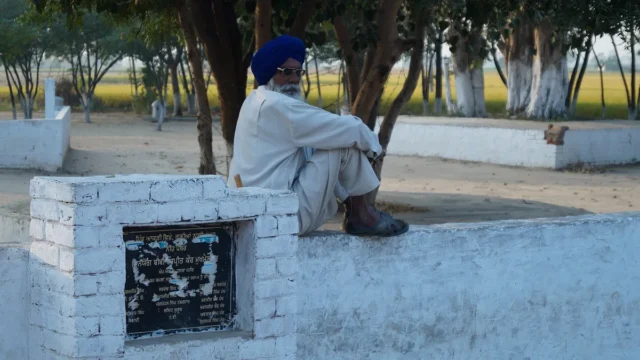
Cabinet extends NSAP to 2030-31 and renames it Pradhan Mantri Samajik Sahayata Yojana
On 14 October 2026 the Union Cabinet extended the National Social Assistance Programme for five years, 2026-27 to 2030-31, with Rs. 53,428 crore. It is renamed Pradhan Mantri Samajik Sahayata Yojana. The disability pension now needs 40% benchmark disability instead of 80%, starts from birth, and pays Rs. 375 or Rs. 625 a month.
UPSC angle: Prelims: launch date, new names, outlay, 40% benchmark, Article 41. · Mains GS-II: welfare schemes for vulnerable sections; DPSPs; rights of persons with disabilities.
14 Oct 2026
EPFO Amnesty Scheme 2026: deadline 28 December for PF Trust regularisation
EPFO is reminding establishments that the Amnesty Scheme, 2026 for retrospective regularisation of Provident Fund Trust exemption status closes on 28 December 2026. It covers trusts recognised under the Income Tax Act but without a formal exemption order under the EPF Act or the Code on Social Security.
UPSC angle: Prelims: Amnesty dates and legal sections. · Mains GS-III: social security and labour compliance.
13 Oct 2026
₹1,423 crore over three years for implementing PCR and SC/ST Atrocities Acts; 217 exclusive special courts
The Centre released ₹1,423.30 crore to States and UTs over 2022-23 to 2024-25 to implement the Protection of Civil Rights Act, 1955 and the SC/ST (Prevention of Atrocities) Act, 1989. States report 217 Exclusive Special Courts in 15 States and UTs. Yet 65,646 cases were registered in 2024 and 3,92,006 were pending trial at year end.
UPSC angle: Prelims: PCR Act year; Art. 17. · Mains: Why do atrocity cases see low conviction?
1 Oct 2026
PM-AJAY backgrounder: one merged scheme for Scheduled Caste development
Pradhan Mantri Anusuchit Jaati Abhyuday Yojana (PM-AJAY) is a 100 per cent centrally sponsored scheme of the Social Justice Ministry, launched in 2021-22. It merges three older schemes and works through Adarsh Gram, grants-in-aid and hostels. By 8 September 2026, 18,093 villages had been declared Adarsh Grams.
UPSC angle: Prelims: funding pattern; merged schemes.
28 Sep 2026Learn the concept
Question text as printed in the official UPSC Civil Services (Main) question paper. The model answer is original Battle IAS work; use it to learn structure, not to memorise.
Want every PYQ in one place? See the Battle IAS PYQ Book.