
UPSC Mains 2021 GS Paper 2 Q17: model answer
"Though women in post-Independent India have excelled in various fields, the social attitude towards women and feminist movement has been patriarchal." Apart from women education and women empowerment schemes, what interventions can help change this milieu?
What the question wants
Suggest interventions, other than women's education and empowerment schemes, that can change patriarchal social attitudes towards women and feminism.
How to structure it
Apart from education and schemes: the twist is to go beyond them.
- The paradox
- Why schemes are not enough
- Interventions: law, family, workplace, media, politics, men
- Conclusion
How to think it through
India has had a woman PM, women astronauts and scientists, yet NFHS-5 found many women and men justifying wife-beating in some situations. Attitudes need different tools: men and boys, media, religious and community leaders, workplaces, inheritance in practice.
Model answer
India has sent women scientists to lead its Mars and Moon missions, and women have topped its civil services examination. Yet in NFHS-5 (2019–21), about 45% of women and 44% of men said a husband is justified in beating his wife in at least one situation. Achievement at the top has not changed attitudes at home.
Why schemes are not enough
Education and empowerment schemes change women's capacities. Patriarchy lives in men's expectations, family customs, workplaces and media. Those need their own interventions.
Interventions
- Engage men and boys: gender-equality programmes in schools for boys; campaigns like 'MARD' and community programmes where men discuss violence and care.
- School curriculum: textbooks that show men cooking and women leading; gender modules from early grades.
- Family law in practice: equal inheritance (Vineeta Sharma, 2020) enforced through land registration; joint titles for houses under PMAY.
- Workplaces: enforce the POSH Act, 2013; paternity leave to share care; childcare at work under the labour codes.
- Media and advertising: regulate stereotyping; show women in nontraditional roles; ASCI's guidelines against harmful gender stereotypes.
- Political representation: implement women's reservation; women leaders change norms in villages, as studies of women sarpanches found.
- Religious and community leaders: work with them on dowry and child marriage.
- Feminism's image: present gender equality as fairness for everyone, not a fight against men.
- Data and accountability: gender audits in public bodies; the gender budget.
- Safety in public spaces: lighting, safe transport and quick police response, so women can work and move freely.
Changing the meaning of 'respect'
Movements like the Kerala women's wall (2019) and #MeToo (2018) showed that public debate shifts norms faster than pamphlets.
Conclusion
Patriarchy is learned, so it can be unlearned. The decisive change will come when boys are raised differently, and when equal sharing at home becomes normal rather than heroic.
Draw: An iceberg: visible achievements on top; attitudes, customs and care burden below, with interventions as tools at each layer.
Keywords, cases and data to drop in
NFHS-5 attitudes to wife-beating, Vineeta Sharma (2020), POSH Act 2013, paternity leave, ASCI gender guidelines, women sarpanches (Chattopadhyay and Duflo 2004), gender budgeting, #MeToo.
Where most answers lose marks
- Writing about women's education and schemes, which the question excludes.
Related Mains PYQs
- Can the constitutional mandate of rights-based welfare be effectively realised in the context of non-integrated governance and minimal public investment? Examine. UPSC 2026 · GS-II
- Civil Society Organizations are often perceived as being anti-State actors than non-State actors. Do you agree? Justify. UPSC 2025 · GS-II
- The National Commission for Protection of Child Rights has to address the challenges faced by children in the digital era. Examine the… UPSC 2025 · GS-II
- Public charitable trusts have the potential to make India’s development more inclusive as they relate to certain vital public issues. Comment. UPSC 2024 · GS-II
Fresh examples from current affairs
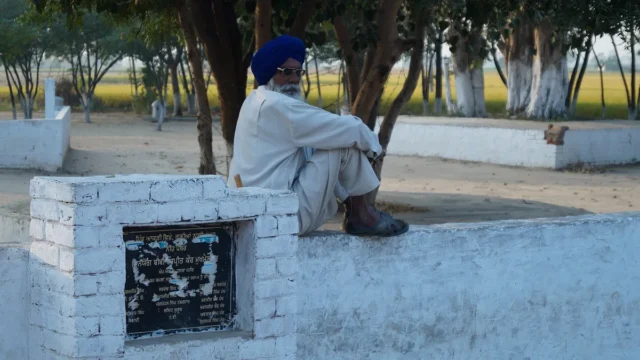
Cabinet extends NSAP to 2030-31 and renames it Pradhan Mantri Samajik Sahayata Yojana
On 14 October 2026 the Union Cabinet extended the National Social Assistance Programme for five years, 2026-27 to 2030-31, with Rs. 53,428 crore. It is renamed Pradhan Mantri Samajik Sahayata Yojana. The disability pension now needs 40% benchmark disability instead of 80%, starts from birth, and pays Rs. 375 or Rs. 625 a month.
UPSC angle: Prelims: launch date, new names, outlay, 40% benchmark, Article 41. · Mains GS-II: welfare schemes for vulnerable sections; DPSPs; rights of persons with disabilities.
14 Oct 2026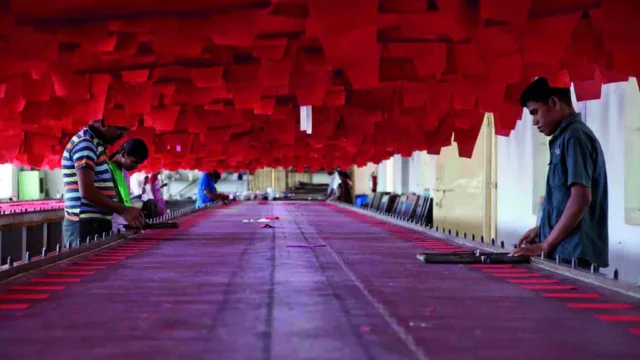
EPFO Amnesty Scheme 2026: deadline 28 December for PF Trust regularisation
EPFO is reminding establishments that the Amnesty Scheme, 2026 for retrospective regularisation of Provident Fund Trust exemption status closes on 28 December 2026. It covers trusts recognised under the Income Tax Act but without a formal exemption order under the EPF Act or the Code on Social Security.
UPSC angle: Prelims: Amnesty dates and legal sections. · Mains GS-III: social security and labour compliance.
13 Oct 2026
₹1,423 crore over three years for implementing PCR and SC/ST Atrocities Acts; 217 exclusive special courts
The Centre released ₹1,423.30 crore to States and UTs over 2022-23 to 2024-25 to implement the Protection of Civil Rights Act, 1955 and the SC/ST (Prevention of Atrocities) Act, 1989. States report 217 Exclusive Special Courts in 15 States and UTs. Yet 65,646 cases were registered in 2024 and 3,92,006 were pending trial at year end.
UPSC angle: Prelims: PCR Act year; Art. 17. · Mains: Why do atrocity cases see low conviction?
1 Oct 2026
PM-AJAY backgrounder: one merged scheme for Scheduled Caste development
Pradhan Mantri Anusuchit Jaati Abhyuday Yojana (PM-AJAY) is a 100 per cent centrally sponsored scheme of the Social Justice Ministry, launched in 2021-22. It merges three older schemes and works through Adarsh Gram, grants-in-aid and hostels. By 8 September 2026, 18,093 villages had been declared Adarsh Grams.
UPSC angle: Prelims: funding pattern; merged schemes.
28 Sep 2026Learn the concept
Question text as printed in the official UPSC Civil Services (Main) question paper. The model answer is original Battle IAS work; use it to learn structure, not to memorise.
Want every PYQ in one place? See the Battle IAS PYQ Book.