
UPSC Mains 2026 GS1 Q16: model answer
“The centre of global trade is gradually shifting from the Atlantic region to the Indo-Pacific region.” Examine this statement.
What the question wants
Test the claim with data on trade, shipping, growth and supply chains; note counter-points; draw implications for India.
How to structure it
Intro: historical Atlantic dominance. Body: evidence of shift; counter-evidence; implications for India. Conclusion.
- 1Evidence of shift
- 2Counter-evidence
- 3Implications for India
Model answer
From the 16th to the 20th century, the Atlantic linked Europe and the Americas and carried most of world trade. The balance has been moving east for four decades.
Evidence of the shift
- Most of the world's busiest container ports are in Asia: Shanghai, Singapore, Ningbo, Shenzhen, Busan.
- The Strait of Malacca carries far more ships than the Panama Canal or the English Channel.
- China, Japan, Korea, ASEAN and India are central to manufacturing value chains.
- Mega trade deals: RCEP (2020) and CPTPP are Indo-Pacific blocs.
- Asia contributes the largest share of global GDP growth.
Counter-points
- The US and EU remain the largest consumer markets and financial centres.
- Transatlantic investment ties are still the deepest in the world.
- 'China plus one' moves supply chains within Asia rather than out of it.
Why it matters for India
- India sits astride the sea lanes of the Indian Ocean.
- Port-led growth: Sagarmala, Vizhinjam transshipment port, Galathea Bay plans.
- Strategic frameworks: Quad, IPOI, IMEC.
- Risk: chokepoints such as the Red Sea, where Houthi attacks (2023–24) diverted ships.
The statement holds for trade volumes and manufacturing, less so for finance. India's task is to turn location into ports, logistics and manufacturing scale.
Keywords, cases and data to drop in
Strait of Malacca RCEP China plus one Sagarmala IPOI IMEC
Where most answers lose marks
- No data or examples
- Ignoring counter-arguments
Same theme in Prelims
Consider the following statements with respect to the AI Impact Summit, 2026 held in New Delhi :
- 1. The Summit’s intellectual framework was based on three foundational Sutras : People, Planning, and Progress.
- 2. The Preamble of the Summit stresses Democratising AI Resources, which acknowledges the Charter for Democratic Diffusion of AI as a binding framework to support locally relevant innovation and strengthen resilient AI ecosystems while respecting national laws.
- 3. The New Delhi Declaration on AI Impact was structured around seven Chakras (Pillars), which included Access for Social Empowerment, AI for Science, and Secure and Trusted AI.
Which of the statements given above is/are correct ?
Answer (d) & explanation
Only statement 3 is correct (d). Statement 3 is right: the New Delhi Declaration on AI Impact was built around seven chakras (pillars), including access for social empowerment, AI for science and secure and trusted AI. Statement 1 is wrong: the three sutras were People, Planet and Progress, not "Planning". Statement 2 is wrong: the Charter for Democratic Diffusion of AI is voluntary, not binding. So options (a), (b) and (c) fail.
Notice the event: the AI Impact Summit was held at Bharat Mandapam, New Delhi, in February 2026, the first global AI summit in the Global South. It followed the summits at Bletchley Park (2023), Seoul (2024) and Paris (2025). At home, the IndiaAI Mission (2024) funds shared GPU computing.
Statement 1 changes one word, Planet to Planning. Statement 2 changes voluntary to binding.
Answer as per the official UPSC answer key.
Tungurahua Volcano, which was declared a Global Geopark by UNESCO in 2025, is situated in which one among the following countries ?
Answer (a) & explanation
Tungurahua is in Ecuador (a). Tungurahua, meaning "throat of fire", is an active stratovolcano in the Andes of central Ecuador, above the town of Baños. UNESCO named the area around it a Global Geopark in 2025. Options (b), (c) and (d), Peru, Bolivia and Colombia, are wrong, though the Andes pass through all of them too.
Notice Ecuador's other famous volcanoes: Cotopaxi, one of the highest active volcanoes, and Chimborazo, whose summit is the point farthest from Earth's centre, because of the equatorial bulge. Ecuador also owns the Galápagos Islands. A Global Geopark honours geological heritage; India has none yet, though sites like Lonar have been proposed.
Answer as per the official UPSC answer key.
Which of the following connectivity projects is/are a part of cooperation between India and the ASEAN member countries ?
- 1. Kaladan Multi-Modal Transit Transport Project
- 2. IMT Trilateral Highway
- 3. Agartala-Akhaura Rail Line
Select the answer using the code given below :
Answer (a) & explanation
Projects 1 and 2 involve ASEAN members (a). Item 1 is right: the Kaladan Multi-Modal project links Kolkata to Sittwe port and on to Mizoram through Myanmar. Item 2 is right: the India–Myanmar–Thailand Trilateral Highway runs from Moreh in Manipur to Mae Sot in Thailand. Myanmar and Thailand are both ASEAN members. Item 3 is wrong: the Agartala–Akhaura rail line links Tripura with Bangladesh, which is not in ASEAN. So options (b), (c) and (d) fail.
Notice the policy: these projects are the backbone of India's Act East Policy (2014), which upgraded the Look East Policy (1991). ASEAN has 11 members since Timor-Leste joined in 2025. Bangladesh links fall under BBIN and BIMSTEC instead.
Answer as per the official UPSC answer key.
Fresh examples from current affairs
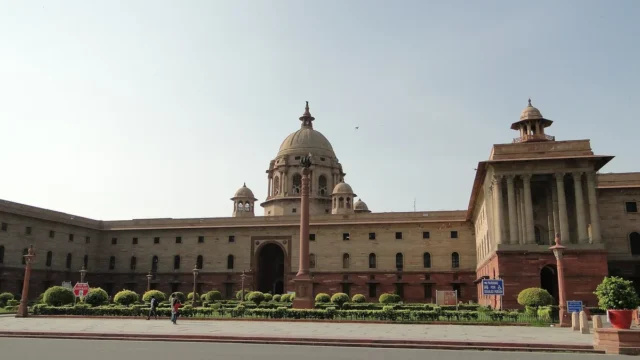
First ASEAN-India Defence Think Tank Forum opens at MP-IDSA
On 14 October 2026 Raksha Mantri Rajnath Singh opened the first ASEAN-India Defence Think Tank Forum at MP-IDSA in New Delhi. The two-day meeting brings India and all 11 ASEAN members together on maritime security, emerging tech and defence-industry ties, under the ASEAN-India Year of Maritime Cooperation.
UPSC angle: Prelims: ASEAN (11 members), MP-IDSA, ADMM-Plus, SAGAR/MAHASAGAR. · Mains GS-II: India–ASEAN defence engagement and Indo-Pacific.
14 Oct 2026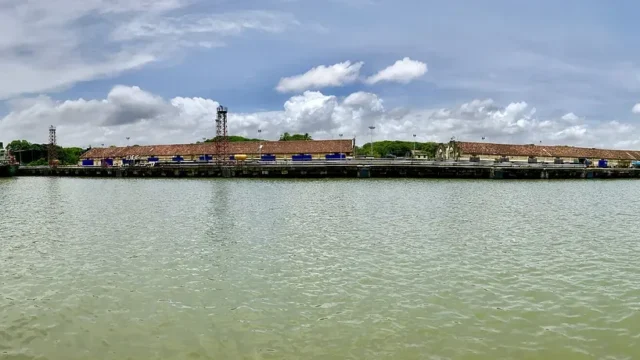
Sagarmanthan 2026: India pitches a “rules-based maritime order” and Maritime Amrit Kaal Vision 2047
The third Sagarmanthan: The Great Oceans Dialogue opened on 7 October 2026, organised by the Shipping Ministry with ORF. The PM's message called for a free, open, secure and rules-based maritime order. The minister presented Maritime Amrit Kaal Vision 2047, and an India-EU Green Shipping Corridor coalition was launched.
UPSC angle: Prelims: corridors, organisers. · Mains GS-II: Indo-Pacific; GS-III: ports and shipping.
7 Oct 2026
QUAD-at-Sea Ship Observer Mission: ICG ship Shaunak sails Chennai to Perth
On 25 September 2026 the Indian Coast Guard ship Shaunak sailed from Chennai to Perth, Australia, under the QUAD-at-Sea Ship Observer Mission. Six Sea Riders from India, Japan, Australia and the United States are on board to build interoperability and trust among Quad coast guards.
UPSC angle: Prelims: Quad members; MAHASAGAR expansion. · Mains: Quad beyond military: maritime domain awareness and coast-guard cooperation.
25 Sep 2026
India–New Zealand FTA to enter into force on 20 October 2026
The India-New Zealand Free Trade Agreement, signed on 27 April 2026 at Bharat Mandapam, will enter into force on 20 October 2026 (PIB, 21 September 2026). From day one, all of India's exports to New Zealand become duty-free. Dairy, sugar and edible oils stay out of India's tariff cuts, and New Zealand commits to facilitate USD 20 billion of investment.
UPSC angle: Prelims: entry-into-force date; zero-duty coverage. · Mains: India's new FTA strategy after leaving RCEP.
21 Sep 2026Question text as printed in the official UPSC question paper: https://www.upsc.gov.in/sites/default/files/QP-CSM-26-010926-GENERAL%20STUDIES%20PAPER%20-%20I.pdf The model answer is original Battle IAS work; use it to learn structure, not to memorise.