
Chapter 6 · Topic 6.2 · Prelims + Mains2 of 3
Civil Service Values: Spirit of rules and dilemmas
Key points
- Substance over form (Mains 2024): follow the purpose of a rule, not just its format.
- "Everything not prohibited is permitted" (Mains 2018): supports innovation, never bypasses law, safety or rights.
- Seven-step dilemma process (Mains 2018): facts, stakeholders and values, law, options, tests, decide and record, review.
- Decision tests: legality, consequences, duty, fairness, publicity.
Prelims box: facts and traps
- Effective first (right goals), then efficient (least waste).
Spirit versus letter of the rules
Like a teacher who accepts homework on the wrong-size paper, because the learning matters, not the paper.
Mains 2024: Mindless addiction to Form, ignoring the Substance of the matter, results in rendering of injustice.
- Example: rejecting a disability certificate because it is on the wrong format, when the disability is obvious and verified.
- An alert officer follows the purpose of the rule.
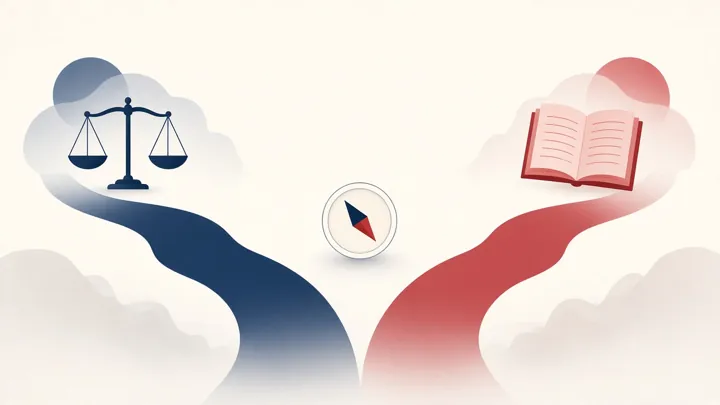
Mindless addiction to Form, ignoring the Substance of the matter, results in rendering of injustice. A perceptive civil servant is one who ignores such literalness and carries out true intent. Examine the above statement with suitable illustrations.
Mains 2018: In doing a good thing, everything is permitted which is not prohibited expressly or by clear implication.
- It supports innovation, such as using an idle school building as a night shelter in winter.
- But it never permits bypassing law, safety or others’ rights.
In doing a good thing, everything is permitted which is not prohibited expressly or by clear implication. Examine the statement with suitable examples in the context of a public servant discharging his/her duties.
Mains 2022: Wisdom lies in knowing what to reckon with and what to overlook. An officer obsessed with minor paperwork while ignoring core delivery commits a travesty of justice to the cause of effective service delivery and good governance.
Wisdom lies in knowing what to reckon with and what to overlook. An officer being engrossed with the periphery, ignoring the core issues before him, is not rare in the bureaucracy. Do you agree that such preoccupation of an administrator leads to travesty of justice to the cause of effective service delivery and good governance? Critically evaluate.
Mains 2026 asked how to balance rules and children’s rights when schools in remote areas do not fully comply with government regulations, but strict enforcement would close most of them. Balance:
- classify violations by risk: safety first, paperwork later;
- give time-bound improvement plans;
- close only where children are in danger, and arrange alternatives.
Usually schools, working in remote areas, do not fully comply with government regulations. However, if the rules are enforced strictly, it would lead to most schools closing down. How should an administrator strike a balance between enforcement of rules and educational rights of children?
Mains 2026 also said: Efficiency is doing things right, while effectiveness is doing the right thing. Balance both: pick the right goals first (effectiveness), then do them with least waste (efficiency).
Efficiency is doing things right, while effectiveness is doing the right thing. How do you strike a balance between the two to enhance productivity?
What UPSC asks: substance over form; “not prohibited” does not always mean right. Next likely angle: effective first, then efficient.
Resolving ethical dilemmas
Mains 2018 asked: Explain the process of resolving ethical dilemmas in Public Administration. A seven-step process:
- (1) gather facts;
- (2) identify stakeholders and the values in conflict;
- (3) check law, rules and codes;
- (4) list options;
- (5) test each option for consequences, duties and fairness, and ask whether you could defend it publicly;
- (6) decide, record reasons and act;
- (7) review.
Explain the process of resolving ethical dilemmas in Public Administration.
| Test | Question to ask |
|---|---|
| Legality | Is it within law and rules? |
| Consequences | Who gains, who loses, how much? |
| Duty | What does my role require? |
| Fairness | Would I accept it if I were affected? |
| Publicity | Could I defend it in the newspaper tomorrow? |
Decision tests.
Mains 2021: Besides domain knowledge, a public official needs innovativeness and creativity of a high order as well, while resolving ethical dilemmas. Example: a road must be widened through a temple and a school. A creative officer may redesign the alignment or build an elevated stretch. This avoids a zero-sum (one side must lose) choice.
Besides domain knowledge, a public official needs innovativeness and creativity of a high order as well, while resolving ethical dilemmas. Discuss with suitable example.
What UPSC asks: the seven-step process; the publicity test. Next likely angle: creative options that avoid a zero-sum choice.
Mains box: analysis and answer points
- 2022: what to overlook. 2026: remote schools; efficiency vs effectiveness. 2021: creativity in dilemmas.
Practice
Write an answer
In 150 words, explain the significance of Civil Service Values with one recent example.
Flashcards (5)
Form vs substance: which first?
Substance.
Efficiency vs effectiveness?
Doing things right vs doing the right thing.
Remote schools: first enforce?
Safety, then paperwork.
Publicity test?
Could I defend it in tomorrow's newspaper?
Why creativity in dilemmas?
Avoid zero-sum choices.
 Next topic · 6.3 →Civil Service Values: Ethics in international relations and funding
Syllabus: GS-IV · Aptitude and foundational values for Civil Service, integrity, impartiality and…