
Chapter 1 · Topic 1.1 · Prelims + Mains1 of 3
Advent of Europeans: The sea route and the Portuguese
Key points
- Vasco da Gama reached Calicut in 1498 and was received by the Zamorin.
- The Portuguese ruled the sea through the Blue Water policy and the cartaz, a paid sailing pass.
- Albuquerque took Goa from Bijapur in 1510; Bahadur Shah of Gujarat gave Diu in 1535.
- Papaya, pineapple, guava, chilli, potato, tobacco, cashew and maize came to India through the Portuguese.
Prelims box: facts and traps
- First viceroy: Francisco de Almeida (1505–09), the man behind the Blue Water policy.
- Goa: captured by Albuquerque from Bijapur in 1510; Nino da Cunha made it the capital in 1530, moving it from Cochin.
- Diu: handed over by Bahadur Shah of Gujarat in 1535 (Prelims 2023).
- Decline: Hooghly lost to Shah Jahan (1632); Bombay given to England as dowry (1661); Bassein taken by the Maratha general Chimaji Appa (1739).
- Trap: Marthanda Varma of Travancore beat the Dutch, not the Portuguese, at Colachel in 1741.
- Trap (Prelims 2021): Vasco da Gama came in 1498, long after Deva Raya II (died around 1446).
Why the Europeans came
Europe wanted spices, textiles and indigo, like buying mangoes through three shopkeepers who each add profit. Arab and Venetian middlemen (traders who stand between seller and buyer) held the land routes. After the Ottoman Turks took Constantinople in 1453, those routes got harder still. So Portugal and Spain looked for a sea route.
In 1498 Vasco da Gama reached Calicut. The ruler of Calicut, the Zamorin, received him. Huge profits drew other Europeans.
Prelims 2021 set a dating trap: ‘It was during the reign of Deva Raya II of Vijayanagara Empire that Vasco da Gama reached the coast of Kerala.’ Wrong. Deva Raya II died around 1446, fifty years before 1498.
Consider the following statements : 1. It was during the reign of Iltutmish that Chengiz Khan reached the Indus in pursuit of the fugitive Khwarezm prince. 2. It was during the reign of Muhammad bin Tughluq that Taimur occupied Multan and crossed the Indus. 3. It was during the reign of Deva Raya II of Vijayanagara Empire that Vasco da Gama reached the coast of Kerala. Which of the statements given above is/are correct?
- 1 only
- 1 and 2
- 3 only
- 2 and 3
Show answer
Answer: (a) · UPSC official key
What UPSC asks: Prelims wants 1498, Calicut, the Zamorin and date traps (2021). Mains asks why the Europeans came. Next likely angle: the Age of Discovery.
The Portuguese
First to come, last to leave, they aimed to rule the sea.
| Name or event | Key facts |
|---|---|
| Francisco de Almeida (1505–09) | First viceroy; ‘Blue Water policy’: control the sea, not land |
| Afonso de Albuquerque (1509–15) | Captured Goa from Bijapur (1510); encouraged Portuguese marriage with Indian women; banned sati in his territory |
| Nino da Cunha | Shifted capital from Cochin to Goa (1530); got Diu and Bassein from Gujarat |
| Cartaz system | Asian ships had to buy a Portuguese pass to sail |
| Decline | Religious intolerance, corruption, rise of the Dutch and English; Hooghly lost to Shah Jahan (1632); Bombay given to England as dowry (1661) |
The ‘Blue Water policy’ meant: control the sea with a strong navy and you control trade. The cartaz worked like a toll pass; a ship without one could be seized.
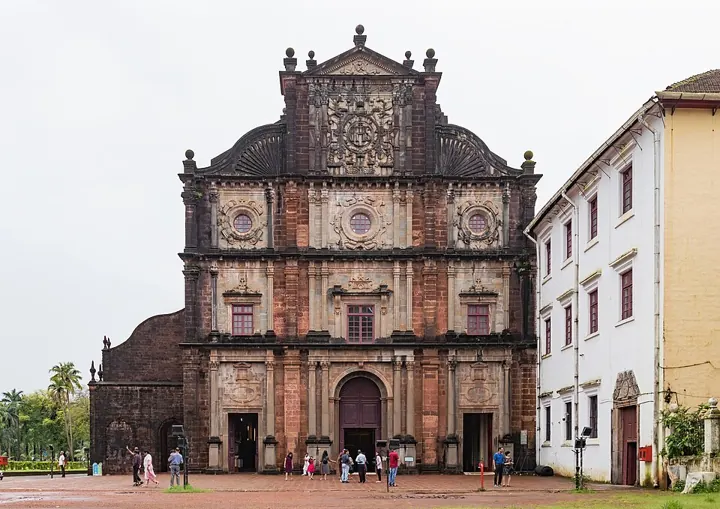
Prelims 2023 asked: ‘Who among the following rulers of medieval Gujarat surrendered Diu to Portuguese?’ Answer: Bahadur Shah. He gave Diu in 1535 for help against Humayun.
Who among the following rulers of medieval Gujarat surrendered Diu to Portuguese?
- Ahmad Shah
- Mahmud Begarha
- Bahadur Shah
- Muhammad Shah
Show answer
Answer: (c) · UPSC official key
Prelims 2025 listed papaya, pineapple and guava and asked how many ‘were introduced in India by the Portuguese in the sixteenth and seventeenth centuries’. All three. Tobacco, potato, chilli, cashew and maize came the same way.
Consider the following fruits : I. Papaya II. Pineapple III. Guava How many of the above were introduced in India by the Portuguese in the sixteenth and seventeenth centuries?
- Only one
- Only two
- All the three
- None
Show answer
Answer: (c) · UPSC official key
What UPSC asks: Prelims: Diu (2023), fruits (2025), Albuquerque. Mains: why the Portuguese declined. Next likely angle: the cartaz system.
Mains box: analysis and answer points
- Why they came: costly spices through Arab and Venetian middlemen, the fall of Constantinople (1453), and new ships and compasses.
- Why the Portuguese declined: religious intolerance, corruption, a small home country, and stronger Dutch and English rivals.
- Next likely angle: the Age of Discovery and the cartaz system.
Practice
Practice MCQs (8)
The Portuguese settlement at Hooghly in Bengal was captured by the Mughals in 1632, and the Portuguese were driven out, during the reign of
Answer (b) & explanation
The Portuguese had built up Hooghly (Hugli) as their main base in Bengal in the late 16th century. Complaints of slave-raiding, piracy in the delta and the evasion of customs led the Mughal governor Qasim Khan to besiege and take the town in 1632, in the reign of Shah Jahan. Many Portuguese were taken prisoner to Agra. The episode marks the end of Portuguese power in Bengal.
When Vasco da Gama reached the Malabar coast near Calicut in May 1498, the ruler of Calicut who received him was known by the title
Answer (a) & explanation
Vasco da Gama's fleet anchored at Kappad near Calicut in May 1498, after a pilot engaged at Malindi on the East African coast guided it across the Arabian Sea. Calicut's Hindu ruler bore the title Zamorin (Samoothiri). He allowed limited trade, but the Arab merchants who dominated the pepper trade resented the newcomers, and relations soon turned hostile. The Kolathiri ruled the Kannur region to the north and became a Portuguese ally.
With reference to Afonso de Albuquerque, the Portuguese governor in India, consider the following statements:
1. He encouraged Portuguese men to marry local women and settle in the territories under Portuguese control.
2. He prohibited the practice of sati in the territory under his control.
3. Goa became the official headquarters of the Estado da India during his governorship.
Which of the statements given above is/are correct?
Answer (b) & explanation
Albuquerque (governor 1509-15) captured Goa in 1510 and tried to build a settled Portuguese population there: he encouraged soldiers to marry local women (the casados) and he prohibited sati in Goa. He also extended Portuguese power to Malacca (1511) and Hormuz (1515). But the capital of the Estado da India moved from Cochin to Goa only in 1530, under Nino da Cunha, fifteen years after Albuquerque's death.
The 'Blue Water Policy', which sought Portuguese supremacy in the Indian Ocean through naval power rather than through territorial conquest on land, is associated with
Answer (c) & explanation
Francisco de Almeida, sent in 1505 as the first Portuguese viceroy, held that Portugal should control the sea lanes and not spend its small manpower on land forts and territory. This is called the Blue Water Policy (cartaz-backed naval control). His defeat of the combined Gujarati-Egyptian fleet off Diu in 1509 was its high point. His successor Albuquerque reversed the emphasis and seized key bases on land, such as Goa (1510).
With reference to the cartaz system in the Indian Ocean in the 16th century, consider the following statements:
1. A cartaz was a pass issued by the Portuguese authorities to Asian merchant vessels.
2. A vessel found sailing without a cartaz was liable to be seized.
3. After the Mughal conquest of Gujarat, the Mughal state too obtained Portuguese passes for its ships carrying pilgrims to the Red Sea.
4. The system applied only to ships carrying spices; ships carrying textiles or pilgrims were exempt.
How many of the statements given above are correct?
Answer (c) & explanation
Claiming lordship of the sea, the Portuguese required Asian ships in the waters they patrolled to carry a cartaz, a pass that named the ship, its captain and its cargo, and which bound it to call at Portuguese-held ports and pay duties there. Ships without one could be seized and their cargo confiscated. Even the Mughal state accepted the system: after the conquest of Gujarat (1572-73), Akbar's government obtained passes for pilgrim ships to the Red Sea. The system was general, and pilgrim and textile ships were ==not exempt==. So statements 1, 2 and 3 are correct.
Consider the following statements regarding the decline of Portuguese power in India:
1. From 1580 to 1640 the crown of Portugal was held by the kings of Spain, which drew Portugal into Spain's conflicts with the Dutch and the English.
2. The arrival of the Dutch and the English, with stronger navies and better-funded companies, broke the Portuguese hold on Asian sea routes.
3. Religious intolerance, including the Inquisition set up at Goa in 1560, alienated many people in and around their territories.
Which of the statements given above are correct?
Answer (d) & explanation
Textbooks list several causes of Portuguese decline. The Iberian Union (1580- 1640) made Portugal's overseas posts targets for Spain's enemies, above all the Dutch, who took Malacca (1641), Ceylon's ports and Cochin (1663). The northern European companies had more capital and stronger fleets. At home in Asia, forced conversions and the Goa Inquisition (1560) created hostility. Other factors include a small population, corruption and the lure of Brazil. All three statements are correct.
Consider the following:
1. The Kunjali Marakkars
2. Rani Abbakka of Ullal
3. Marthanda Varma of Travancore
4. Chimaji Appa
How many of the above are known for armed resistance against the Portuguese?
Answer (b) & explanation
The Kunjali Marakkars were the hereditary naval commanders of the Zamorin of Calicut and fought the Portuguese at sea through the 16th century. Rani Abbakka of Ullal, near Mangalore, resisted Portuguese attempts to control her port in the mid-16th century. The Maratha general Chimaji Appa, brother of Peshwa Baji Rao I, took Bassein from the Portuguese in 1739. Marthanda Varma of Travancore is famous for defeating the ==Dutch==, not the Portuguese, at Colachel in 1741. So three are correct.
Consider the following events in the history of the Portuguese in India:
1. Capture of Goa
2. Portuguese naval victory over the Gujarat-Egyptian fleet off Diu
3. Treaty of Bassein with Sultan Bahadur Shah of Gujarat
4. Transfer of the capital of the Estado da India from Cochin to Goa
Which one of the following is the correct chronological order of the above events?
Answer (d) & explanation
The naval battle off Diu came first (February 1509, under Almeida). Goa was taken by Albuquerque in 1510 (finally in November). The capital of the Estado moved from Cochin to Goa in 1530 under Nino da Cunha. The Treaty of Bassein, by which Bahadur Shah ceded Bassein and its dependencies, was signed in December 1534. So the order is 2-1-4-3.
0 / 0 correct
Write an answer
In 150 words, explain the significance of Advent of Europeans with one recent example.
Flashcards (7)
Vasco da Gama reached Calicut?
1498.
Was it under Deva Raya II?
No; he died around 1446 (Prelims 2021).
Blue Water policy?
Francisco de Almeida.
Goa captured from whom?
Bijapur, by Albuquerque, 1510.
Who gave Diu to the Portuguese?
Bahadur Shah of Gujarat (Prelims 2023).
Cartaz?
Portuguese pass required for Asian ships.
Fruits brought by the Portuguese?
Papaya, pineapple, guava and more (Prelims 2025).
In the news
 Next topic · 1.2 →Advent of Europeans: Dutch, Danes and English
Syllabus: GS-I · Modern Indian history from about the middle of the eighteenth century until the…