
Chapter 9 · Topic 9.2 · Prelims + Mains2 of 3
Social & Religious Reform Movements: Arya Samaj to Muslim reform
Key points
- Arya Samaj and Ramakrishna Mission.
- Theosophy and Besant (Prelims 2013).
- Muslim and Parsi reform.
Prelims box: facts and traps
| Arya Samaj | Detail |
|---|---|
| Book | Satyarth Prakash (1875) |
| Beliefs | The Vedas are infallible; one God; against idols, rituals and priests |
| Social | Against caste by birth and child marriage; for widow remarriage and women's education |
| Shuddhi | Reconversion of those who had left Hinduism |
| After his death | Split between the DAV schools (Lahore, 1886; Lala Hansraj) and Gurukul Kangri (Haridwar, 1902; Swami Shraddhanand). |
- Swami Dayanand Saraswati (1824–1883), born Mool Shankar at Tankara in Gujarat, gave the call 'Back to the Vedas'.
- His disciple Narendranath Datta became Swami Vivekananda (1863–1902).
- The Tattvabodhini Sabha was founded in 1839, the Prarthana Samaj in 1867, Phule's Satyashodhak Samaj in 1873 and the Ramakrishna Mission in 1897.
- Trap (UPSC Prelims 2013): “the founder of the Theosophical Society” is incorrect.
- Trap (UPSC Prelims 2012): “It popularized the doctrine that the Vedas are infallible” is incorrect.
On this page (3 sections)
Arya Samaj and the Ramakrishna Mission
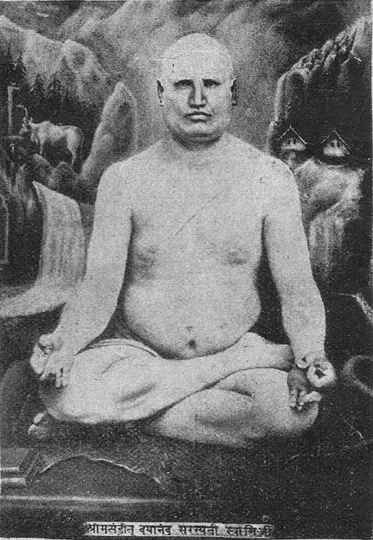
Swami Dayanand Saraswati (1824–1883), born Mool Shankar at Tankara in Gujarat, gave the call ‘Back to the Vedas’. He founded the Arya Samaj in Bombay in 1875. It grew strongest in Punjab, where it was centred at Lahore.
| Arya Samaj | Detail |
|---|---|
| Book | Satyarth Prakash (1875) |
| Beliefs | The Vedas are infallible; one God; against idols, rituals and priests |
| Social | Against caste by birth and child marriage; for widow remarriage and women’s education |
| Shuddhi | Reconversion of those who had left Hinduism |
| After his death | Split between the DAV schools (Lahore, 1886; Lala Hansraj) and Gurukul Kangri (Haridwar, 1902; Swami Shraddhanand) |
Remember the contrast from the Brahmo PYQ: ‘the Vedas are infallible Prelims 2012 ‘ was an Arya Samaj belief, not a Brahmo one.
Which of the following statements is/are correct regarding Brahmo Samaj? 1. It opposed idolatry. 2. It denied the need for a priestly class for interpreting the religious texts. 3. It popularized the doctrine that the Vedas are infallible. Select the correct answer using the codes given below :
- 1 only
- 1 and 2 only
- 3 only
- 1, 2 and 3
Show answer
Answer: (b) · UPSC official key
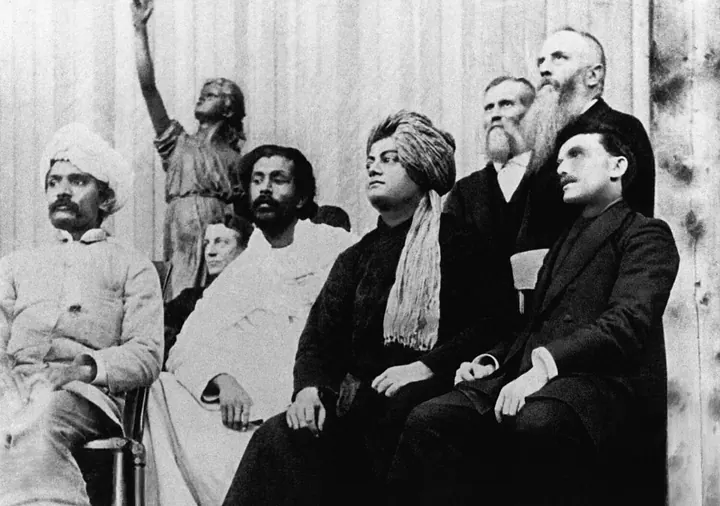
Ramakrishna Paramahamsa (1836–1886), a priest at Dakshineswar near Calcutta, taught that all religions lead to the same God. His disciple Narendranath Datta became Swami Vivekananda (1863–1902).
| Vivekananda | Detail |
|---|---|
| 1893 | Parliament of Religions, Chicago (from 11 September); made Vedanta known in the West |
| 1897 | Founded the Ramakrishna Mission; Belur Math became its headquarters |
| Ideas | Practical Vedanta: serving the poor is serving God; self-confidence and strength for India’s youth |
The Theosophical Society and Annie Besant
The Theosophical Society was founded in New York in 1875 by Madame H.P. Blavatsky, a Russian, and Colonel H.S. Olcott, an American. They admired Hindu and Buddhist philosophy. In 1882 they moved the headquarters to Adyar, near Madras.
Theosophy in Detail India
| Belief | Universal brotherhood; revival of ancient religions; study of Eastern philosophy |
|---|---|
| Annie Besant | Irish-born; joined 1889, came to India in 1893; later president of the Society |
| Education | Central Hindu College, Benaras (1898), later part of Banaras Hindu University (1916) |
| Politics | All-India Home Rule League (1916); newspapers New India and Commonweal |
| Congress | President of the Calcutta session (1917), the first woman to hold the post |
Prelims 2013 asked whether Annie Besant was ‘responsible for starting the Home Rule Movement ‘, the founder of the Theosophical Society, and once Congress president. The first and third are true. She did not found the Society; Blavatsky and Olcott did.
Annie Besant was 1. responsible for starting the Home Rule Movement 2. the founder of the Theosophical Society 3. once the President of the Indian National Congress Select the correct statement/statements using the codes given below.
- 1 only
- 2 and 3 only
- 1 and 3 only
- 1, 2 and 3
Show answer
Answer: (c) · UPSC official key
Why it mattered: Western scholars praising Indian thought gave educated Indians pride and self-confidence. The weakness was that it stayed limited to the educated few and drifted into the occult.
Muslim and Parsi reform movements
Muslim reform took two paths. Some movements wanted to purify Islam and resist British rule. Others wanted Muslims to take up Western education and work with the British.
| Movement | Detail |
|---|---|
| Wahabi (Waliullahi) movement | Inspired by Shah Waliullah; led by Syed Ahmad of Rae Bareli (died at Balakot, 1831); centre at Patna; fought the Sikhs, then the British; crushed in the 1860s |
| Faraizi movement (1818) | Haji Shariatullah and his son Dudu Miyan in east Bengal; religious reform and peasants against zamindars |
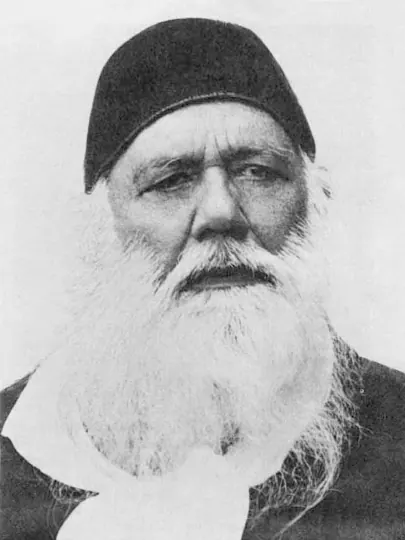
| Aligarh movement | Sir Syed Ahmad Khan (1817–1898); Scientific Society (1864); Muhammadan Anglo-Oriental College, Aligarh (1875), which became Aligarh Muslim University (1920); journal Tahzib-ul-Akhlaq |
| Deoband school (1866) | Founded by Muhammad Qasim Nanautavi and Rashid Ahmad Gangohi; orthodox, anti-British; welcomed the Congress |
| Ahmadiyya (1889) | Mirza Ghulam Ahmad at Qadian, Punjab; liberal, spread Western education |
Sir Syed urged Muslims to stay loyal to the British and to keep away from the Congress. Deoband did the opposite. This contrast is a favourite statement question.
| Parsi reform | Detail |
|---|---|
| Rahnumai Mazdayasnan Sabha (1851) | Founded in Bombay by Naoroji Furdonji, Dadabhai Naoroji, S.S. Bengalee and others |
| Rast Goftar | Their newspaper |
| Aims | Modern education for girls, reform of Parsi customs |
Mains box: analysis and answer points
- The weakness was that it stayed limited to the educated few and drifted into the occult.
- Remember the contrast from the Brahmo PYQ: 'the Vedas are infallible Prelims 2012 ' was an Arya Samaj belief, not a Brahmo one.
- Likely next angle: Chicago 1893; Mission 1897
Practice
Practice MCQs (8)
The 'shuddhi' movement associated with the Arya Samaj aimed at
Answer (d) & explanation
Shuddhi ('purification') was the Arya Samaj ceremony for receiving into Hinduism people who had converted to Islam or Christianity, and also for raising the ritual status of some low-caste groups. It gave the Samaj a sharp, assertive edge in Punjab and the United Provinces, and later fed communal tension in the 1920s alongside the tabligh and tanzim campaigns.
Which one of the following was NOT associated with the Arya Samaj?
Answer (d) & explanation
Lala Hansraj headed the DAV school at Lahore, Swami Shraddhananda led the Gurukul section, and Lala Lajpat Rai was an active Arya Samajist in Punjab who worked for the DAV institutions. Keshab Chandra Sen was a Brahmo leader in Bengal; he met Dayananda in Calcutta in 1872-73, but he never belonged to the Arya Samaj.
With reference to the Theosophical Society, consider the following statements:
1. It was founded in New York in 1875 by Madame H.P. Blavatsky and Colonel H.S. Olcott.
2. Its first headquarters in India was set up at Calcutta.
3. The Central Hindu College founded by Annie Besant at Benares in 1898 later became the nucleus of the Banaras Hindu University.
Which of the statements given above is/are correct?
Answer (b) & explanation
The Theosophical Society was founded in New York in 1875 by Blavatsky and Olcott. They came to India in 1879 and set up their first base at Bombay, then moved the headquarters to Adyar near Madras in 1882. Annie Besant, who joined in 1889 and came to India in 1893, founded the Central Hindu College at Benares in 1898; it became the nucleus of the Banaras Hindu University (1916).
Consider the following statements: Statement-I: Unlike many older monastic orders, the Ramakrishna Mission took up famine relief and ran schools and hospitals. Statement-II: Vivekananda taught that service of suffering human beings was itself a form of worship of God.
Which one of the following is correct in respect of the above statements?
Answer (a) & explanation
The Ramakrishna Mission combined monastic life with organised social service: relief during famines, epidemics and floods, and the running of schools, orphanages and hospitals. This programme came straight from Vivekananda's teaching that God is present in every human being, so service of the poor and suffering is worship. Statement-II therefore explains Statement-I.
With reference to the Ramakrishna Mission, consider the following statements:
1. It was founded by Swami Vivekananda in 1897.
2. Its rules and organisation were drawn up by Ramakrishna Paramahamsa before his death.
Which of the statements given above is/are correct?
Answer (a) & explanation
Ramakrishna Paramahamsa (1836-86), a priest at the Dakshineswar Kali temple near Calcutta, taught the truth of all religions and the path of devotion, but left no organisation. Eleven years after his death, Swami Vivekananda founded the Ramakrishna Mission in May 1897 to carry out social service and spread his master's message; the math at Belur became its headquarters.
Under which teacher at Mathura did Dayananda Saraswati study the Vedas and Sanskrit grammar before starting his public mission?
Answer (d) & explanation
Dayananda (born Mool Shankar at Tankara in Kathiawar, 1824) left home to become a wandering ascetic and in 1860 became the pupil of the blind grammarian Swami Virajananda at Mathura. Virajananda taught him to reject post-Vedic texts and to go back to the pure Vedic tradition, which shaped his later 'Back to the Vedas' programme.
Consider the following organisations:
1. Tattvabodhini Sabha
2. Ramakrishna Mission
3. Prarthana Samaj
4. Satyashodhak Samaj What is the correct chronological order of their founding?
Answer (c) & explanation
The Tattvabodhini Sabha was founded in 1839, the Prarthana Samaj in 1867, Phule's Satyashodhak Samaj in 1873 and the Ramakrishna Mission in 1897. The order is therefore 1-3-4-2.
With reference to the division in the Arya Samaj after Dayananda's death, consider the following statements:
1. The first Dayanand Anglo-Vedic (DAV) school was opened at Lahore in 1886, with Lala Hansraj as its head.
2. Swami Shraddhananda founded the Gurukul at Kangri near Haridwar in 1902.
3. The Gurukul section favoured English-medium Western education, while the DAV section insisted on a purely Vedic curriculum.
Which of the statements given above are correct?
Answer (a) & explanation
After 1883 the Samaj split over education. The 'college' party set up the DAV school at Lahore in 1886 under Lala Hansraj, combining English and Western learning with Vedic values. The 'Gurukul' party, led by Munshi Ram, later Swami Shraddhananda, wanted traditional Vedic education and set up the Gurukul at Kangri near Haridwar in 1902. Statement 3 reverses the two positions.
0 / 0 correct
Write an answer
In 150 words, explain the significance of Social & Religious Reform Movements with one recent example.
Flashcards (9)
Dayanand's main book?
Satyarth Prakash.
Who led Gurukul Kangri?
Swami Shraddhanand.
When was the Ramakrishna Mission
founded? 1897, by Vivekananda.
Founders of the Theosophical Society?
Blavatsky and Olcott, New York, 1875.
Theosophical headquarters in India?
Adyar, Madras (1882).
College founded by Annie Besant?
Central Hindu College, Benaras (1898).
Founder of the MAO College, Aligarh?
Sir Syed Ahmad Khan, 1875.
Founders of Deoband (1866)?
Muhammad Qasim Nanautavi and Rashid Ahmad Gangohi.
Parsi reform body of 1851?
Rahnumai Mazdayasnan Sabha.
Read more: related explainers
In the news
 Next topic · 9.3 →Social & Religious Reform Movements: Caste, women and education
Syllabus: GS-I · Modern Indian history from about the middle of the eighteenth century until the…