
Chapter 18 · Topic 18.2 · Prelims + Mains2 of 3
Important Personalities: Gandhi, Nehru, Patel, Bose, Bhagat Singh
Key points
- Gandhi: South Africa 1893–1914; Natal Indian Congress 1894; back in India January 1915; Hind Swaraj 1909.
- Nehru: Lahore 1929 Purna Swaraj; Objectives Resolution 1946; first PM; Discovery of India.
- Patel: Kheda 1918, Bardoli 1928 ('Sardar'); Karachi 1931; integrated the states.
- Bose: Haripura 1938, Tripuri 1939, Forward Bloc 1939, INA 1943. Bhagat Singh: hanged 23 March 1931.
Prelims box: facts and traps
- Days: Rashtriya Ekta Diwas 31 October (Patel); Vijay Diwas 16 December (1971); Janjatiya Gaurav Divas 15 November (Birsa Munda).
- Harijan Sevak Sangh: 1932.
- Trap: the Nehru Report was Motilal's, not Jawaharlal's.
- Trap (Prelims 2026): the option that the Communists did not support Bose is not part of the key.
On this page (3 sections)
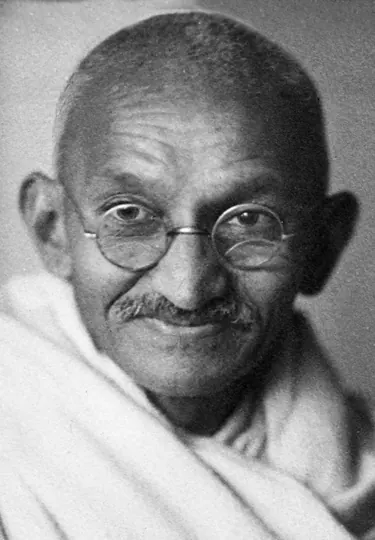
Mahatma Gandhi
Gandhi (1869–1948) developed satyagraha, peaceful refusal to obey unjust laws, in South Africa (1893–1914), with the Natal Indian Congress (1894), Indian Opinion and the Phoenix and Tolstoy farms. He returned to India in January 1915.
| Phase | Key facts |
|---|---|
| Early satyagrahas | Champaran (1917), Ahmedabad mill strike and Kheda (1918) |
| Mass movements | Non-Cooperation (1920–22), Civil Disobedience (1930–34), Quit India (1942) |
| Writings | Hind Swaraj (1909); My Experiments with Truth; Young India and Harijan |
| Social work | Harijan Sevak Sangh (1932), constructive programme, khadi, basic education |
What UPSC asks: Prelims: the South Africa years and writings. Mains: the three mass movements.
Nehru and Patel
| Leader | Key facts |
|---|---|
| Jawaharlal Nehru | Lahore Congress President (1929), Purna Swaraj; Objectives Resolution (1946); first Prime Minister; Discovery of India, Glimpses of World History; non-alignment and planning |
| Vallabhbhai Patel | Kheda (1918) and Bardoli (1928), where he was called ‘Sardar’; Karachi Congress President (1931); Home Minister; integrated the princely states |
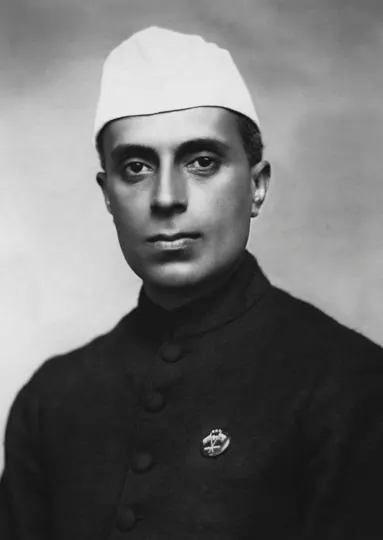
The Nehru Report (1928) was drafted by a committee chaired by Motilal Nehru, Jawaharlal’s father; do not mix them up.
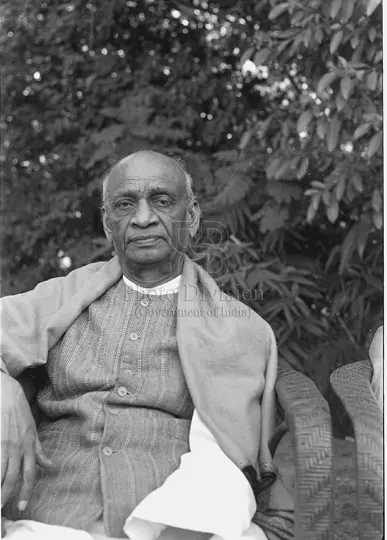
What UPSC asks: Prelims: Lahore 1929 and Bardoli’s ‘Sardar’. Next likely angle: Motilal vs Jawaharlal.
Subhas Chandra Bose and Bhagat Singh
| Leader | Key facts |
|---|---|
| Subhas Chandra Bose | Left the ICS (1921); Congress President at Haripura (1938) and Tripuri (1939); resigned and formed the Forward Bloc (1939); Azad Hind government and the INA (1943); ‘Dilli Chalo’ |
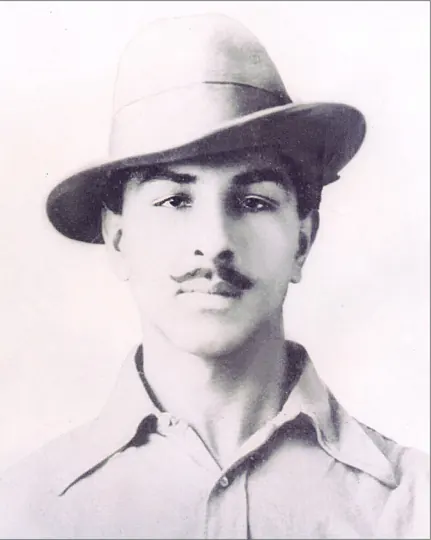
| Bhagat Singh | Naujawan Bharat Sabha (1926); HSRA (1928); Saunders killing (1928); Assembly bombs with B.K. Dutt (April 1929); executed with Rajguru and Sukhdev, 23 March 1931 |
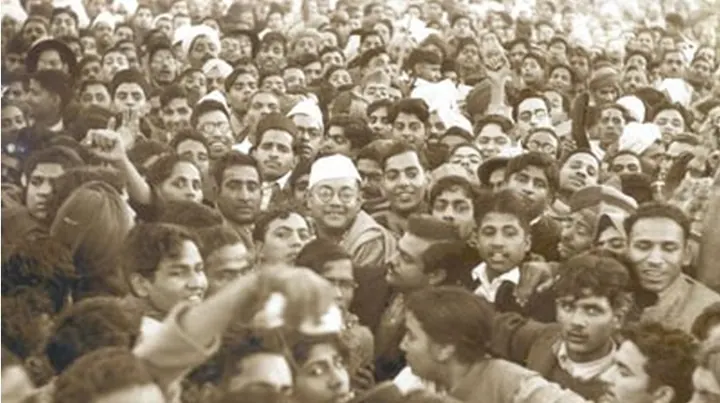
Prelims 2026 asked which reasons led Bose to form the Forward Bloc. Answer (b), statements 1, 2 and 4: Bose could not win Mahatma Gandhi’s trust, the Congress Left was divided and did not back him, and socialist leaders such as Jayaprakash Narayan put Congress unity before backing him.
Which of the following factors contributed to the formation of the Forward Bloc by Subhas Chandra Bose in 1939 ? 1. Bose failed to win the confidence of Mahatma Gandhi. 2. The Congress Left was disunited and failed to support Bose. 3. The Communists did not support Bose in his endeavours. 4. The supporters of M.N. Roy and socialist leaders like Jayaprakash Narayan preferred Congress unity to supporting Bose. Select the answer using the code given below :
- 1, 2 and 3
- 1, 2 and 4
- 1, 3 and 4
- 2 and 4 only
Show answer
Answer: (b) · UPSC provisional key (final key awaited)
Mains 2016 asked candidates to ‘Highlight the difference in the approach of Subhash Chandra Bose and Mahatma Gandhi in the struggle for freedom’. Gandhi relied on non-violence and mass satyagraha; Bose favoured armed struggle and foreign help in wartime. Both wanted complete independence and a secular, united India, like two doctors with different medicines for the same patient.
Highlight the difference in the approach of Subhash Chandra Bose and Mahatma Gandhi in the struggle for freedom.
What UPSC asks: Prelims: Forward Bloc (2026). Mains: Bose vs Gandhi (2016). Next likely angle: the HSRA.
Mains box: analysis and answer points
- Mains 2016 (GS I, 12.5 marks): non-violence and mass satyagraha vs armed struggle with foreign help; shared goal.
- Nehru and Patel: vision and planning vs integration and administration.
- Next likely angle: Gandhi's writings.
Practice
Practice MCQs (8)
Consider the following statements about the Provisional Government of Azad Hind:
1. It was proclaimed by Subhas Chandra Bose at Singapore on 21 October 1943.
2. It declared war on Britain and the United States.
3. Japan handed over the Andaman and Nicobar Islands to it, and Bose renamed them Shaheed and Swaraj Islands.
How many of the statements given above are correct?
Answer (c) & explanation
All three are correct. On 21 October 1943 Bose proclaimed the Provisional Government of Azad Hind at Singapore, with himself as head of state, prime minister and minister of war. It soon declared war on Britain and the United States and was recognised by Japan and its allies. Japan nominally handed over the Andaman and Nicobar Islands; Bose visited Port Blair at the end of December 1943, hoisted the national flag and renamed the islands Shaheed and Swaraj.
In January 2021 the Government of India decided that 23 January, the birth anniversary of Subhas Chandra Bose, would be observed every year as
Answer (d) & explanation
To mark the 125th birth anniversary of Netaji (born 23 January 1897 at Cuttack), the Ministry of Culture notified in January 2021 that 23 January would be celebrated every year as Parakram Diwas (Day of Valour), to inspire the people, especially the youth, with his fortitude. Rashtriya Ekta Diwas (31 October) honours Sardar Patel, Vijay Diwas (16 December) marks the 1971 victory, and Janjatiya Gaurav Divas (15 November) honours Birsa Munda.
On the night of 16-17 January 1941 Subhas Chandra Bose slipped out of his house in Calcutta, where he was under police watch, and began his journey to Kabul and then Europe. In what disguise did he leave Calcutta?
Answer (a) & explanation
Released from jail but kept under watch at his Elgin Road house, Bose grew a beard and left at night dressed as Muhammad Ziauddin, an inspector of an insurance company; his nephew Sisir Kumar Bose drove him to Gomoh, where he took a train to Peshawar. From Peshawar he went to Kabul with Bhagat Ram Talwar, who posed as Rahmat Khan while Bose played his deaf-mute relative. In Kabul the Italian legation gave him a passport in the name of Orlando Mazzotta, on which he travelled through Moscow to Berlin.
With reference to Subhas Chandra Bose's activities in Germany during 1941-43, consider the following statements:
1. He set up a Free India Centre in Berlin and broadcast to India over Azad Hind Radio.
2. An Indian Legion was raised from Indian prisoners of war captured by the Axis forces in North Africa.
3. Germany formally recognised a provisional government of free India that he set up in Berlin in 1942.
Which of the statements given above is/are correct?
Answer (a) & explanation
In Berlin Bose set up the Free India Centre and began broadcasts over Azad Hind Radio. With German help an Indian Legion was recruited from Indian soldiers taken prisoner in North Africa; it used the springing-tiger emblem and the greeting 'Jai Hind'. Hitler gave no firm commitment on India, and no government in exile was set up in Germany; Bose proclaimed the Provisional Government of Azad Hind only in Singapore, on 21 October 1943, after reaching East Asia by submarine.
Consider the following statements about the INA trials of 1945-46:
1. The Congress set up an INA Defence Committee whose counsel included Bhulabhai Desai, Tej Bahadur Sapru and Jawaharlal Nehru.
2. The first trial was held at the Red Fort in Delhi in November 1945.
3. Besides the Congress, bodies such as the Muslim League and the Communist Party also supported the demand for the release of the INA prisoners.
4. The court martial acquitted the three officers in the first trial and set them free.
How many of the statements given above are correct?
Answer (c) & explanation
Statements 1, 2 and 3 are correct. The Congress formed an INA Defence Committee, and Bhulabhai Desai led the defence with Tej Bahadur Sapru, Asaf Ali, K.N. Katju and Nehru, who put on a barrister's gown again after many years. The first trial opened at the Red Fort in November 1945. Bipan Chandra notes that the Muslim League, the Communist Party, the Akali Dal, the Hindu Mahasabha and others also backed the INA cause. The court martial found the three officers guilty and sentenced them to transportation for life, but the Commander-in-Chief, Auchinleck, remitted the sentences in January 1946 under public pressure.
During the Imphal campaign of 1944, Colonel Shaukat Ali Malik of the INA's Bahadur Group hoisted the INA flag on 14 April 1944 at a place in Manipur that is now the site of an INA memorial. The place is
Answer (d) & explanation
In March-April 1944 the Japanese and INA units advanced into Manipur in the Imphal-Kohima campaign. On 14 April 1944 Colonel Shaukat Ali Malik, commanding the Bahadur (intelligence) Group, hoisted the tricolour at Moirang, south of Imphal; this is remembered as the first hoisting of the INA flag on the Indian mainland. The siege of Imphal failed, and the INA retreated with the Japanese into Burma.
With reference to the first Indian National Army (1942), consider the following statements:
1. It was founded by Subhas Chandra Bose soon after he reached Singapore in 1942.
2. The idea of raising it from Indian prisoners of war was taken up by Captain Mohan Singh with the help of the Japanese after the British defeat in Malaya.
3. The Indian Independence League, headed by Rash Behari Bose, met at a conference in Bangkok in June 1942.
Which of the statements given above is/are correct?
Answer (c) & explanation
During the Japanese advance in Malaya, Mohan Singh, an officer of the British Indian Army, agreed with the Japanese officer Major Fujiwara to raise an Indian force; after the fall of Singapore in February 1942 thousands of Indian prisoners of war were handed over to him. The Indian Independence League under Rash Behari Bose met at Bangkok in June 1942 and placed the army under its authority. The first INA collapsed in December 1942 when Mohan Singh fell out with the Japanese and was arrested. Subhas Bose reached Singapore only in July 1943 and revived it.
With reference to Subhas Chandra Bose and the Forward Bloc, consider the following statements:
1. After resigning the Congress presidency in 1939, Bose formed the Forward Bloc as a group within the Congress to rally its left-wing elements.
2. In August 1939 the Congress Working Committee removed Bose from the presidentship of the Bengal Provincial Congress Committee and barred him from holding any elective Congress office for three years.
3. The Forward Bloc was founded in Berlin in 1942 as the political wing of the Indian Legion.
Which of the statements given above is/are correct?
Answer (b) & explanation
After the Tripuri crisis Bose resigned as Congress President in April 1939 and soon announced the Forward Bloc, meant at first to work inside the Congress and bring the left together. On 9 July 1939 he called for protests against two resolutions of the AICC. For this breach of discipline the Working Committee, in August 1939, removed him from the presidentship of the Bengal PCC and debarred him from elective office for three years. The Bloc was an Indian party, formed in 1939; the Indian Legion was raised in Germany only in 1942.
0 / 0 correct
Write an answer
In 150 words, explain the significance of Important Personalities with one recent example.
Flashcards (8)
When did Gandhi write Hind Swaraj?
1909.
When did Gandhi return to India?
January 1915.
Who presided over the Lahore Congress,
1929? Jawaharlal Nehru.
Where did Patel earn the title 'Sardar'?
Bardoli, 1928.
Who chaired the Nehru Report committee?
Motilal Nehru.
When did Bose form the Forward Bloc?
1939.
Which sessions did Bose preside over?
Haripura 1938, Tripuri 1939.
When was Bhagat Singh executed?
23 March 1931.
Read more: related explainers
In the news
 Next topic · 18.3 →Important Personalities: Ambedkar and Maulana Azad
Syllabus: GS-I · The Freedom Struggle — its various stages and important contributors/contributio…