
UPSC Mains 2024 GS1 Q18: model answer
Despite comprehensive policies for equity and social justice, underprivileged sections are not yet getting the full benefits of affirmative action envisaged by the Constitution. Comment.
What the question wants
Acknowledge achievements, explain gaps in reaching the most deprived, suggest reforms.
How to structure it
Intro: constitutional provisions. Body: (1) Achievements; (2) Gaps (concentration of benefits, unfilled posts, shrinking public jobs); (3) Way forward. Conclusion: Affirmative action has opened doors.
- 1(1) Achievements
- 2(2) Gaps (concentration of benefits, unfilled posts, shrinking public jobs)
- 3(3)
Model answer
The Constitution provides for affirmative action through Articles 15(4), 16(4), 46, 330 and 332, along with reservation in education, jobs and legislatures for SCs, STs and OBCs, and since 2019 for EWS.
Achievements
- A visible Dalit and tribal middle class; representation in legislatures and services.
- Literacy gaps between SCs/STs and others have narrowed.
- Political empowerment: reserved panchayat seats brought many women and Dalits into leadership.
Gaps
- Concentration of benefits: a few dominant sub-castes corner most benefits. In August 2024, the Supreme Court (State of Punjab v. Davinder Singh) allowed States to sub-classify SCs for this reason.
- Unfilled posts: backlog vacancies in reserved categories, especially at higher levels.
- Shrinking public jobs: privatisation and contract work reduce the space for reservation.
- Quality: poor schooling means many cannot compete even for reserved seats.
- Social discrimination: manual scavenging persists; atrocities under the SC/ST Act still reported.
- Awareness: scholarships and schemes often do not reach remote tribal areas.
Way forward
- Sub-classification based on data, periodic review of lists.
- Fill backlog posts; enforce reservation in contractual jobs.
- Invest in quality schools (Eklavya Model Residential Schools), coaching and scholarships.
- Encourage diversity in the private sector.
- Strict enforcement of anti-discrimination laws.
Affirmative action has opened doors; the task now is to carry the benefits to the last and the least, as Ambedkar intended.
Keywords, cases and data to drop in
Art. 15(4) and 16(4) creamy layer sub-classification 2024 backlog vacancies EMRS
Where most answers lose marks
- Arguing against reservation as such.
- Ignoring achievements.
Fresh examples from current affairs
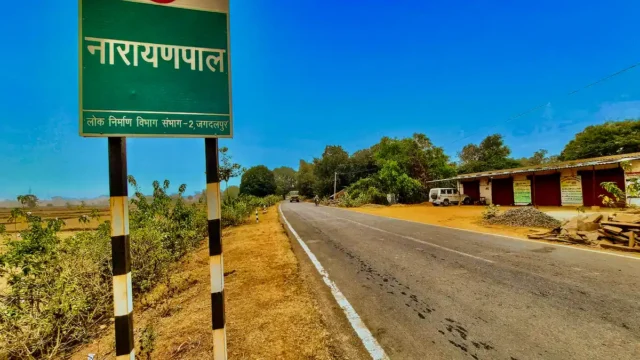
Forest Rights Act: second regional review conference for eight eastern and central States
On 9 October 2026 the Tribal Affairs Ministry held the second regional review of the Forest Rights Act, 2006 in Kolkata with eight States. Nationally, over 54 lakh claims have been filed, about 25 lakh titles given, about 11 lakh are pending and over 18 lakh rejected. The focus is quick disposal, record updating, CFR rights and PVTG habitat rights.
UPSC angle: Prelims: FRA provisions, PVTG habitat rights. · Mains GS-II: welfare of STs; GS-III: forest governance.
10 Oct 2026
₹1,423 crore over three years for implementing PCR and SC/ST Atrocities Acts; 217 exclusive special courts
The Centre released ₹1,423.30 crore to States and UTs over 2022-23 to 2024-25 to implement the Protection of Civil Rights Act, 1955 and the SC/ST (Prevention of Atrocities) Act, 1989. States report 217 Exclusive Special Courts in 15 States and UTs. Yet 65,646 cases were registered in 2024 and 3,92,006 were pending trial at year end.
UPSC angle: Prelims: PCR Act year; Art. 17. · Mains: Why do atrocity cases see low conviction?
1 Oct 2026
PM-AJAY backgrounder: one merged scheme for Scheduled Caste development
Pradhan Mantri Anusuchit Jaati Abhyuday Yojana (PM-AJAY) is a 100 per cent centrally sponsored scheme of the Social Justice Ministry, launched in 2021-22. It merges three older schemes and works through Adarsh Gram, grants-in-aid and hostels. By 8 September 2026, 18,093 villages had been declared Adarsh Grams.
UPSC angle: Prelims: funding pattern; merged schemes.
28 Sep 2026
PM-AJAY: 16,022 villages declared Adarsh Gram; ₹11,186 crore released in 12 years
The Social Justice Ministry said on 19 September 2026 that over ₹11,186 crore has been released under the three components of PM-AJAY since 2014-15. Under the Adarsh Gram component, 16,022 of 48,811 selected Scheduled Caste-majority villages have been declared Adarsh Gram. Grants have helped 34.61 lakh people, and 244 hostels have been funded.
UPSC angle: Prelims: components of PM-AJAY.
19 Sep 2026Learn the concept
Question text as printed in the official UPSC question paper: https://www.upsc.gov.in/sites/default/files/QP_CSM_2024_GenStud_I_03102024.pdf The model answer is original Battle IAS work; use it to learn structure, not to memorise.