
Women Empowerment in India: Meaning, Constitutional Provisions, Laws, Schemes, Key Data, Women’s Reservation Act and Challenges (UPSC Notes + PYQs)
UPSC has already asked about this. Read the story with these questions in mind.
- Prelims 2024Consider the following statements regarding 'Nari Shakti Vandan Adhiniyam': Provisions will come into effect from the 18th Lok Sabha. …Solve it below ↓
- Mains 2023 · GS3Distinguish between ‘care economy’ and ‘monetized economy’. How can care economy be brought into monetized economy through women empowerment?See model answer →
Equality, equity and empowerment
Gender equality is equal rights and opportunities; gender equity is fairness in treatment, which may need extra support (such as maternity leave or reserved seats) to reach equal outcomes; empowerment is the process by which women gain the power to choose. Naila Kabeer defines it through three linked elements: resources, agency and achievements. Mains 2024 asked exactly this distinction.
- EconomicWork, income, assets
- SocialEducation, health, mobility
- PoliticalRepresentation, voice
- LegalRights and remedies
- DigitalAccess to phones and the internet
- PsychologicalConfidence and choice
Constitutional provisions
- Article 14 (equality before law), 15(1) (no discrimination on sex), 15(3) (special provisions for women and children), 16 (equal opportunity in public jobs).
- Article 39(a) and (d): equal right to livelihood and equal pay for equal work; Article 42: maternity relief.
- Article 51A(e): renounce practices derogatory to the dignity of women.
- Articles 243D and 243T: one-third reservation in panchayats and municipalities.
- Articles 330A and 332A (added in 2023): one-third of Lok Sabha and Assembly seats.
Key laws
- Dowry Prohibition Act, 1961; Medical Termination of Pregnancy Act, 1971 (2021 amendment: up to 24 weeks for certain categories).
- Protection of Women from Domestic Violence Act, 2005.
- Sexual Harassment of Women at Workplace Act, 2013 (POSH), building on Vishaka (1997).
- Criminal Law (Amendment) Act, 2013 after the Justice Verma Committee.
- Maternity Benefit (Amendment) Act, 2017: paid leave raised from 12 to 26 weeks; creche for establishments with 50 or more employees.
- Hindu Succession (Amendment) Act, 2005: daughters as coparceners.
- Constitution (106th Amendment) Act, 2023 (Nari Shakti Vandan Adhiniyam).
Key data
| Indicator | Value | Source |
|---|---|---|
| Female LFPR (15+, usual status) | 23.3% (2017-18) to 41.7% (2023-24) | PLFS |
| Sex ratio at birth | 929 girls per 1,000 boys | NFHS-5 (2019-21) |
| Women with a bank account they use | 78.6% | NFHS-5 |
| Anaemia among women 15-49 | 57% | NFHS-5 |
| Maternal mortality ratio | 97 per lakh live births | SRS 2018-20 |
| Women in the 18th Lok Sabha | 74 of 543 (about 14%) | ECI, 2024 |
Major schemes
- Beti Bachao Beti Padhao (2015, launched at Panipat) for child sex ratio and girls’ education.
- Mission Shakti (2022): Sambal (safety: One Stop Centres, Women Helpline 181, Nari Adalats) and Samarthya (empowerment: PM Matru Vandana Yojana, creches, hostels).
- PM Ujjwala Yojana (2016): LPG connections in women’s names.
- Stand-Up India (2016) and MUDRA loans, most of which go to women.
- DAY-NRLM self-help groups and Lakhpati Didi.
- Sukanya Samriddhi Yojana (2015) for girls’ savings.
The women’s reservation Act
The 106th Amendment reserves one-third of seats in the Lok Sabha, State Assemblies and the Delhi Assembly for women, including within SC and ST reserved seats. It will take effect after the first census after the Act and the delimitation based on it, and last 15 years (extendable by Parliament). Rotation of seats follows each delimitation. It does not cover the Rajya Sabha or Legislative Councils, and there is no separate OBC quota. Earlier bills had lapsed in 1996, 1998, 1999 and 2008 (the 2008 bill passed the Rajya Sabha in 2010).
- 1106th Amendment passed (September 2023)
- 2First Census after the Act
- 3Delimitation based on that Census
- 4Reserved seats identified and rotated
- 5One-third reservation for 15 years
Challenges
Unpaid care work (women spend far more time on it than men, per the Time Use Survey 2019), the “missing women” problem, violence (crimes against women recorded by NCRB rise each year, partly because of better reporting), wage gaps, low share in formal jobs and leadership, digital divides, and social norms that limit mobility. Much of the recent rise in female LFPR is in self-employment and unpaid family work in rural areas, so quality of work matters as much as numbers.
Way forward
Count and share care work (creches, elder care, paid leave for both parents), safe transport and workplaces, skilling linked to jobs, property in women’s names, gender budgeting in every ministry (India has had a Gender Budget Statement since 2005-06), and support for elected women representatives so that reservation leads to real power.
PYQ trend
Mains asks women’s issues almost every year: equality vs equity (2024), women’s social capital (2025), constitutional gender justice (2023), civil society and women in legislatures (2023), care economy (2023), evolution of women’s rights (2026). Prelims asked the Nari Shakti Vandan Adhiniyam (2024), Gender Gap Index (2017) and the Maternity Benefit Act (2019).
Women Empowerment: UPSC angle
For UPSC CSE
Mains GS-I: role of women, women’s organisations, social empowerment. GS-II: schemes, laws, vulnerable sections. GS-III: inclusive growth and care economy.
Women Empowerment UPSC PYQs (Prelims)
Questions UPSC has actually asked, from the official papers. Pick an option to check yourself.
Consider the following statements regarding 'Nari Shakti Vandan Adhiniyam' :
– 1. Provisions will come into effect from the 18th Lok Sabha.
– 2. This will be in force for 15 years after becoming an Act.
– 3. There are provisions for the reservation of seats for Scheduled Castes Women within the quota reserved for the Scheduled Castes.
Which of the statements given above are correct ?
The 106th Amendment (2023) reserves one-third of seats for women in the Lok Sabha, State Assemblies and the Delhi Assembly. It starts only after delimitation based on the first Census after the Act, not from the 18th Lok Sabha. It runs for 15 years, which Parliament can extend. One-third of SC and ST seats go to women from those groups. Answer as per the official UPSC key · Battle IAS PYQ bankAnswer (c) & why
Which of the following gives ‘Global Gender Gap Index’ ranking to the countries of the world ?
The World Economic Forum has published the Global Gender Gap Report every year since 2006. It ranks countries on four areas: economic participation, education, health and survival, and political empowerment. UNDP publishes the separate Gender Inequality Index. Answer as per the official UPSC key · Battle IAS PYQ bankAnswer (a) & why
Which of the following statements is/are correct regarding the Maternity Benefit (Amendment) Act, 2017?
– 1. Pregnant women are entitled for three months pre-delivery and three months post-delivery paid leave.
– 2. Enterprises with crèches must allow the mother minimum six crèche visits daily.
– 3. Women with two children get reduced entitlements.
Select the correct answer using the code given below.
The 2017 amendment raised paid leave to 26 weeks, of which up to 8 weeks can be taken before delivery, not three months. Establishments with 50 or more employees must run a crèche and allow four visits a day. From the third child, a woman (already having two children) gets only 12 weeks. Answer as per the official UPSC key · Battle IAS PYQ bankAnswer (c) & why
Mains PYQs on this topic
Questions from the official UPSC Mains papers (2023-2026 in the Battle IAS Mains bank), newest first. Each links to a model answer.
- UPSC Mains 2026 · GS Paper II · Q2 · 10 marks
“Women as a class neither belong to a minority group nor are they regarded as forming a backward class.” In the light of this statement, discuss the evolution of women's reservation from local bodies to Parliament.
- UPSC Mains 2025 · GS Paper II · Q6 · 10 marks
Women’s social capital complements in advancing empowerment and gender equity. Explain.
- UPSC Mains 2024 · GS Paper I · Q8 · 10 marks
Distinguish between gender equality, gender equity and women’s empowerment. Why is it important to take gender concerns into account in programme design and implementation?
- UPSC Mains 2024 · GS Paper I · Q19 · 15 marks
Globalization has increased urban migration by skilled, young, unmarried women from various classes. How has this trend impacted upon their personal freedom and relationship with family?
- UPSC Mains 2023 · GS Paper I · Q9 · 10 marks
Explain why suicide among young women is increasing in Indian society.
- UPSC Mains 2023 · GS Paper II · Q12 · 15 marks
Explain the constitutional perspectives of Gender Justice with the help of relevant Constitutional Provisions and case laws.
- UPSC Mains 2023 · GS Paper II · Q14 · 15 marks
Discuss the contribution of civil society groups for women’s effective and meaningful participation and representation in state legislatures in India.
- UPSC Mains 2023 · GS Paper III · Q12 · 15 marks
Distinguish between ‘care economy’ and ‘monetized economy’. How can care economy be brought into monetized economy through women empowerment?
Quick quiz
Special provisions for women are allowed by Article
An exception to Article 15(1).Answer (b)
Paid maternity leave under the 2017 amendment is
For the first two children.Answer (d)
The women’s reservation Act does not cover
Only directly elected Houses.Answer (d)
FAQs
What is the difference between gender equality and equity?
Equality is equal rights; equity is fair treatment that may require extra support to reach equal outcomes.
When will women’s reservation in the Lok Sabha begin?
After the first census following the 2023 Act and the delimitation based on it.
What is Mission Shakti?
An umbrella scheme of the Ministry of Women and Child Development with Sambal (safety) and Samarthya (empowerment).
What is the female LFPR in India?
About 41.7% in 2023-24 (PLFS, usual status, age 15+).
What is gender budgeting?
Showing how the budget affects women and men differently; India publishes a Gender Budget Statement every year.
What is the POSH Act?
The 2013 law on sexual harassment at the workplace, requiring Internal Committees in workplaces with ten or more workers.
Spotted an error? Tell us. We correct within 48 hours.
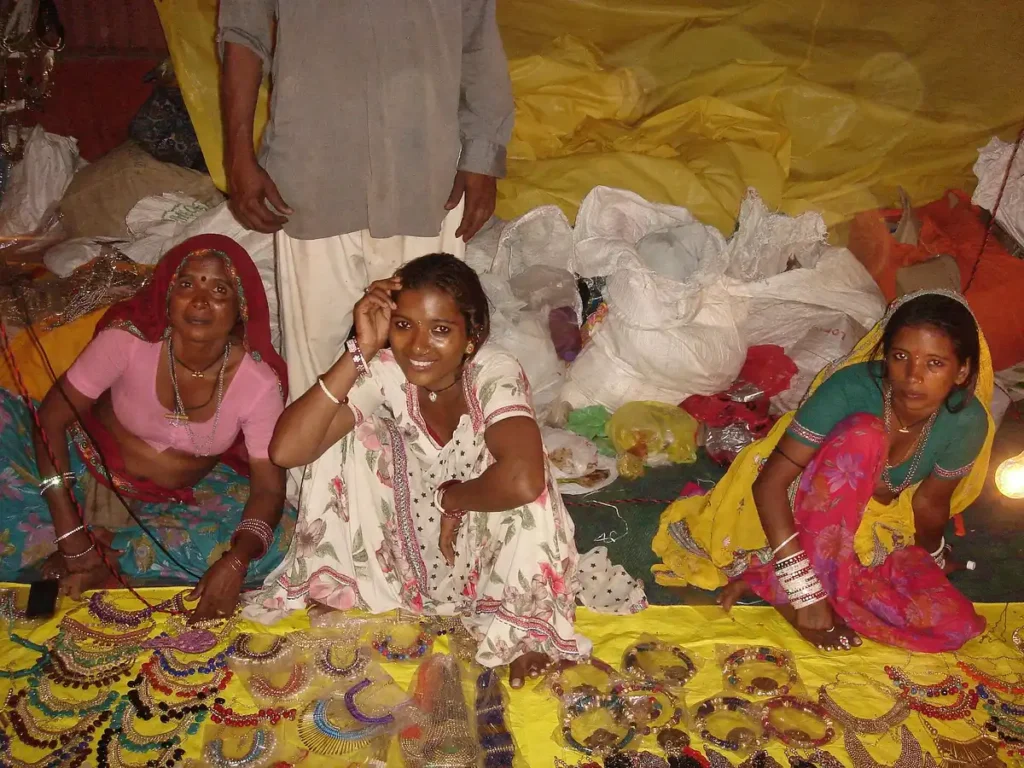
Image: Yulem, Wikimedia Commons, CC BY-SA 4.0
How to use this in Mains
If asked: UPSC Mains 2026, GS-II: “Women as a class neither belong to a minority group nor are they regarded as forming a backward class.” In the light of this statement, discuss the evolution of women's reservation from local bodies to Parliament.
Quote: “The 106th Amendment reserves one-third of seats in the Lok Sabha, State Assemblies and the Delhi Assembly for women, including within SC and ST reserved seats.”
Use it: Use it as the latest stage in the evolution of women's reservation.
In the news
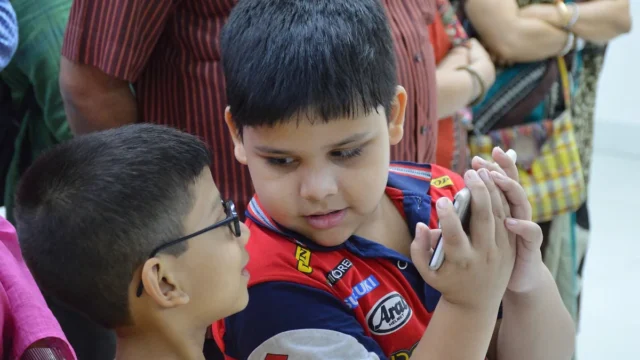
Supreme Court: children have a right to the internet, and platforms must block child abuse material
In a judgment of 15 October 2026, the Supreme Court said that the right to access and use the internet is a fundamental right of every person, children included, under Article 21 read with Article 19(1)(a). So the answer to online danger is not to lock children out but to go after the abusive content and the platforms that fail to remove it. The Court ordered a National Hash and URL List Database, two-hour reporting of unknown abuse material, and loss of revenue for platforms that profit from it through paywalls.
18 Oct 2026
FSSAI draft: no added sucrose or fructose in foods for infants up to six months
On 17 October 2026 FSSAI explained a draft rule that would stop companies from adding sucrose (table sugar) or fructose (fruit sugar) to any product meant for babies up to six months old. The draft amends the Foods for Infant Nutrition Regulations, 2020, was published in the Gazette on 16 October, and is open for public comments for 60 days. The idea is simple: in the first six months a baby needs the right nutrients, not an early taste for sugar.
17 Oct 2026
‘She-Mart’ cooperative outlets launched in Keralam to link women SHGs to markets
On 26 September 2026 the Union Minister of Cooperation launched She-Mart at Kollam, Keralam. Announced in the Budget, She-Mart links women Self-Help Groups and rural women entrepreneurs directly to buyers. More than 300 She-Mart stores are planned across Kerala, Tamil Nadu and Karnataka, selling local and Bharat Brand products.
26 Sep 2026
“Nirbhay Chetna” to sensitise 17.5 lakh male panchayat representatives
The Panchayati Raj Ministry rolled out Nirbhay Chetna under the Nirbhaya Fund, with a Training of Trainers in New Delhi from 17 to 19 June 2026. It aims to sensitise over 17.5 lakh male elected representatives on women's safety and gender equality through 28,500 master trainers. It is one of three arms of Nirbhay Raho, launched on 11 March 2026.
20 Jun 2026