
UPSC Mains 2023 GS3 Q18: model answer
The Intergovernmental Panel on Climate Change (IPCC) has predicted a global sea level rise of about one metre by AD 2100. What would be its impact in India and the other countries in the Indian Ocean region?
What the question wants
Impacts of about one metre sea-level rise on India and Indian Ocean countries.
How to structure it
Intro: IPCC AR6 projections; causes: thermal expansion, ice melt. Body: (1) India: coastal flooding of cities (Mumbai, Kolkata, Chennai), Sundarbans and deltas, salinisation, fisheries, displacement, infrastructure and ports, Lakshadweep, economic losses; (2) Other IOR countries: Maldives (existential), Bangladesh (delta, migration), Sri Lanka, Myanmar, Indonesia (Jakarta capital shift), Mauritius, Seychelles, East Africa; (3) Regional effects: climate migration, security, EEZ loss. Conclusion: adaptation (mangroves, sea walls), climate finance, India's role (CDRI, IORA).
- 1(1) India: coastal flooding of cities (Mumbai, Kolkata, Chennai), Sundarbans and deltas, salinisation, fisheries, displacement, infrastructure and ports, Lakshadweep, economic losses
- 2(2) Other IOR countries: Maldives (existential), Bangladesh (delta, migration), Sri Lanka, Myanmar, Indonesia (Jakarta capital shift), Mauritius, Seychelles, East Africa
- 3(3) Regional effects: climate migration, security, EEZ loss
Model answer
The IPCC's Sixth Assessment Report projects global sea level could rise by about a metre by 2100 under high-emission scenarios, due to thermal expansion of warming seas and melting ice. The Indian Ocean is warming faster than average.
Impact on India
- Coastal cities: Mumbai, Kolkata, Chennai, Kochi and Surat face frequent flooding and storm surges.
- Deltas: the Sundarbans, Ganga-Brahmaputra, Mahanadi and Godavari deltas would lose land; islands like Ghoramara are already shrinking.
- Salinity: seawater intrusion into groundwater and farmland harms crops and drinking water.
- Livelihoods: fishers and coastal farmers displaced; climate migration to cities.
- Infrastructure: ports, refineries, power plants and naval bases at risk.
- Islands: Lakshadweep and parts of Andaman and Nicobar face erosion.
- Ecosystems: mangroves, coral reefs and turtle nesting beaches lost.
Impact on other Indian Ocean countries
- Maldives: most islands are about a metre above sea level, so its very existence is at stake.
- Bangladesh: large parts of its low coast could flood, displacing millions.
- Sri Lanka, Myanmar and Thailand: coastal cities and the Irrawaddy delta.
- Indonesia: Jakarta is sinking; the capital is being moved to Nusantara.
- Small island states: Seychelles, Mauritius and Comoros.
Regional effects
- Cross-border climate migration and pressure on India's borders.
- Shrinking baselines raise questions over maritime zones.
Response
- Mangrove belts (MISHTI), coastal zone planning and resilient infrastructure.
- Climate finance and the loss and damage fund for vulnerable states.
- India's leadership through CDRI, IORA and support to island neighbours.
Sea-level rise is a shared Indian Ocean threat that needs shared adaptation.
Keywords, cases and data to drop in
IPCC AR6 thermal expansion Sundarbans Maldives climate migration CDRI
Where most answers lose marks
- Writing only about India.
- No adaptation measures.
Fresh examples from current affairs
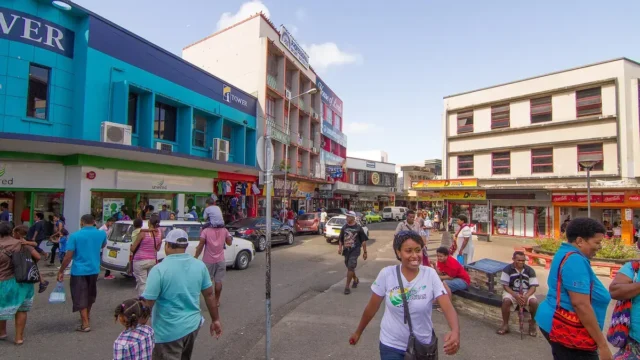
Pre-COP31 in Fiji: India seeks “flexibility, pragmatism and mutual respect” and scaled-up climate finance
At the Pre-COP31 meeting in Nadi, Fiji, India's Environment Minister asked for flexibility, pragmatism and mutual respect so that COP31 gives an ambitious and balanced result. India said higher ambition must come with climate finance, technology and capacity building, and that each country's path must be respected. COP31 is in Antalya, Türkiye, in November.
UPSC angle: Prelims: COP venues, Paris articles. · Mains GS-III: climate change; GS-II: international agreements.
8 Oct 2026
India–Japan Joint Crediting Mechanism gets an operational manual under Article 6.2 of the Paris Agreement
India and Japan launched the Operational Manual for their Joint Crediting Mechanism in New Delhi on 30 September 2026. Under Article 6.2 of the Paris Agreement, the mechanism lets Japanese low-carbon technology be deployed in India and the resulting emission cuts be issued as credits. The manual sets the full project cycle, from idea note to credit issuance.
UPSC angle: Prelims: Article 6 sub-parts. · Mains GS-III: carbon markets.
5 Oct 2026
New CAFE norms for cars: ~16.7% fuel-efficiency improvement from 2027 to 2032
On 30 September 2026 the Ministry of Power notified new Corporate Average Fuel Economy (CAFE) norms for passenger vehicles, in force from 1 April 2027 to 31 March 2032. The fuel-use benchmark tightens from 3.996 to 3.3273 litres per 100 km, an improvement of about 16.7 per cent, and the reference weight rises to 1,229 kg.
UPSC angle: Prelims: CAFE notifying ministry (Power, under the Energy Conservation Act). · Mains: Fleet-average standards as a nudge to EVs and hybrids.
30 Sep 2026
At FAO COFO-28, India cites 25.17% forest and tree cover and 3rd rank in net forest gain
At the 28th session of the FAO Committee on Forestry in Rome (28 September to 2 October 2026), India said its forest and tree cover is 82.74 million hectares, or 25.17 per cent of its area. FAO's Global Forest Resources Assessment 2025 ranks India 9th in forest area and 3rd in net annual forest gain.
UPSC angle: Prelims: forest cover %, FRA ranks. · Mains: Quality vs quantity of forest cover.
28 Sep 2026Learn the concept
Question text as printed in the official UPSC question paper: https://www.upsc.gov.in/sites/default/files/QP-CSM-23-GENERAL-STUDIES-PAPER-III-180923.pdf The model answer is original Battle IAS work; use it to learn structure, not to memorise.