
UP Legislative Council polls: 5 graduate and 6 teacher seats vote on 23 October
Next story · 17 OctUP voter enrolment camps on 17 and 24 October; electoral roll revision begins 2 November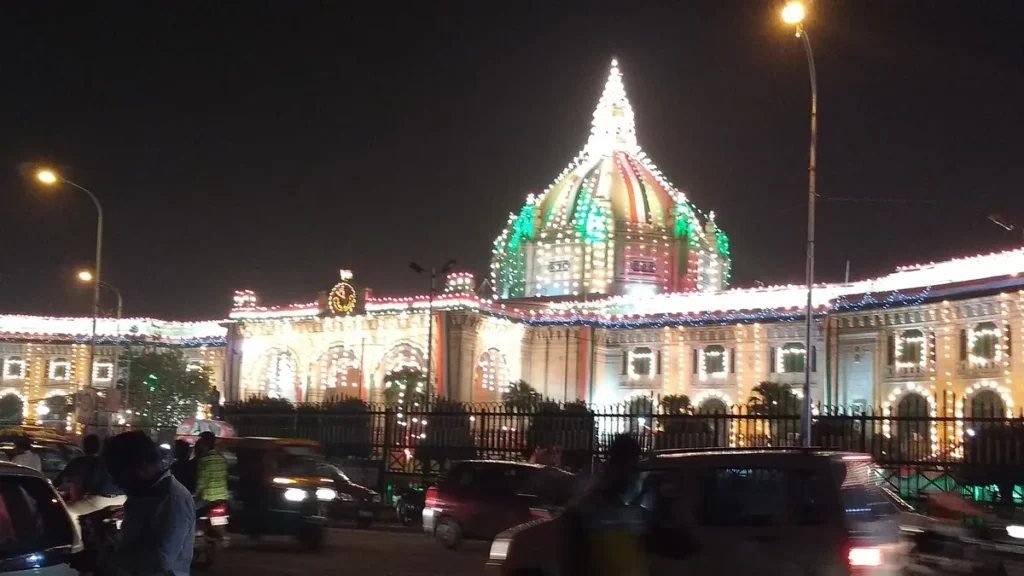
Uttar Pradesh votes on 23 October 2026 in the biennial elections to five graduates’ and six teachers’ constituencies of the Legislative Council. In all, 14,81,310 voters (11,85,706 graduates and 2,95,604 teachers) will choose from 152 candidates at 2,697 polling stations, and counting is on 27 October. Only graduates or teachers can vote for these seats, which makes this a live lesson in Article 171.
- Polling
- 23 Oct 2026
- Seats
- 5 graduate + 6 teacher
- Voters
- 14,81,310
- Counting
- 27 Oct 2026
UP MLC polls: what happened?
Most elections in India ask only two things of a voter: be 18 and be on the roll. These elections ask for more. To vote here you must be a graduate, or a teacher, and be on a special electoral roll of your own.
- 23 Oct 2026: polling for five graduates’ seats (Lucknow, Varanasi, Agra, Meerut, Allahabad-Jhansi) and six teachers’ seats (Lucknow, Varanasi, Agra, Meerut, Bareilly-Moradabad, Gorakhpur-Faizabad).
- Hindustan Times, 17 Oct 2026: 14,81,310 voters, 152 candidates and 2,697 polling stations; counting on 27 October.
- The terms of the sitting members end on 6 December 2026.
- Largest graduate electorate: Lucknow (3,13,531); smallest: Meerut (1,28,595).
What is the UP Legislative Council?
- The Vidhan Parishad is the upper House of the UP legislature; the Vidhan Sabha is the lower House.
- It has 100 members: 38 elected by MLAs, 36 by local authorities’ constituencies, 8 by graduates, 8 by teachers and 10 nominated by the Governor (UP Vidhan Parishad).
- It is a permanent House: it is never dissolved, and about one-third of its members retire every second year (Article 172(2)). That is why these elections are called biennial.
- Members serve six-year terms. UP is one of six States with a Council, along with Andhra Pradesh, Bihar, Karnataka, Maharashtra and Telangana.
Graduates’ seat vs teachers’ seat: what is the difference?
| Point | Graduates’ constituency | Teachers’ constituency |
|---|---|---|
| Share of Council (Art. 171(3)) | One-twelfth | One-twelfth |
| Who can vote | Residents of the State who have been graduates for at least three years | Those who have taught for at least three years (within the last six) in institutions not below secondary school level |
| Seats in UP | 8 | 8 |
| Voting on 23 Oct 2026 | 5 seats; 11,85,706 voters | 6 seats; 2,95,604 voters |
Which constitutional provisions apply?
- Article 169: Parliament may create or abolish a State’s Council by law, if the Assembly passes a resolution by a special majority.
- Article 171: Council size not more than one-third of the Assembly’s strength and not less than 40; one-third elected by local authorities, one-twelfth by graduates, one-twelfth by teachers, one-third by MLAs, the rest nominated by the Governor.
- Article 171(4): members are elected by proportional representation through the single transferable vote.
- Article 173: a member of the Council must be at least 30 years old. Section 27 of the Representation of the People Act, 1950 governs the special rolls for graduates’ and teachers’ seats.
How is an MLC elected from a graduates’ seat?
Single transferable vote, step by step
- Voter registers on the special graduates’ roll
- On polling day, marks preferences 1, 2, 3… on a ballot paper
- A quota is fixed: half the valid votes, plus one (for one seat)
- Lowest candidate is dropped and those votes move to next preferences
- The first candidate to reach the quota wins
Why does this matter for UPPCS?
| Angle | What to note |
|---|---|
| GS-V (UP polity) | Structure and working of the UP legislature. |
| Representation | A voice for educated voters and the teaching community. |
| Electoral system | STV and special rolls, unlike first-past-the-post Assembly polls. |
| Bicameralism | The live debate on whether States need a second House. |
What are the challenges?
- Critics call Councils costly and say they can delay but not block, while sometimes giving a back door to those who lose direct elections.
- Graduates and teachers must apply separately to join the special rolls, and many eligible people never do.
- The Hindu notes that teachers’ seats were long dominated by non-political teachers’ unions, but parties now increasingly back candidates.
- Preferential ballots are easy to spoil if voters do not mark them correctly.
What should be done next?
- Run steady enrolment drives in colleges and schools, not just before polls.
- Teach voters how to mark preferences so fewer ballots are rejected.
- Use the Council for careful, expert review of Bills, which is its main value.
- Adopt clear national criteria for creating or abolishing Councils instead of case-by-case choices.
What can UPPCS Prelims ask?
- UP Legislative Council: 100 members (38 MLAs, 36 local authorities, 8 graduates, 8 teachers, 10 nominated).
- Article 171(3): one-twelfth graduates, one-twelfth teachers.
- Election method: proportional representation by single transferable vote (Art. 171(4)).
- Minimum age for MLC: 30 years (Art. 173).
- Council is permanent; one-third retire every two years (Art. 172(2)).
- 23 Oct 2026: 5 graduate and 6 teacher seats; counting 27 Oct.
How to write about the UP Legislative Council in Mains (UPPCS)
Practice question (8 marks, 125 words): Examine the role of graduates’ and teachers’ constituencies in the Uttar Pradesh Legislative Council.
- Intro: UP’s bicameral legislature; 100-member Council.
- Body: Article 171(3) one-twelfth each; who can vote; STV.
- Example: 23 Oct 2026 polls, 14,81,310 voters for 11 seats.
- Issues: low enrolment, party capture of teachers’ seats, cost debate.
- Conclusion: a useful expert voice if enrolment and debate quality improve.
Image: Mohammad Azahar, Wikimedia Commons, CC BY-SA 4.0
Read all of October 2026 in the monthly UP current affairs compilation →
How to use this in Mains
If asked: Discuss the composition and role of the Uttar Pradesh Legislative Council. (UPPCS GS-V)
Quote: “In the biennial elections to five graduate and six teacher constituencies, 14,81,310 voters — 11,85,706 graduates and 2,95,604 teachers — are set to decide the fate of 152 candidates at 2,697 polling stations.”
Use it: A fresh, UP-specific data line. Put it right after you explain Article 171(3), so the examiner sees the rule working in real life.
If asked: “State Legislative Councils have outlived their utility.” Do you agree? (UPPCS GS-V / GS-II)
Quote: “Teachers' constituencies have historically been dominated by independent professional bodies and non-political teachers' unions.”
Use it: Use it on the ‘against’ side: the expert, non-party voice that Councils were meant to carry is now under pressure from party politics.
Exam angle
GS-V: UP legislature, Legislative Council composition, graduates' and teachers' constituencies.
Practice MCQs
Original practice questions (not PYQs).
With reference to the Uttar Pradesh Legislative Council, consider the following statements:
1. One-twelfth of its members are elected by graduates.
2. It can be dissolved by the Governor on the advice of the Chief Minister.
Which of the statements given above is/are correct?
Answer (a) & explanation
Article 171(3) gives one-twelfth seats to graduates; the Council is a permanent body and is not dissolved (Art. 172(2)).
Members of a State Legislative Council from graduates’ constituencies are elected by
Answer (b) & explanation
Article 171(4).
In the UP Legislative Council elections of 23 October 2026, which of the following is NOT a teachers’ constituency?
Answer (c) & explanation
Allahabad-Jhansi is a graduates’ constituency; Agra has both a graduates’ and a teachers’ seat.
Questions students ask about this
When is the UP MLC poll?
On 23 October 2026, with counting on 27 October.
How many seats are up for election?
Eleven: five graduates’ and six teachers’ constituencies.
Who can vote in a graduates’ constituency?
Residents of the State who have been graduates for at least three years and are on the special roll.
How big is the UP Legislative Council?
100 members, of whom 8 are elected by graduates and 8 by teachers.
Keep studying
Go deeper
Official source: Uttar Pradesh Vidhan Parishad: form of constitution
facts from cited sources only; cross-checked; faculty review pending