
India–New Zealand FTA enters into force: zero duty on all Indian exports from day one
Next story · 20 OctFinancial inclusion saturation campaign in 2.70 lakh panchayats and ULBs from 21 October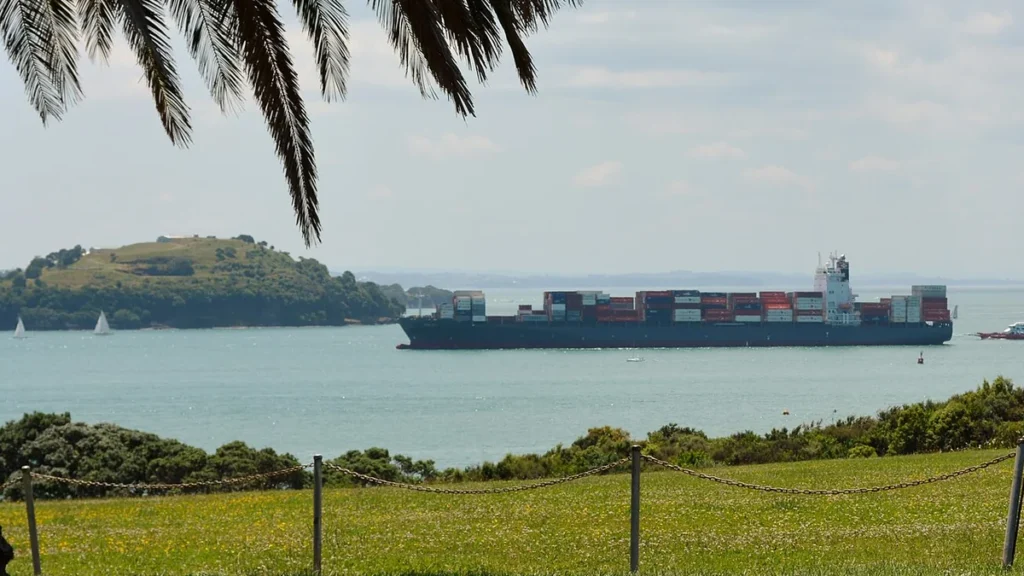
The India–New Zealand Free Trade Agreement came into force on 20 October 2026. From day one, New Zealand charges no customs duty on any Indian export, the first time India has got full duty-free access on all tariff lines at entry into force. New Zealand has also committed to facilitate USD 20 billion of investment into India, while dairy, sugar and edible oils stay protected.
- In force
- 20 Oct 2026
- Signed
- 27 Apr 2026
- NZ duty on Indian goods
- Zero, all lines
- Investment pledge
- USD 20 billion
India–New Zealand FTA: what happened?
An Indian exporter of carpets or auto parts used to pay up to 10% duty at a New Zealand port. From Vijayadashami, that duty is zero. The FTA that was signed in April is now live, and the real test begins: will Indian firms actually use it?
- 19 Oct 2026: Piyush Goyal and NZ Trade Minister Todd McClay announced entry into force; the first-ever JCB machine export to New Zealand was flagged off (PIB).
- New Zealand has removed duty on all tariff lines covering Indian exports, ending peak tariffs of up to 10%.
- India gives concessions on 70% of its tariff lines, covering about 95% of current bilateral trade (The Hindu).
- Commerce Secretary Rajesh Agrawal called it the seventh FTA operationalised in five years (HT).
What does the FTA contain?
- Goods: duty-free entry for textiles, leather, footwear, gems, engineering goods, pharma and processed food.
- Services: NZ’s best services offer in any FTA, about 118 sectors, with AYUSH and yoga services included for the first time.
- Mobility: 5,000 Temporary Employment Entry visas and 1,000 Working Holiday visas a year; no cap on Indian students.
- Agriculture: an Agricultural Productivity Partnership with action plans for kiwifruit, apples and honey.
How does access compare on both sides?
| Point | Indian exports to NZ | NZ exports to India |
|---|---|---|
| Tariff cut | All tariff lines duty-free from day one | 70% of lines; about 95% of trade |
| Protected items | Not applicable | Dairy, sugar, edible oils, onions, chickpeas |
| Quota route | — | Apples, kiwifruit, Manuka honey, albumins |
| Wine | — | Duty falls from 150% to 25% or 50% over 10 years |
Which constitutional and legal provisions apply?
- Article 253: Parliament can legislate to implement treaties; signing is an executive act.
- Union List Entries 10, 14 and 41: foreign affairs, treaties and trade with foreign countries.
- Customs Tariff Act, 1975: duty concessions are notified under Section 25 of the Customs Act, 1962.
- GATT Article XXIV permits FTAs covering ‘substantially all the trade’.
How does a kiwifruit reach India under the FTA?
From quota to farmer support
- NZ exporter applies under tariff rate quota
- Lower duty only within the quota
- Minimum import price guards Indian growers
- Joint council checks action plan delivery
- Centres of Excellence help Indian orchards
Why does this matter?
| Angle | What to note |
|---|---|
| Trade policy | India now prefers deep FTAs with developed economies. |
| Farm safeguards | Market access is tied to farmer-support action plans. |
| Diaspora and skills | Visas and post-study work for Indian students. |
| Indo-Pacific | Economic weight added to a Pacific partner. |
What are the challenges?
- Bilateral trade is small, so gains depend on exporters using the FTA.
- Low FTA utilisation by Indian firms has been a long-running problem.
- Indian apple and honey growers fear cheaper imports.
- Strict rules of origin mean extra paperwork for MSMEs.
What should be done next?
- Run district-level outreach so small exporters learn the new duty rates.
- Track the action plans before expanding fruit quotas.
- Use the services and visa chapters for IT, health and education.
- Get Indian GIs registered in New Zealand quickly.
What can Prelims ask on the India–New Zealand FTA?
- Talks launched 16 March 2025; concluded 22 December 2025; signed 27 April 2026.
- First Indian FTA with full duty-free access on all lines at entry into force.
- Kiwifruit Centres of Excellence: Pfutsero (Nagaland) and Magra (Uttarakhand).
- Honey Centres of Excellence planned in Uttar Pradesh and West Bengal.
- Target: double bilateral trade to NZ$7 billion by 2030.
How to write about new-generation FTAs in Mains
Practice question (10 marks, 150 words): India’s recent FTAs with developed economies seek market access while protecting sensitive sectors. Examine with reference to the India–New Zealand FTA. (GS-II)
- Intro: in force 20 Oct 2026; zero duty on all Indian exports.
- Gains: goods access, services, visas, USD 20 billion investment.
- Safeguards: dairy excluded, quotas, minimum import price.
- Concerns: low utilisation, orchard competition, origin rules.
- Way out: outreach, monitoring, use of services chapters.
Image: Container ship at the Ports of Auckland, New Zealand. GPS 56 from New Zealand, Wikimedia Commons, CC BY 2.0
How to use this in Mains
If asked: Discuss how India is balancing market access and farmer protection in its recent trade agreements. (GS-III)
Quote: “All Tariff Rate Quotas for apples, kiwifruit and Mānuka honey are formally linked to the delivery of the Action Plans, under the oversight of a Joint Agriculture Productivity Council.”
Use it: Use it to show a new model: imports are opened only alongside technology support for Indian growers.
If asked: Examine the significance of New Zealand for India’s Indo-Pacific outreach. (GS-II)
Quote: “New Zealand has committed to facilitate USD 20 billion of investment into India.”
Use it: Quote it to show the economic depth now added to a political partnership; add mobility and education links.
Exam angle
Prelims: FTA dates, Centres of Excellence, visa quotas, TRQ items. · Mains GS-II/III: FTAs with developed economies and farm safeguards.
Practice MCQs
Original practice questions (not PYQs).
Consider the following statements about the India–New Zealand FTA:
1. It entered into force on 20 October 2026.
2. New Zealand has eliminated customs duty on all tariff lines covering Indian exports.
3. India has given tariff concessions on dairy products.
How many of the statements given above are correct?
Answer (b) & explanation
Statements 1 and 2 are correct. Dairy, sugar and edible oils are excluded from India’s concessions (PIB).
Under the India–New Zealand FTA, Phase I Centres of Excellence for kiwifruit are being set up in
Answer (b) & explanation
Phase I kiwifruit sites are Pfutsero (Nagaland) and Magra (Uttarakhand). Honey centres are planned in UP and West Bengal.
Which article of the Constitution empowers Parliament to make laws for implementing international treaties and agreements?
Answer (c) & explanation
Article 253 lets Parliament legislate for the whole or any part of India to implement treaties.
Questions students ask about this
When did the India–New Zealand FTA come into force?
On 20 October 2026, Vijayadashami.
What do Indian exporters get?
Duty-free access on all tariff lines, ending tariffs of up to 10%.
Which Indian sectors stay protected?
Dairy, sugar, edible oils and key farm items such as onions and chickpeas.
What is in it for students and workers?
5,000 TEE visas, 1,000 working holiday visas a year and post-study work rights.
Keep studying
Go deeper
Official source: PIB, 19 Oct 2026: India–New Zealand FTA to Come into Force on 20th October 2026
facts from cited sources only; faculty review pending