
Indus Waters Treaty, 1960: The Indus River System, How the Waters Were Divided, India’s Rights, Kishenganga and Ratle Disputes, and the 2025 Abeyance (UPSC Notes + PYQs)
UPSC has already asked about this. Read the story with these questions in mind.
The Indus river system
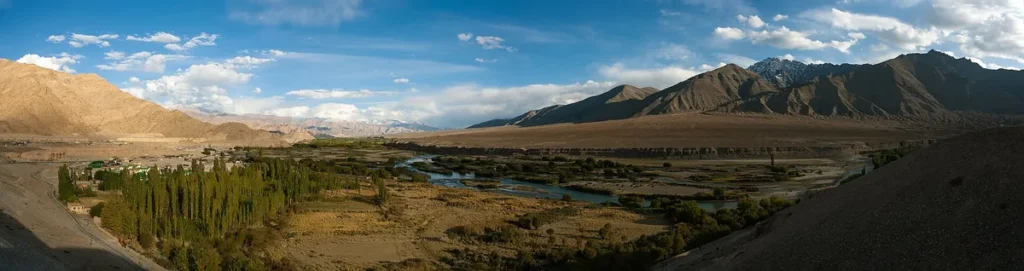
The Indus rises near Lake Mansarovar in Tibet, flows north-west through Ladakh and Gilgit-Baltistan, turns south through Pakistan and enters the Arabian Sea near Karachi. Its main tributaries, from west to east, are the Jhelum (rising at Verinag in Kashmir), the Chenab (formed by the Chandra and Bhaga in Himachal), the Ravi, the Beas and the Sutlej (rising near Rakas Tal in Tibet). The Beas joins the Sutlej at Harike in Punjab before the Sutlej flows into Pakistan. The basin is shared by China, India, Pakistan and Afghanistan (the Kabul river), and is fed heavily by glaciers and snow, so it is among the basins most exposed to climate change.
How the treaty came about
Partition put the headworks of Punjab’s canals in India and the irrigated lands in Pakistan. In April 1948 India briefly stopped flows into some canals, alarming Pakistan, whose farm economy depended on them. After years of talks led by the World Bank, which also arranged funds for new dams and canals in Pakistan, Nehru and Ayub Khan signed the treaty in Karachi in 1960. It is often praised as one of the most durable water treaties in the world, having survived the wars of 1965, 1971 and 1999.
Main provisions
| Provision | Detail |
|---|---|
| Eastern rivers (Ravi, Beas, Sutlej) | All waters for India’s unrestricted use, about 33 million acre-feet (MAF) a year |
| Western rivers (Indus, Jhelum, Chenab) | Pakistan gets the waters, about 135 MAF; India must “let flow” them |
| India’s rights on western rivers | Domestic use, non-consumptive use, limited irrigation, run-of-the-river hydropower within design limits (Annexure D), and limited storage (about 3.6 MAF) |
| Data sharing | Exchange of flow and project data |
| Permanent Indus Commission | One commissioner from each side; to meet at least once a year |
| Disputes (Article IX) | Questions to the Commission; differences to a Neutral Expert; disputes to a Court of Arbitration |
| Exit | No clause for unilateral termination; changes need a new treaty ratified by both |
So Pakistan got about 80% of the system’s water. India also paid about £62 million towards replacement works in Pakistan.
- Ravi
- Beas
- Sutlej
- About 33 MAF, unrestricted use
- Indus
- Jhelum
- Chenab
- About 135 MAF; India limited use
- 1Question raised in Permanent Indus Commission
- 2Difference referred to a Neutral Expert
- 3Dispute referred to a Court of Arbitration
- 4World Bank facilitates appointments
India’s projects and the disputes
India long did not even use its full share of the eastern rivers; some water flowed unused into Pakistan, which projects such as the Shahpurkandi dam on the Ravi (completed 2024) and the Ujh project are meant to stop. On the western rivers, Pakistan has objected to the design of Indian hydropower projects, claiming they give India the ability to hold back or release water:
- Salal (Chenab): settled bilaterally in 1978.
- Baglihar (Chenab): a Neutral Expert largely upheld India’s design in 2007.
- Kishenganga (Kishenganga/Neelum, a Jhelum tributary): a Court of Arbitration in 2013 allowed India to divert water for power, subject to a minimum flow.
- Ratle (Chenab) and Kishenganga again: in 2016 Pakistan sought a Court of Arbitration while India sought a Neutral Expert. In 2022 the World Bank started both processes at once. India took part only in the Neutral Expert process, and rejected the Court’s rulings as illegal.
- Tulbul navigation project at Wular Lake: suspended since 1987 after Pakistan objected.
Towards abeyance
India served notices in January 2023 and August 2024 seeking to modify the treaty, citing Pakistan’s cross-border terrorism, changed population and energy needs, and the parallel dispute processes. On 23 April 2025, the day after the Pahalgam attack, the Cabinet Committee on Security decided to hold the treaty in abeyance “until Pakistan credibly and irrevocably abjures its support for cross-border terrorism”. India stopped sharing flood and flow data, suspended Commission meetings, began flushing reservoirs at Salal and Baglihar outside treaty schedules, and fast-tracked projects such as Pakal Dul, Kiru, Kwar and Ratle on the Chenab. Pakistan called any stoppage of water an “act of war”.
- 1948Canal flows stopped briefly
- 1960Treaty signed, 19 September
- 2007Baglihar: Neutral Expert ruling
- 2013Kishenganga award
- 2022World Bank starts parallel processes
- 2023-24India seeks modification
- 2025Treaty held in abeyance, 23 April
Can India stop the water?
Not quickly. The western rivers carry huge flows in summer, and India has little storage on them; run-of-the-river plants cannot hold water for long. Large dams and canals to divert water to Punjab, Haryana and Rajasthan would take a decade or more and face tough terrain. What India can do now is use its full rights, time reservoir operations, stop data sharing that helps Pakistan plan for floods, and build storage. The value of abeyance is as leverage and as a signal that the treaty’s generous terms depended on peaceful relations.
Legal and diplomatic questions
- The treaty has no termination clause, but the Vienna Convention on the Law of Treaties (which India has not ratified, though parts reflect customary law) allows suspension for a fundamental change of circumstances or material breach.
- The World Bank says its role is limited to facilitation.
- China, upstream of India on the Indus and Brahmaputra, watches closely; India must avoid setting precedents that China could use against it.
- Downstream human costs in Pakistan’s Punjab and Sindh could affect international opinion.
Climate change and the basin
The treaty was written for the rivers of the 1950s. Today the Upper Indus basin is changing fast. Glaciers in the Himalaya, Karakoram and Hindu Kush are losing mass, and studies by ICIMOD and others warn that meltwater flows may rise until about the middle of the century and then fall as glaciers shrink. Monsoon and western disturbance patterns are also becoming more erratic, bringing both floods, as in Pakistan in 2022, and longer dry spells. Groundwater in Indian and Pakistani Punjab is being pumped far faster than it recharges. None of this is covered by a treaty that only divides rivers by name and sets design limits on dams. Experts on both sides have suggested that any future arrangement should include joint flood forecasting, shared glacier monitoring, environmental flows and basin-wide planning, ideas that are hard to pursue while political ties are frozen.
Way forward
Build storage and canals on the western rivers within a planned national framework, use the eastern rivers fully, modernise irrigation in Punjab and Jammu and Kashmir, keep the legal case clear by linking abeyance to terrorism, and leave the door open to a renegotiated treaty that reflects climate change and present needs.
PYQ trend
Prelims asks the rivers, their sources and tributaries, and treaty basics. Mains GS-II asks water diplomacy and India-Pakistan relations.
Indus Waters Treaty: UPSC angle
For UPSC CSE
Prelims: rivers, sources, treaty facts. Mains GS-II: water diplomacy, India-Pakistan, international law. GS-I: drainage of the Indus.
Indus Waters Treaty UPSC PYQs (Prelims)
Questions UPSC has actually asked, from the official papers. Pick an option to check yourself.
Consider the following statements :
– 1. Jhelum River passes through Wular Lake.
– 2. Krishna River directly feeds Kolleru Lake.
– 3. Meandering of Gandak River formed Kanwar Lake.
How many of the statements given above are correct?
The Jhelum flows through Wular, India’s largest freshwater lake. Kolleru lies between the Godavari and Krishna deltas and is fed by seasonal streams such as the Budameru and Tammileru, not directly by the Krishna. Kanwar (Kabartal) in Begusarai is an oxbow wetland of the Burhi Gandak. Answer as per the official UPSC key · Battle IAS PYQ bankAnswer (a) & why
Mains PYQs on this topic
No UPSC Mains question from 2023-2026 is directly on this topic. Older papers (2013-2022) will be added as the Mains bank grows.
Quick quiz
Which river was allotted to Pakistan under the treaty?
The western rivers are the Indus, Jhelum and Chenab.Answer (c)
The Kishenganga project is on a tributary of the
Kishenganga (Neelum) joins the Jhelum.Answer (b)
Under Article IX of the treaty, a “difference” goes to a
Differences go to a Neutral Expert; disputes to a Court of Arbitration.Answer (b)
FAQs
What is the Indus Waters Treaty?
A 1960 agreement between India and Pakistan, with the World Bank as a signatory, that divides the six rivers of the Indus system.
Which rivers does India control?
The eastern rivers: Ravi, Beas and Sutlej.
What can India do on the western rivers?
Use them for domestic needs, limited irrigation, run-of-the-river hydropower and limited storage.
What does abeyance mean?
India has stopped carrying out its treaty obligations, such as data sharing and Commission meetings, without formally ending the treaty.
Can the treaty be ended unilaterally?
It has no exit clause; India relies on a fundamental change of circumstances and Pakistan’s support for terrorism to justify suspension.
Spotted an error? Tell us. We correct within 48 hours.
Image: KennyOMG, Wikimedia Commons, CC BY-SA 3.0
How to use this in Mains
If asked: Is the Indus Waters Treaty still relevant? Discuss India's options. (GS-II)
Quote: “Not quickly. The western rivers carry huge flows in summer, and India has little storage on them; run-of-the-river plants cannot hold water for long.”
Use it: A realistic counter-view: India cannot stop the western rivers quickly.
In the news
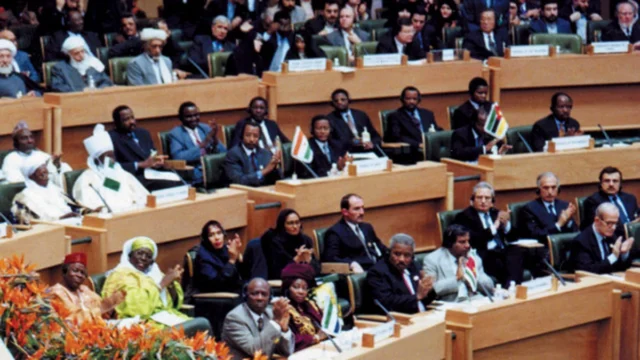
India rejects OIC’s Baghdad resolutions on Jammu and Kashmir as ‘malicious, biased and false’
On 19 October 2026 the Ministry of External Affairs rejected references to India in resolutions adopted at the Organisation of Islamic Cooperation (OIC) Council of Foreign Ministers in Baghdad on 17–18 October. It called them ‘malicious, biased and false’, said Pakistan orchestrated them, and said the OIC has no locus standi on India’s internal matters.
19 Oct 2026
First international cargo from upper Assam since Independence: Bogibeel to Dhaka via NW-2
On 5 October 2026 a barge with 540 tonnes of methanol from Assam Petro-Chemicals, Namrup, left Bogibeel terminal in Dibrugarh for Dhaka. It travels about 768 km on National Waterway-2 and then the Indo-Bangladesh Protocol Route, about 1,300 km in all. It is the first cargo from upper Assam to a foreign port since 1947.
5 Oct 2026
India rejects OIC Contact Group remarks on J&K
On 23 September 2026 the Ministry of External Affairs rejected references to India in the joint communique of the OIC Contact Group on Jammu and Kashmir. It said the OIC has no locus standi on matters internal to India and that J&K and Ladakh are an integral and inalienable part of India.
23 Sep 2026
India rejects Pakistan-China Boundary Joint Commission
On 16 September 2026 the MEA rejected the so-called Pakistan-China Boundary Joint Commission as having no legal basis. It said there is no boundary between Pakistan and China, the whole of Jammu & Kashmir and Ladakh are integral parts of India, and India has never recognised the so-called China-Pakistan Boundary Agreement of 1963.
16 Sep 2026