
Conversion does not carry over a quota: Supreme Court on Tamil Nadu’s BC Muslim certificates
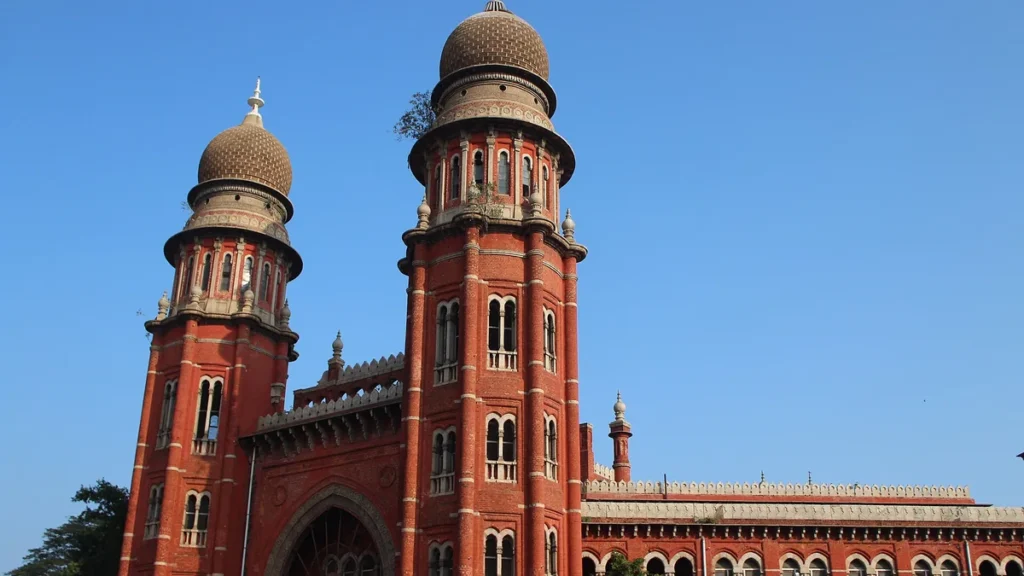
On 15 October 2026, in The Secretary to Government v. Sameer Ahamed N., the Supreme Court upheld the Madras High Court’s quashing of a 2024 Tamil Nadu order. That order let converts to Islam from Backward, Most Backward, Denotified and Scheduled Caste communities get Backward Class Muslim certificates and use the 3.5% BC Muslim quota. The Court said conversion to Islam does not by itself make a person a member of any of the seven notified BC Muslim communities.
- Judgment
- 15 Oct 2026
- Order quashed
- TN G.O. 31, 9 Mar 2024
- BC Muslim quota (TN)
- 3.5%
- Bench
- Justices P.K. Mishra, Shree Chandrashekhar
Conversion and reservation: what happened?
A young man from Thoothukudi was born Hindu, embraced Islam in 2015 and asked to be certified as a ‘Muslim Labbai’, a notified backward community. The taluk office said no: he had changed his religion, not his community. That small file has now produced a big constitutional ruling.
- The Supreme Court dismissed Tamil Nadu’s appeal and upheld the Madras High Court’s invalidation of G.O. (Ms.) No. 31 dated 9 March 2024.
- It held that a community certificate is ‘statutory recognition of present community status’; the G.O. created ‘an artificial route’ into a notified class.
- An expert body’s recommendation (Tamil Nadu Backward Classes Commission) cannot make an unconstitutional classification valid.
- The State cannot leave the decision to a private body such as a Jamath; verification is a public function.
What are the seven BC Muslim communities?
- Tamil Nadu gives 3.5% reservation to Backward Class Muslims under a 2007 State Act.
- Notified groups: Dekkani Muslims, Dudekula, Labbais (including Rowthar and Marakayar), Mapilla, Sheik, Syed and Ansar.
- The Court stressed that not every Muslim is a BC Muslim; each group is a distinct social community.
- So a convert must still prove membership of a notified group, not just faith.
How do the SC route and the backward-class route differ?
| Point | Scheduled Caste route | Backward class route |
|---|---|---|
| Provision | Article 341; SC Order, 1950 | Articles 15(4), 16(4), 342A |
| Religion test | Only Hindus, Sikhs, Buddhists | No religion bar |
| Who decides | President; Parliament amends list | State lists after evidence; Centre’s list for Central posts |
| After conversion | SC status ends (outside the three religions) | Must belong to a notified community |
Which constitutional provisions apply?
- Article 15(4) and 16(4): special provisions and job reservation for backward classes.
- Article 341: President notifies Scheduled Castes; the 1950 Order limits it to Hindus, Sikhs (added 1956) and Buddhists (added 1990).
- Article 342A (102nd and 105th Amendments): lists of socially and educationally backward classes.
- Kumari Madhuri Patil (1994): safeguards for issuing and verifying caste certificates.
What issues remain open?
- Dalit converts to Islam and Christianity say discrimination continues after conversion.
- The Ranganath Misra Commission (2007) suggested delinking SC status from religion; the Centre has not accepted it.
- The Justice K.G. Balakrishnan Commission (set up 2022) is examining SC status for converts.
- States may misuse certificates for political ends if checks are weak.
What should be done next?
- Base any backward-class inclusion on fresh, quantifiable data, as the Court suggests.
- Strengthen district-level scrutiny committees for certificates.
- Settle the converts’ SC status question after the Balakrishnan Commission reports.
- Keep religious identity and social backwardness as separate tests.
What can Prelims ask on caste certificates and conversion?
- SC Order, 1950: Hindus; Sikhs added 1956; Buddhists added 1990.
- Article 342A came by the 102nd Amendment (2018).
- 105th Amendment (2021) restored States’ power to make their own SEBC lists.
- Tamil Nadu: 3.5% quota for BC Muslims; seven notified communities.
- Madhuri Patil (1994): scrutiny committees for caste certificates.
How to write about religion and reservation in Mains
Practice question (10 marks, 150 words): ‘Conversion changes faith, not necessarily social disadvantage.’ Discuss with reference to recent judicial rulings on reservation. (GS-II)
- Intro: Sameer Ahamed ruling, 15 Oct 2026.
- SC route: Article 341, religion-bound by the 1950 Order.
- BC route: Articles 15(4), 16(4); membership of a notified group.
- Debate: Ranganath Misra, Balakrishnan Commission.
- Conclusion: evidence-based inclusion, strong verification.
Image: Madras High Court, Chennai. Kalyan07kumar, Wikimedia Commons, CC BY-SA 4.0
How to use this in Mains
If asked: Should Scheduled Caste status be linked to religion? Discuss. (GS-II)
Quote: “Conversion cannot automatically transfer a person into a different notified community, but continuing social disadvantage calls for evidence-based inquiry.”
Use it: Use it as a balanced line, then present both the Misra and the Balakrishnan Commission angles.
If asked: Discuss the importance of caste certificate verification in protecting reservation. (GS-II)
Quote: “The State cannot abdicate the statutory determination to a private body like Jamath.”
Use it: Quote the Court and add the Madhuri Patil safeguards.
Exam angle
Prelims: Articles 15(4), 16(4), 341, 342A; SC Order 1950. · Mains GS-II: conversion and reservation debate.
Practice MCQs
Original practice questions (not PYQs).
Under the Constitution (Scheduled Castes) Order, 1950, as amended, a person can be a member of a Scheduled Caste only if he/she professes
Answer (c) & explanation
The Order covers Hindus; Sikhs were added in 1956 and Buddhists in 1990.
Article 342A of the Constitution, dealing with socially and educationally backward classes, was inserted by the
Answer (b) & explanation
The 102nd Amendment (2018) inserted Article 342A; the 105th (2021) restored States’ power to prepare their own lists.
Consider the following statements about the Supreme Court’s ruling of 15 October 2026:
1. It upheld the Madras High Court’s quashing of a 2024 Tamil Nadu order.
2. It held that a Jamath’s acceptance is enough for issuing a BC Muslim certificate.
Which of the statements given above is/are correct?
Answer (a) & explanation
The Court said certificate verification is a public function and cannot be left to a private body like a Jamath.
Questions students ask about this
What did the Supreme Court decide?
That conversion to Islam does not automatically make a person a member of a notified BC Muslim community.
Which order was quashed?
Tamil Nadu’s G.O. (Ms.) No. 31 of 9 March 2024.
Can Muslims get backward-class reservation?
Yes, if they belong to a notified backward community; the test is membership, not faith.
Does this decide SC status for Dalit converts?
No. That question is with the Justice K.G. Balakrishnan Commission.
Keep studying
Go deeper
Official source: Supreme Court of India, 15 Oct 2026: The Secretary to Government v. Sameer Ahamed N., 2026 INSC 1129
facts from cited sources only; faculty review pending