
Secularism in India: Meaning, Constitutional Provisions, Indian vs Western Model, Bommai Case and Challenges (UPSC Notes + PYQs)
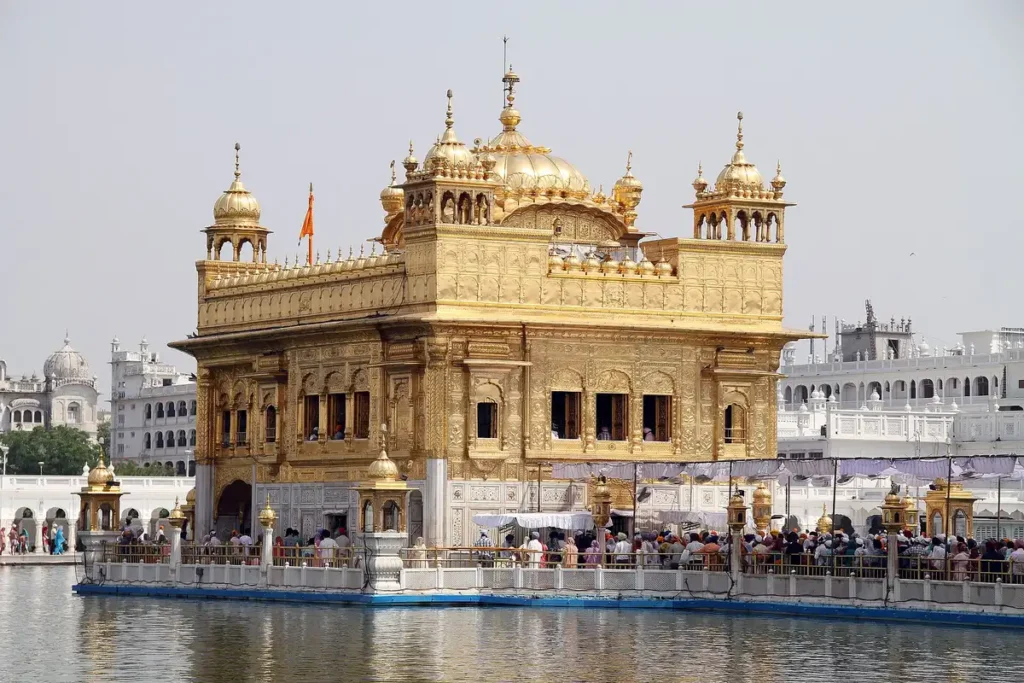
UPSC has already asked about this. Read the story with these questions in mind.
Background
The word “secular” comes from the Latin saeculum, “of this age” or worldly. In Europe secularism grew out of conflict between Church and State after the wars of religion. In India the story was different: many faiths lived side by side, and the national movement had to hold them together against communal politics encouraged by separate electorates. Gandhi spoke of sarva dharma sambhava (equal respect for all religions); Nehru stood for a State that kept religion out of public policy. The Constitution blended both views.
In the Constitution
- Equality and non-discrimination: Articles 14, 15, 16(2).
- Freedom of conscience and to profess, practise and propagate religion, subject to public order, morality and health (Article 25).
- Freedom of religious denominations to manage their affairs (26); no tax for promoting a religion (27); no religious instruction in wholly State-funded institutions (28).
- Rights of minorities to conserve culture and run educational institutions (29-30).
- Single electorate; no separate electorates as under the 1909 and 1919 Acts.
- Article 14-15Equality, non-discrimination
- Article 25Freedom of conscience
- Article 26Denominational affairs
- Article 27No tax for religion
- Article 28No religious instruction in State schools
- Articles 29-30Minority rights
Indian vs Western model
| Western (US, France) | Indian |
|---|---|
| Strict separation of State and religion | Principled distance: the State may engage or stay away to promote equality and liberty |
| State does not fund religious bodies | Aid to minority institutions; State management of some temples |
| Focus on individual freedom | Also protects communities and allows reform (Article 25(2): temple entry, social welfare) |
- Strict wall between State and religion
- No State aid to religious bodies
- Individual-centred
- State stays away from religious reform
- Principled distance
- Aid to minority institutions allowed
- Protects communities and individuals
- State may reform practices (Article 25(2))
What the courts said
Kesavananda Bharati (1973) listed secularism among basic features, and S.R. Bommai (1994) made it firm: a State government acting against secularism could be dismissed under Article 356. The essential religious practices test, from Shirur Mutt (1954), decides which practices get Article 25 protection; it was central to the Sabarimala (2018) and hijab (2022) cases.
Religion and the State in practice
Indian secularism allows the State to be involved with religion in ways a Western “wall of separation” would not. Some examples:
- Temple administration: Tamil Nadu, Andhra Pradesh and other States run Hindu temples through endowment departments under laws such as the Tamil Nadu Hindu Religious and Charitable Endowments Act, 1959. Critics argue this treats Hindu institutions unequally, since mosques and churches are run by their communities or Waqf boards.
- Haj and pilgrimage support: the Haj subsidy was phased out by 2018 after a Supreme Court direction in 2012, while States fund pilgrimages of various faiths.
- Minority educational institutions: Article 30 lets minorities set up and run their own institutions; aided ones get State grants but must follow some regulations.
- Religious reform by law: the State abolished untouchability, opened temples to all castes, banned triple talaq (2019) and regulates practices such as sati and devadasi dedication.
This “principled distance”, in Rajeev Bhargava’s phrase, means the State keeps an equal but flexible distance from all religions, intervening where a practice violates rights, staying out where it does not.
Essential religious practices test
Courts decide which practices Article 25 protects by asking whether a practice is essential to the religion. The test came from the Shirur Mutt case (1954). It has been applied in many cases: animal sacrifice, the Ananda Marga’s tandava dance (1983 and 2004), the hijab in Karnataka classrooms (split verdict, 2022) and entry of women to Sabarimala (2018), now before a larger bench. Critics say judges should not decide theology; instead, they argue, courts should test whether a practice violates dignity and equality, the approach of Justice Chandrachud in Sabarimala.
Places of Worship Act, 1991
The Act freezes the religious character of every place of worship as it stood on 15 August 1947 and bars suits to change it, with Ram Janmabhoomi-Babri Masjid excluded. In the 2019 Ayodhya judgment the Court called it a protection of secular values; petitions challenging it are pending, and in 2024 the Court barred new suits and surveys till they are decided.
Challenges
Communal violence and polarisation, use of religion in elections (barred as a corrupt practice under Section 123(3) of the RPA, as reaffirmed in Abhiram Singh, 2017), State control of temples but not other places of worship, conversion laws in several States, and debates over a uniform civil code. Rajeev Bhargava’s idea of principled distance is the standard way to defend the Indian model in answers.
Judgments to quote
| Case | Point |
|---|---|
| Shirur Mutt (1954) | “Essential religious practices” test |
| St. Xavier’s College (1974) | Secularism means the State is neutral and impartial |
| S.R. Bommai (1994) | Secularism is basic structure; ground for Article 356 action |
| Aruna Roy (2002) | Teaching about religions is not religious instruction |
| Abhiram Singh (2017) | Votes cannot be sought in the name of religion, caste or language |
Indian and US models compared
The US First Amendment bars Congress from making laws “respecting an establishment of religion” and protects free exercise. Courts there use the idea of a “wall of separation” (Jefferson’s phrase), so public schools cannot hold prayers. India allows State aid to religious minority schools, State boards to run temples, and laws to reform religious practices (abolition of untouchability, temple entry). The Indian State is not indifferent to religion; it is meant to be even-handed.
Way forward
Apply laws equally to all communities, punish hate speech whatever its source, keep religion out of election campaigns as the RPA requires, teach constitutional values in schools, and build trust through quick, fair justice after communal violence.
PYQ trend
Mains GS-II 2024 asked: “Discuss India as a secular state and compare with the secular principles of the US constitution.” GS-I has asked on secularism and communalism several times. Prelims touches it through the Preamble (2021) and basic structure (2020).
Secularism: UPSC angle
For UPSC CSE
Prelims: 42nd Amendment, Articles 25-28, Bommai. Mains GS-I: “Indian secularism is different from Western”, challenges. GS-II: rights, Article 356 misuse.
Secularism UPSC PYQs (Prelims)
Questions UPSC has actually asked, from the official papers. Pick an option to check yourself.
Consider the following statements :
– 1. The Constitution of India defines its 'basic structure' in terms of federalism, secularism, fundamental rights and democracy.
– 2. The Constitution of India provides for 'judicial review' to safeguard the citizens' liberties and to preserve the ideals on which the Constitution is based.
Which of the statements given above is/are correct?
The basic structure comes from judgments, mainly Kesavananda Bharati (1973). The Constitution does not define it. The phrase “judicial review” does not appear in the text either. The power comes from Articles 13, 32 and 226, and the Court calls it part of the basic structure. UPSC marked both statements wrong. Answer as per the official UPSC key · Battle IAS PYQ bankAnswer (d) & why
What was the exact constitutional status of India on 26th January, 1950?
The original Preamble read “Sovereign Democratic Republic”. “Socialist” and “Secular” were added by the 42nd Amendment in 1976. Answer as per the official UPSC key · Battle IAS PYQ bankAnswer (b) & why
Mains PYQs on this topic
Questions from the official UPSC Mains papers (2023-2026 in the Battle IAS Mains bank), newest first. Each links to a model answer.
- UPSC Mains 2024 · GS Paper II · Q15 · 15 marks
Discuss India as a secular state and compare with the secular principles of the US constitution.
Quick quiz
“Secular” was added to the Preamble by the
1976.Answer (b)
Religious instruction is barred in institutions wholly maintained by State funds under Article
Article 28(1).Answer (c)
The term “principled distance” is associated with
Political theorist.Answer (a)
FAQs
Was India secular before 1976?
Yes. The word was added in 1976, but the Constitution’s provisions were secular from 1950.
Is secularism part of the basic structure?
Yes, per Kesavananda Bharati and S.R. Bommai.
How is Indian secularism different?
It allows the State to engage with religion for equality and reform, not strict separation.
What is the essential religious practices test?
The test courts use to decide whether a practice is integral to a religion and thus protected by Article 25.
Did the Constituent Assembly reject the word “secular”?
K.T. Shah’s proposal to add it was not accepted, as members felt the provisions already made the State secular.
Is there a State religion in India?
No. The State has no official religion.
Spotted an error? Tell us. We correct within 48 hours.
Image: This picture has been taken by Oleg Yunakov. Contact e-mail: yunakovgm, Wikimedia Commons, CC BY-SA 3.0
How to use this in Mains
If asked: UPSC Mains 2024, GS-II: Discuss India as a secular state and compare with the secular principles of the US constitution.
Quote: “Indian secularism allows the State to be involved with religion in ways a Western “wall of separation” would not.”
Use it: The core contrast with the US model; use it right after defining secularism.