
India–New Zealand FTA: customs sign pact on electronic origin data exchange
Next story · 21 OctCore sector grows 7.9% in September 2026; iron ore, electricity and coal lead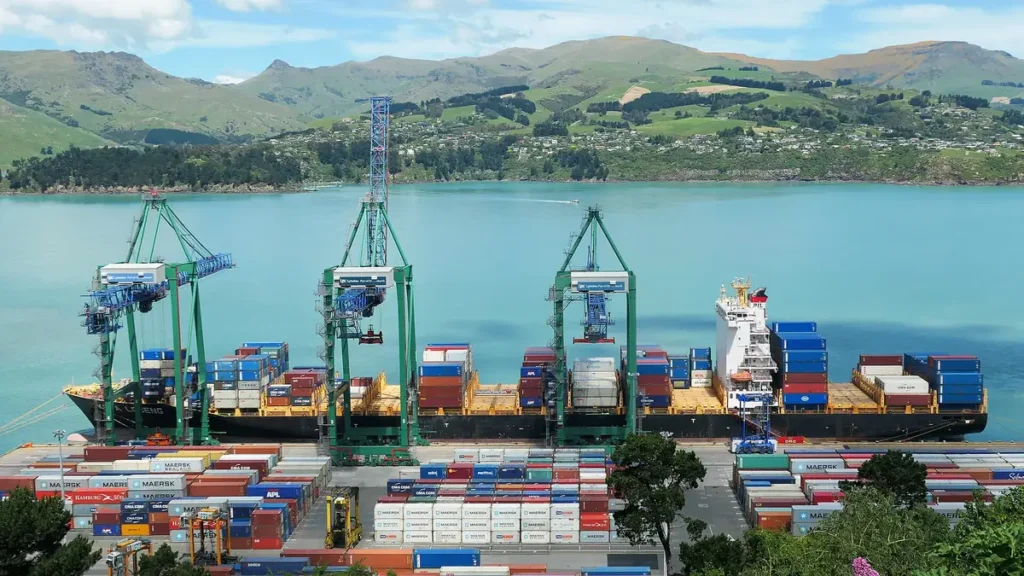
As the India–New Zealand FTA came into force on 20 October 2026, the two customs services signed a Memorandum of Cooperation on Electronic Origin Data Exchange. Signed on 19 October by CBIC and the New Zealand Customs Service, it lets origin data on goods move electronically in advance, so that exporters can claim the FTA’s duty cuts faster and with fewer disputes.
- MoC signed
- 19 Oct 2026
- Parties
- CBIC and NZ Customs
- FTA in force
- 20 Oct 2026
- Purpose
- Origin data, electronically
India–NZ origin data pact: what happened?
An FTA’s zero duty is only a promise until a customs officer at the other end accepts that the goods really were made in India. Paper certificates slow that down and invite disputes. This pact moves the proof online.
- The MoC was signed by CBIC Chairman Vivek Chaturvedi and NZ Customs Comptroller Christine Stevenson on 19 October 2026 (PIB, 21 Oct).
- It provides for advance electronic exchange of origin data on trade in goods.
- PIB says it will help benefits under the FTA reach eligible businesses ‘more efficiently and with greater certainty’.
- For the FTA’s main features, see our 20 October post on its entry into force.
Why does origin matter in an FTA?
- FTA duty cuts apply only to goods that meet the agreed rules of origin.
- Without checks, third-country goods could be routed through a partner to dodge duty.
- Exporters prove origin through certificates; customs verify them.
- Low use of FTAs by Indian firms is often blamed on paperwork and origin compliance costs.
Paper certificates versus electronic exchange
| Point | Paper certificate | Electronic origin data |
|---|---|---|
| Speed | Courier or scan, checked at arrival | Shared in advance |
| Fraud risk | Forgery possible | Data matched between customs |
| Disputes | Frequent verification requests | Fewer gaps in information |
| Cost for MSMEs | Higher | Lower over time |
Which legal provisions apply?
- Customs Act, 1962, Section 28DA: duties of importers claiming FTA preference.
- CAROTAR, 2020: Customs (Administration of Rules of Origin under Trade Agreements) Rules.
- Article 253: Parliament can legislate to implement international agreements.
- WTO Trade Facilitation Agreement (in force 2017) encourages electronic data exchange.
What are the challenges?
- Systems on both sides must be compatible and secure.
- Data protection rules apply to shared commercial data.
- Small exporters still need to learn origin rules.
- Bilateral trade with New Zealand is small, so gains depend on use.
What should be done next?
- Extend electronic origin exchange to India’s other FTAs.
- Link it with ICEGATE and the national trade single window.
- Run outreach for MSMEs on rules of origin.
- Track FTA utilisation rates and publish them.
What can Prelims ask?
- CBIC works under the Department of Revenue, Ministry of Finance.
- CAROTAR came into force in September 2020.
- India–NZ FTA: signed 27 April 2026; in force 20 October 2026.
- Rules of origin decide which goods get FTA preference.
- WTO TFA entered into force in February 2017.
How to write about FTA utilisation in Mains
Practice question (10 marks, 150 words): India signs many FTAs, but exporters often do not use them. Discuss the reasons and the role of trade facilitation in fixing this. (GS-III)
- Intro: India–NZ FTA in force 20 Oct 2026; origin MoC of 19 Oct.
- Problem: low utilisation, origin compliance costs.
- Fix: electronic origin data, CAROTAR, single window.
- Limits: MSME awareness, systems, data safety.
- Conclusion: implementation is the real FTA.
Image: Containers at the Port of Lyttelton, New Zealand. Bernard Spragg, Wikimedia Commons, CC0
How to use this in Mains
If asked: Discuss the importance of trade facilitation measures for Indian exporters. (GS-III)
Quote: “The electronic exchange of origin data is expected to improve operational efficiency, reduce information gaps and provide greater certainty to traders.”
Use it: Use it as the main benefit line, then add MSME outreach.
If asked: Why do Indian firms under-use FTAs? (GS-III)
Quote: “The arrangement will support the effective utilisation of trade preferences under the India–New Zealand Free Trade Agreement.”
Use it: Quote it to show the government’s focus has moved from signing to using FTAs.
Exam angle
Prelims: CBIC, CAROTAR, rules of origin, WTO TFA. · Mains GS-III: FTA utilisation and trade facilitation.
Practice MCQs
Original practice questions (not PYQs).
CAROTAR, 2020, often seen in the news, relates to
Answer (a) & explanation
CAROTAR are the Customs (Administration of Rules of Origin under Trade Agreements) Rules, 2020.
The Central Board of Indirect Taxes and Customs (CBIC) functions under the
Answer (b) & explanation
CBIC is under the Department of Revenue in the Ministry of Finance.
Consider the following statements:
1. The India–New Zealand FTA entered into force on 20 October 2026.
2. The MoC on origin data was signed by DGFT and New Zealand Customs.
Which of the statements given above is/are correct?
Answer (a) & explanation
The MoC was signed by CBIC (not DGFT) and the New Zealand Customs Service.
Questions students ask about this
What did India and New Zealand sign?
A Memorandum of Cooperation on Electronic Origin Data Exchange of Trade in Goods.
Who signed it?
CBIC and the New Zealand Customs Service, on 19 October 2026.
Why does it matter?
It helps exporters claim FTA duty cuts quickly and reduces origin disputes.
When did the FTA come into force?
On 20 October 2026.
Keep studying
Go deeper
Official source: PIB, 21 Oct 2026: India and New Zealand sign MoC on Electronic Origin Data Exchange to Facilitate Bilateral Trade Under the India-New Zealand FTA
facts from cited sources only; faculty review pending