
Jaishankar in Baku: India and Azerbaijan try to reset ties strained over Operation Sindoor
Next story · 24 OctAny voter can prosecute a candidate for a false affidavit: Supreme Court on Section 125A of the RP Act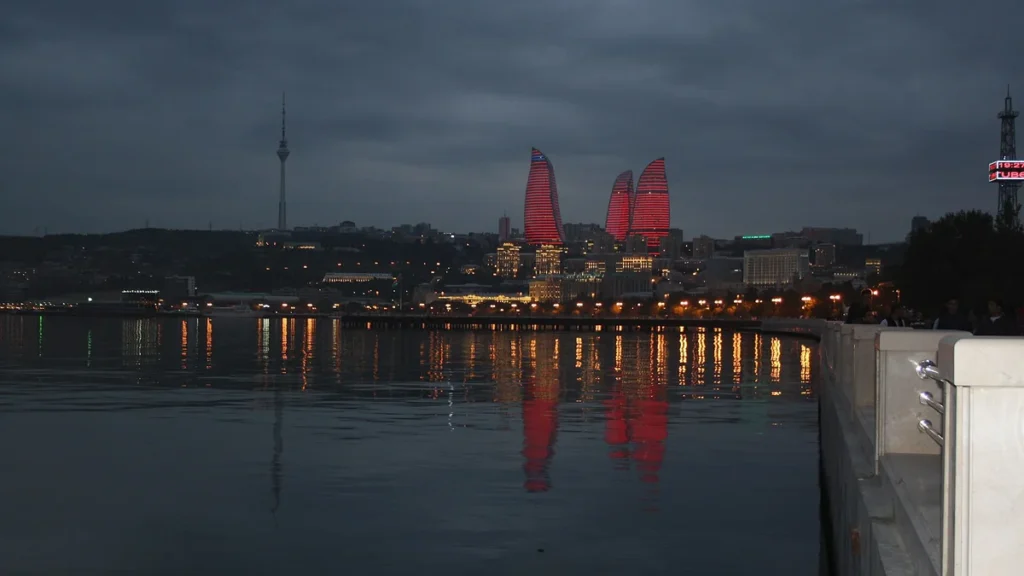
UPSC has already asked about this. Read the story with these questions in mind.
- Prelims 2019Consider the following pairs: Adriatic Sea : Albania …Solve with answer →
- Prelims 2020Consider the following pairs: Mekong : Andaman Sea …Solve with answer →
See all 4 PYQs
- Prelims 2023Consider the following pairs: North Kivu and Ituri : War between Armenia and Azerbaijan …Solve with answer →
- Prelims 2025India is one of the founding members of the International North-South Transport Corridor (INSTC), a multimodal transportation corridor, which will connectSolve with answer →
External Affairs Minister S. Jaishankar met President Ilham Aliyev and Foreign Minister Jeyhun Bayramov in Baku on 23 October 2026, the first visit by an Indian foreign minister to Azerbaijan in eight years. Ties had soured after Azerbaijan condemned India’s strikes on terror targets in Pakistan under Operation Sindoor in May 2025. The two sides agreed to deepen political talks and work together on energy, trade, tourism and connectivity. It is a good example of how India repairs a strained relationship with interests, not just words.
- Visit
- Baku, 23 Oct 2026
- Met
- President Ilham Aliyev
- Gap
- First EAM visit in 8 years
- Energy stake
- OVL’s $1.2 bn in ACG fields
India–Azerbaijan reset: what happened?
Diplomacy is often about picking up the phone after a quarrel. Mr. Jaishankar’s trip to Baku was that phone call.
- 23 Oct 2026: Mr. Jaishankar met President Aliyev and said the visit charted a ‘pathway’ for future ties.
- Mr. Bayramov admitted ‘different view points on different issues’, but called the talks ‘fruitful’.
- Agreed: deeper political consultations, exchange of visits and trade delegations, more economic activity, connectivity and people-to-people ties.
- India thanked Azerbaijan for helping evacuate Indian students from Iran earlier this year, and backed the Armenia–Azerbaijan peace process.
Why did ties sour?
- 7 May 2025: Azerbaijan’s Foreign Ministry condemned India’s strikes on Pakistan-based terror targets under Operation Sindoor.
- Azerbaijan has close ties with Türkiye and Pakistan; India has close defence ties with Armenia, its neighbour and rival.
- Yet India has real stakes: more than 1,000 Indian firms work there, and ONGC Videsh has invested $1.2 billion in the Azeri-Chirag-Gunashli oil and gas fields.
- Bayramov also pointed to growing air links and Indian students in Azerbaijan.
What does India want from Azerbaijan?
| Area | India’s interest | Status |
|---|---|---|
| Energy | Oil and gas; OVL in ACG fields | $1.2 bn invested (HT) |
| Connectivity | Route to Russia and Europe via the Caspian | Lies on the western route of INSTC |
| Security | Common stand against terrorism | ‘Common enemies’, says Jaishankar |
| People | Students, tourists, air links | Growing, says Bayramov |
What is the policy angle?
- Article 51 (DPSP): the State shall endeavour to promote international peace and maintain just and honourable relations between nations.
- INSTC: a 7,200-km multimodal corridor agreed in 2000 by India, Iran and Russia, linking Mumbai to Russia via Iran and the Caspian region.
- Connect Central Asia policy (2012): India’s push for ties with the wider region beyond Pakistan and Afghanistan.
- India’s stated line: disputes must be resolved through dialogue and diplomacy.
What are the challenges?
- Azerbaijan’s close alignment with Türkiye and Pakistan on Kashmir-related issues.
- India’s arms supplies to Armenia make Baku wary.
- Low trade beyond crude oil.
- Instability in West Asia can hit connectivity through Iran.
What should be done?
- Follow up quickly with trade and business delegations.
- Push energy and connectivity projects that give both sides a stake.
- Keep the Armenia relationship, but avoid zero-sum signalling.
- Use multilateral forums to build a working, issue-based relationship.
What can Prelims ask on Azerbaijan?
- Capital: Baku, on the western shore of the Caspian Sea.
- Neighbours: Russia, Georgia, Armenia, Iran; the exclave Nakhchivan borders Türkiye.
- Nagorno-Karabakh: region at the centre of the Armenia–Azerbaijan conflict.
- ACG (Azeri-Chirag-Gunashli): Caspian oil fields where OVL has a stake.
- INSTC: India, Iran and Russia signed in 2000.
How to write about India–Azerbaijan ties in Mains
Practice question (10 marks, 150 words): ‘India’s engagement with the South Caucasus is shaped as much by Pakistan and Türkiye as by its own interests.’ Discuss with reference to recent India–Azerbaijan ties. (GS-II)
- Intro: the October 2026 Baku visit, first in eight years.
- Body 1: the 2025 rupture over Operation Sindoor.
- Body 2: India’s stakes: energy, INSTC, students.
- Body 3: balancing Armenia and Azerbaijan.
- Conclusion: interest-based, dialogue-led diplomacy.
Image: The Flame Towers seen from Baku Boulevard, Azerbaijan. Xoncha, Wikimedia Commons, CC BY-SA 4.0
How to use this in Mains
If asked: Discuss the significance of the South Caucasus for India’s connectivity and energy security. (GS-II)
Quote: “Our talks charted a pathway forward for our relationship.”
Use it: Quote it to show that the visit was about repair and future plans.
If asked: Examine how India manages relations with countries close to Pakistan. (GS-II)
Quote: “Threats like terrorism, conflict, and instability are our common enemies.”
Use it: Use it to show India framing terrorism as a shared concern rather than a bilateral grievance.
Exam angle
Prelims: Azerbaijan map, Caspian Sea, Nagorno-Karabakh, INSTC. · Mains GS-II: India’s extended neighbourhood, connectivity diplomacy.
Practice MCQs
Original practice questions (not PYQs).
Which one of the following countries does NOT share a land border with Azerbaijan?
Answer (c) & explanation
Turkmenistan lies across the Caspian Sea from Azerbaijan. Georgia, Iran, Russia and Armenia share land borders with it.
Consider the following statements about the International North–South Transport Corridor (INSTC):
1. India, Iran and Russia signed the agreement in 2000.
2. It links India to Russia via Iran and the Caspian region.
Which of the statements given above is/are correct?
Answer (c) & explanation
The INSTC agreement was signed in 2000 by India, Iran and Russia, and connects Mumbai to Russia through Iran and the Caspian region.
The Azeri-Chirag-Gunashli fields, where ONGC Videsh has a stake, are located in the:
Answer (b) & explanation
ACG is a group of oil fields in the Azerbaijani sector of the Caspian Sea.
Questions students ask about this
Why did Jaishankar visit Azerbaijan?
To reset ties strained since Azerbaijan condemned Operation Sindoor in May 2025.
When was the last Indian foreign minister’s visit?
Eight years ago, according to the Hindustan Times.
What did both sides agree on?
Deeper political consultations, exchange of visits and trade delegations, energy, connectivity and people-to-people ties.
What is India’s energy stake in Azerbaijan?
ONGC Videsh has invested $1.2 billion in the Azeri-Chirag-Gunashli fields.
Keep studying
Go deeper
facts from cited sources only; faculty review pending