
UNSC faces a ‘legitimacy deficit’: India’s case for Security Council reform at the UN
Next story · 24 Oct‘Sentencing shall not be a lottery’: why India needs a Sentencing Council and guidelines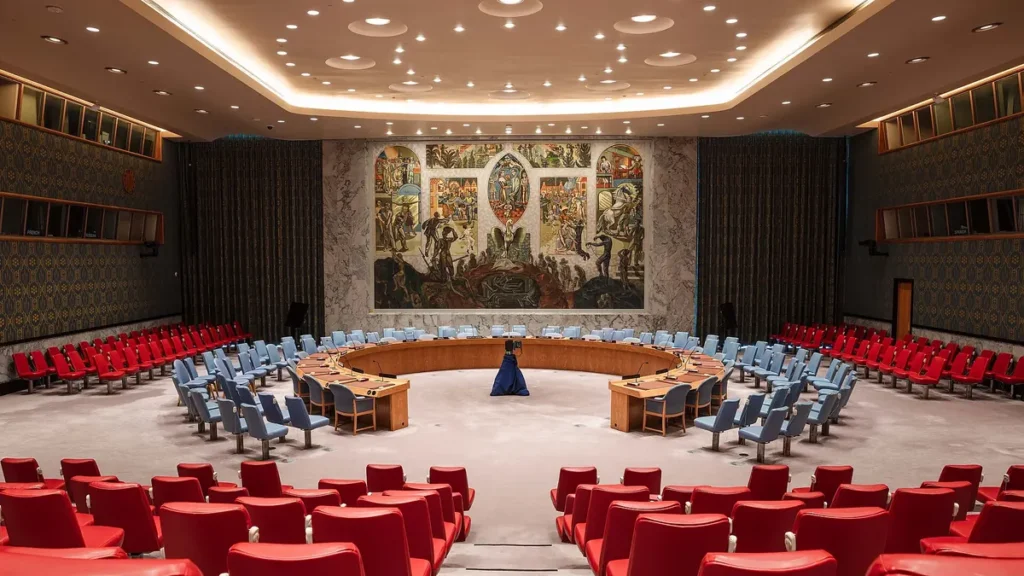
UPSC has already asked about this. Read the story with these questions in mind.
- Prelims 2022With reference to the “United Nations Credentials Committee”, consider the following statementsSolve with answer →
- Mains 2024 · GS2‘Terrorism has become a significant threat to global peace and security.’ Evaluate the effectiveness of the United Nations Security Council’s Counter Terrorism Committee (CTC)…See model answer →
On 22 October 2026, India’s Permanent Representative to the UN, Ambassador P. Harish (Harish Parvathaneni), told the General Assembly that authority won in a war 80 years ago cannot make up for the ‘deficit in legitimacy’ of an unrepresentative Security Council today. He pointed out that Asia-Pacific, with over 60% of the world’s population, has just one permanent seat, and blamed a small group led by Italy, which includes Pakistan, for blocking a negotiating text. This is the classic GS-II question on UNSC reform, now with fresh quotes you can use.
- Speaker
- Amb. P. Harish
- Date
- 22 Oct 2026
- Council
- 15 members, 5 permanent
- India’s bid
- Non-permanent seat, 2028–29
UNSC reform debate: what happened?
Imagine a class monitor chosen in 1945 who still decides everything in 2026, while most of the class has no say. That is India’s argument about the Security Council.
- 22 Oct 2026: India spoke in the General Assembly debate on ‘Question of equitable representation on and increase in the membership of the Security Council’.
- ‘History can be a guide for what not to do. It cannot determine today’s choices,’ Ambassador Harish said.
- He recalled that about 2.5 million Indians took part in the Second World War and around 90,000 died in service.
- He criticised the Uniting for Consensus group for stalling the Intergovernmental Negotiations (IGN) by refusing a negotiating text.
What is the UN Security Council?
- One of the six principal organs of the UN, with primary responsibility for international peace and security (Article 24 of the UN Charter).
- 15 members: five permanent with a veto (China, France, Russia, the UK and the US) and ten elected for two-year terms.
- It was enlarged only once, from 11 to 15 members, through a Charter amendment in force from 1965.
- India has been an elected member eight times, most recently in 2021–22.
Who wants what in UNSC reform?
| Group | Members | Position |
|---|---|---|
| G4 | India, Brazil, Germany, Japan | Expand both permanent and non-permanent seats |
| African Group | Ezulwini Consensus (2005) | Two permanent seats with veto, more elected seats for Africa |
| Uniting for Consensus | Italy-led; includes Pakistan | No new permanent seats; consensus before a text |
| P5 | China, France, Russia, UK, US | Mixed; any change needs all five to ratify |
What does the UN Charter say?
- Article 23: composition of the Council; elected members serve two years and cannot be re-elected immediately.
- Article 27(3): substantive decisions need nine votes including the concurring votes of the permanent members, the ‘veto’.
- Article 108: an amendment needs a two-thirds vote in the General Assembly and ratification by two-thirds of members, including all five permanent members.
- The IGN on Council reform began in the General Assembly in 2009.
What are the challenges?
- Any P5 member can block reform at the ratification stage.
- Rival blocs (G4, Africa, UfC) cannot agree on numbers or the veto.
- The IGN works without a single negotiating text, so talks go round in circles.
- Regional rivals oppose specific candidates, such as Pakistan against India.
What should India do?
- Push for a text-based negotiation with a timeline in the IGN.
- Build a joint G4–Africa platform, since Africa’s support is the biggest vote bank.
- Show leadership through peacekeeping, Global South causes and development help.
- Win the 2028–29 non-permanent seat to show broad support.
What can Prelims ask on the UNSC?
- P5: China, France, Russia, UK, US; 10 elected members for two years.
- Expansion from 11 to 15 members came into force in 1965.
- Article 108 governs Charter amendments.
- G4: India, Brazil, Germany, Japan; UfC is led by Italy.
- India’s last UNSC term: 2021–22 (eighth term).
How to write about UNSC reform in Mains
Practice question (10 marks, 150 words): ‘The UN Security Council suffers from a deficit of legitimacy.’ Examine, with reference to India’s demand for reform. (GS-II)
- Intro: India’s 22 October 2026 statement in the General Assembly.
- Body 1: why the 1945 structure is unrepresentative: Asia, Africa, Latin America.
- Body 2: India’s claim: population, economy, peacekeeping, WWII contribution.
- Body 3: obstacles: Article 108, P5 veto, UfC and IGN deadlock.
- Conclusion: text-based talks and G4–Africa unity.
Image: The Security Council chamber at UN Headquarters, New York, 16 November 2023. Wikiweeki, Wikimedia Commons, CC BY 4.0
How to use this in Mains
If asked: Discuss the need for reforms in the UN Security Council. (GS-II)
Quote: “The authority derived from a victory eight decades ago cannot compensate for the deficit in legitimacy of an unrepresentative Security Council today.”
Use it: Open your answer with it, then give the numbers on representation.
If asked: Critically examine India’s claim to a permanent seat in the UNSC. (GS-II)
Quote: “Let this organisation not send them back in a time machine to 1945 every time it discusses Peace and Security.”
Use it: Use it in the conclusion to show why reform cannot wait.
Exam angle
Prelims: UNSC composition, Article 108, G4, UfC, IGN. · Mains GS-II: reform of global institutions, India’s multilateral diplomacy.
Practice MCQs
Original practice questions (not PYQs).
Consider the following statements about the UN Security Council:
1. It has 15 members, of which five are permanent.
2. Elected members serve for three years.
3. An amendment to the UN Charter needs ratification by all five permanent members.
Which of the statements given above are correct?
Answer (b) & explanation
Elected members serve two-year terms. Article 108 requires ratification by two-thirds of members, including all permanent members.
Which one of the following groups is led by Italy and opposes new permanent seats in the UNSC?
Answer (c) & explanation
Uniting for Consensus, led by Italy and including Pakistan, opposes new permanent members.
The UN Security Council was expanded from 11 to 15 members in:
Answer (b) & explanation
The Charter amendment raising membership to 15 came into force in 1965.
Questions students ask about this
What did India say about the UNSC on 22 October 2026?
That authority from victory in 1945 cannot make up for the ‘deficit in legitimacy’ of an unrepresentative Council today.
What is the G4?
A group of India, Brazil, Germany and Japan that backs each other’s claims for permanent seats.
What is the IGN?
The Intergovernmental Negotiations on Security Council reform in the General Assembly, started in 2009.
How many times has India been on the UNSC?
Eight times as an elected member, the latest in 2021–22.
Keep studying
Go deeper
facts from cited sources only; faculty review pending