
Science successful only when society benefits: Modi
At a big science meeting in New Delhi, the Prime Minister said science is a success only when it leaves the laboratory and makes life better for people. He also shared a major nuclear milestone: India’s own 500-megawatt Prototype Fast Breeder Reactor (PFBR) has reached first criticality. Read it to revise the PFBR, India’s three-stage nuclear plan and how the government is funding research that reaches the market.
- Event
- Emerging Science, Technology and Innovation Conclave 2026, New Delhi
- Nuclear milestone
- 500 MW PFBR reached first criticality
- Lab-to-market money
- ₹12,000 crore, matched by private investors
- New commitments
- ₹24,000 crore in one year
The science conclave: what happened?
A medicine that never leaves the lab cures no one. That was the Prime Minister’s main message at the Emerging Science, Technology and Innovation Conclave 2026 in New Delhi: science counts only when it travels “from the laboratory to the land”.
- The Prime Minister opened the conclave and said science succeeds only when it improves people’s lives.
- He said India no longer plays catch-up with other countries. It now wants to create new technologies for the world.
- He listed progress in nuclear power, space, artificial intelligence (AI) and computer chips, and asked scientists for measurable (countable) results.
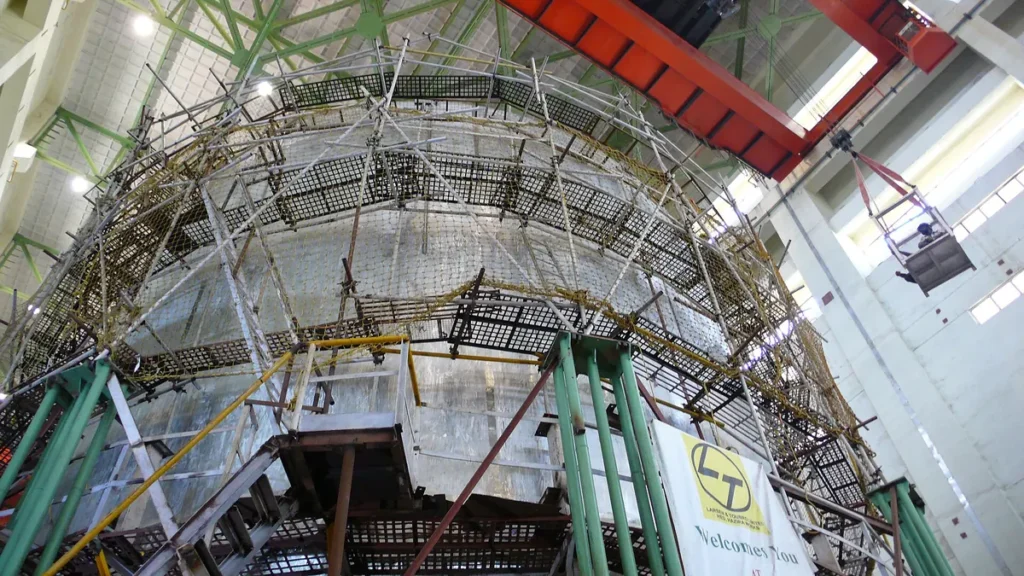
- The big news: the indigenous (made in India) 500-megawatt Prototype Fast Breeder Reactor has reached first criticality. This means the chain reaction inside the reactor has started and can sustain itself for the first time.
- On money: out of the ₹1 lakh crore research pledge, ₹12,000 crore has gone to lab-to-market technologies, and private investors matched it. So ₹24,000 crore of new research commitments came in one year.
What is a fast breeder reactor, and why does India need one?
Most nuclear reactors burn fuel and leave waste. A fast breeder reactor is different: it produces more fissile material (fuel that can split and release energy) than it uses. That is why it is called a ‘breeder’.
The PFBR is at Kalpakkam in Tamil Nadu. It was designed by the Indira Gandhi Centre for Atomic Research (IGCAR) and built by BHAVINI (Bharatiya Nabhikiya Vidyut Nigam Limited). It uses a mixed oxide (MOX) fuel of plutonium and uranium, and it is cooled by liquid sodium, not water.
India has little uranium but some of the world’s largest thorium reserves, mostly in the sands of Kerala and Odisha. So Homi J. Bhabha designed a three-stage plan to reach thorium step by step. The PFBR is the start of stage two.
The Prime Minister also linked the push to energy security: a developed India needs a lot of nuclear power, and depending on imported nuclear fuel is a risk.
India’s three-stage nuclear plan
| Stage | Reactor type | Fuel |
|---|---|---|
| Stage 1 | Pressurised Heavy Water Reactors | Natural uranium; produces plutonium |
| Stage 2 | Fast Breeder Reactors (PFBR) | Plutonium-uranium MOX; breeds more fuel |
| Stage 3 | Thorium-based reactors | Thorium turned into uranium-233 |
Which laws, missions and schemes apply?
- Atomic Energy Act, 1962: nuclear power in India is run by the government through the Department of Atomic Energy.
- National Quantum Mission (2023): aims at quantum computers with 50 to 1,000 physical qubits in eight years, through four Thematic Hubs.
- Anusandhan National Research Foundation Act, 2023: set up a national body to fund and guide research.
- The ₹1 lakh crore research pledge supports private-sector research and lab-to-market technologies.
Why does the science conclave matter?
| Angle | What to note |
|---|---|
| Energy security | Breeder reactors stretch scarce uranium and open the door to thorium. |
| Clean power | Nuclear power gives steady electricity with almost no carbon emissions. |
| Self-reliance | The PFBR is designed and built in India. |
| Research to market | Money tied to results can turn lab ideas into products and jobs. |
What are the problems with the science conclave?
- Long delays: the PFBR took about two decades to reach criticality, and costs rose sharply.
- Sodium is risky: liquid sodium catches fire if it touches air or water, so safety needs extra care.
- Low research spending: India spends well under 1% of its GDP on research, far below leading countries.
- Private firms still invest little in research, so labs often lack partners to make products.
What should be done next on the science conclave?
- Run the PFBR safely and build more fast breeder reactors on time.
- Share clear timelines and results for big missions like the National Quantum Mission.
- Raise total research spending, with more money from private companies.
- Make it easier for scientists to start companies and for industry to license lab work.
What can Prelims ask on the science conclave?
Prelims probability: Expect a statement question on the Prototype Fast Breeder Reactor: 500 megawatts, at Kalpakkam, cooled by liquid sodium, and stage two of India’s three-stage nuclear plan.
- PFBR: 500 MWe, at Kalpakkam, Tamil Nadu; cooled by liquid sodium; fuel is plutonium-uranium MOX.
- Stage 1 = heavy water reactors, Stage 2 = fast breeders, Stage 3 = thorium.
- First criticality = the chain reaction becomes self-sustaining for the first time.
- National Quantum Mission: 50 to 1,000 physical qubits in eight years; four Thematic Hubs.
- India has large thorium reserves in monazite sands of Kerala and Odisha.
How to write about the science conclave in Mains
Practice question (15 marks, 250 words): India’s three-stage nuclear power programme is key to its long-term energy security. Discuss the significance of the Prototype Fast Breeder Reactor reaching criticality, and the challenges ahead.
- Intro: PFBR at Kalpakkam reaches first criticality; stage two begins.
- Significance: breeds fuel, uses scarce uranium better, path to thorium, clean steady power.
- Challenges: delays, cost, sodium safety, public trust, fuel supply.
- Way forward: build fleet on time, strong regulator, more research funding.
- Conclusion: science that reaches society, as the PM said.
Ready lines for your answer
- Science is successful only when it goes from the laboratory to the land and improves lives (Prime Minister at the conclave).
- A fast breeder reactor turns India's thorium wealth into a long-term energy asset.
Quotable data point₹12,000 crore for lab-to-market technologies, matched by private investors, brought ₹24,000 crore of new research commitments in one year.
Exam angle
Prelims: PFBR, three-stage nuclear plan, National Quantum Mission. · Mains GS-III: energy security, science and technology for development.
Practice MCQs
Original practice questions (not PYQs).
Consider the following statements:
1. The Prototype Fast Breeder Reactor is located at Kalpakkam in Tamil Nadu.
2. The Prototype Fast Breeder Reactor is cooled by heavy water.
3. Fast breeder reactors form stage two of India's three-stage nuclear power programme.
How many of the above statements are correct?
Answer (b) & explanation
Statements 1 and 3 are correct. The reactor is cooled by liquid sodium, not heavy water. Stage three of the programme will use thorium.
The National Quantum Mission aims to build intermediate-scale quantum computers with how many physical qubits in eight years?
Answer (d) & explanation
The mission aims at quantum computers with 50 to 1,000 physical qubits in eight years, through four Thematic Hubs.
Questions students ask about this
What is the Prototype Fast Breeder Reactor?
A 500 MW nuclear reactor at Kalpakkam, Tamil Nadu, that produces more fuel than it uses. It is cooled by liquid sodium.
What does first criticality mean?
It means the nuclear chain reaction in the reactor has become self-sustaining for the first time. Power generation comes later.
What are the three stages of India's nuclear plan?
Stage 1 uses natural uranium in heavy water reactors, stage 2 uses fast breeder reactors, and stage 3 will use thorium.
What did the Prime Minister say about science?
He said science is successful only when society benefits, and India now wants to create new technologies, not just catch up.