
India rejects patent plea for drug-resistant tuberculosis treatment
BPaL is a six-month treatment for drug-resistant tuberculosis (TB) that is taken only as tablets. A US-based group, the TB Alliance, asked for an Indian patent on this combination of medicines. The Indian Patent Office said no, because the idea was already published and lacked an inventive step. Read it to revise India’s patent law and why it matters for cheap medicines.
- Treatment
- BPaL: bedaquiline, pretomanid, linezolid
- Applicant
- TB Alliance (United States)
- Decision
- Patent rejected
- Reason
- No inventive step; published since 2015
The BPaL patent case: what happened?
A patent gives one company the sole right to make a medicine for 20 years. For a poor TB patient, that can mean the difference between an affordable copy and a medicine they cannot buy.
- BPaL is a six-month, all-oral treatment for drug-resistant TB. It combines three medicines: bedaquiline, pretomanid and linezolid.
- The TB Alliance, a US-based non-profit group, wanted an Indian patent on this combination.
- The Indian Patent Office rejected it. A patent would have blocked cheaper generic copies.
- Reason: the combination and its shorter use had already been published in research since 2015, so it lacked an inventive step (it was not new enough to deserve a patent).
- Two pre-grant oppositions were filed in 2020, supported by groups such as the Médecins Sans Frontières Access Campaign.
How does India’s patent law protect access to medicines?
India’s Patents Act, 1970 gives a patent for 20 years only if an invention is new, has an inventive step and can be used in industry.
In 2005, India amended the law to allow product patents on medicines, as required under the World Trade Organization’s TRIPS agreement. At the same time it added Section 3(d), which bars patents on new forms of known medicines unless they work clearly better.
In 2013, the Supreme Court used Section 3(d) to reject Novartis’s patent on a new form of its cancer drug Glivec. This protected cheap generics.
India also allows anyone to oppose a patent before it is granted (pre-grant opposition). This is how health groups challenged the BPaL claim. India makes so many affordable generics that it is often called the ‘pharmacy of the developing world’.
Tools in India’s patent law
| Tool | What it does | Example |
|---|---|---|
| Section 3(d) | Blocks patents on minor changes to known drugs | Novartis case, 2013 |
| Pre-grant opposition | Lets anyone object before a patent is granted | BPaL oppositions, 2020 |
| Compulsory licence | Lets others make a patented drug in public interest | Natco v. Bayer, 2012 |
Which laws and Articles apply?
- Patents Act, 1970 (amended 2005): 20-year patents for new, inventive and useful inventions.
- Section 3(d): no patent for new forms of known substances without better efficacy.
- Section 25(1): pre-grant opposition; Section 84: compulsory licences.
- TRIPS agreement of the WTO; the Doha Declaration (2001) says it should not stop countries from protecting public health.
Why does the BPaL patent case matter?
| Angle | What to note |
|---|---|
| Affordable treatment | Generic copies can make BPaL far cheaper. |
| TB burden | India has the world’s largest number of TB patients. |
| Patent quality | Only real inventions should get a monopoly. |
| Global role | Indian generics supply many poor countries. |
What are the problems with the BPaL patent case?
- Drug companies say weak patent protection reduces research money for new medicines.
- Developed countries often pressure India to change Section 3(d).
- Even with cheap drugs, finding and treating every patient remains hard.
- Drug resistance grows when patients stop treatment midway.
What should be done next on the BPaL patent case?
- Keep Section 3(d) and pre-grant opposition strong.
- Scale up shorter oral regimens like BPaL and BPaLM in the National TB Elimination Programme.
- Fund public research so new TB medicines do not depend only on private patents.
- Support patients with nutrition and follow-up so they finish treatment.
What can Prelims ask on the BPaL patent case?
Prelims probability: Expect a question on India’s patent law: Section 3(d) bars patents on new forms of known medicines without better efficacy; the Supreme Court used it against Novartis in 2013.
- BPaL = bedaquiline + pretomanid + linezolid; six months; all oral.
- Section 3(d): added by the 2005 amendment; used in Novartis case (2013).
- Patent term in India: 20 years. Plant varieties cannot be patented.
- Pre-grant opposition: Section 25(1) of the Patents Act.
- Compulsory licence: Section 84; first granted to Natco for Bayer’s Nexavar (2012).
How to write about the BPaL patent case in Mains
Practice question (15 marks, 250 words): India’s patent law balances innovation with access to affordable medicines. Discuss in the light of the recent rejection of a patent for a drug-resistant TB treatment.
- Intro: BPaL patent rejected for lack of inventive step.
- Tools: Section 3(d), pre-grant opposition, compulsory licence.
- Benefits: cheaper generics, public health, India’s global role.
- Concerns: innovation incentives, trade pressure.
- Conclusion: patents should reward real invention, not block access.
Ready lines for your answer
- A patent should reward real invention; a combination already published since 2015 lacks an inventive step.
- India's patent law protects the right to affordable medicine.
Quotable data pointTwo pre-grant oppositions filed in 2020 led to the rejection of the BPaL patent claim.
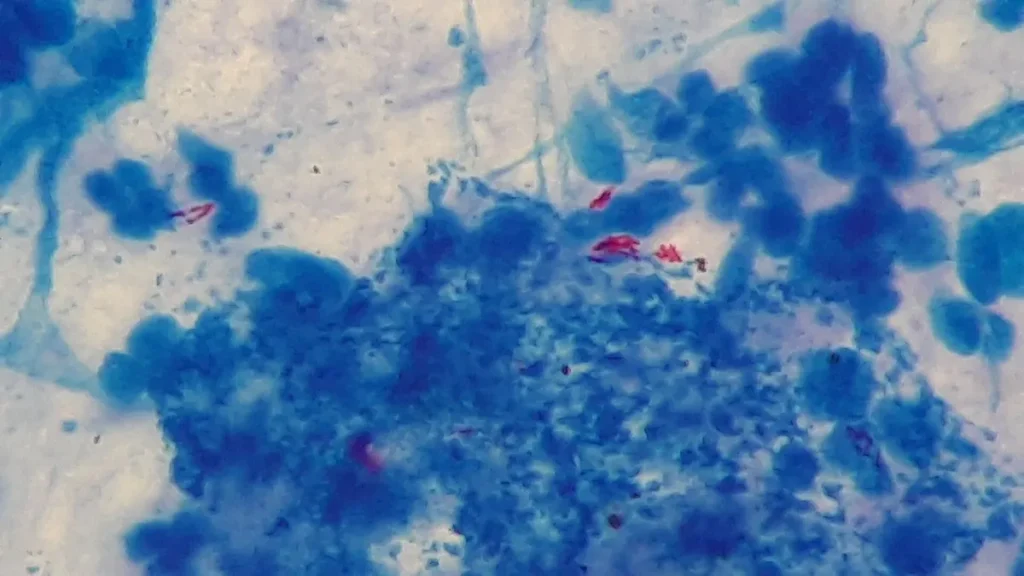
Photo: Ajay Kumar Chaurasiya, CC BY-SA 4.0, via Wikimedia Commons
Exam angle
Prelims: Patents Act, Section 3(d), BPaL, TRIPS. · Mains GS-III: IPR and public health; GS-II: health policy.
Practice MCQs
Original practice questions (not PYQs).
Consider the following statements:
1. The Indian Patent Office rejected the patent because the combination lacked an inventive step.
2. Section 3(d) of the Patents Act, 1970 was added by the 2005 amendment.
3. In India, plant varieties can be patented.
How many of the above statements are correct?
Answer (b) & explanation
Statements 1 and 2 are correct. Plant varieties are not patentable in India.
BPaL, the six-month all-oral treatment for drug-resistant tuberculosis, combines bedaquiline, pretomanid and which other medicine?
Answer (c) & explanation
BPaL = bedaquiline, pretomanid and linezolid.
Questions students ask about this
What is BPaL?
A six-month, all-oral treatment for drug-resistant TB made of bedaquiline, pretomanid and linezolid.
Why did India reject the patent?
The combination and its use had been published in research since 2015, so it lacked an inventive step.
What is Section 3(d) of the Patents Act?
It bars patents on new forms of known medicines unless they show better efficacy. It was added in 2005.
What is pre-grant opposition?
A process that lets anyone object to a patent application before the patent is granted.