
Antimicrobial Resistance (AMR): How Superbugs Arise, the Global and Indian Burden, Causes in Hospitals, Farms and the Environment, and India’s National Action Plan 2.0 (UPSC Notes + PYQs)
UPSC has already asked about this. Read the story with these questions in mind.
How resistance arises
When Alexander Fleming accepted his Nobel Prize for penicillin in 1945, he warned that bacteria exposed to too little of a drug would learn to resist it. He was right. Microbes multiply fast and mutate; when an antibiotic kills the sensitive ones, the few that survive by chance multiply and take over. Bacteria can also swap resistance genes with each other on small loops of DNA called plasmids, even across species. Resistance therefore spreads faster wherever antimicrobials are used heavily or carelessly. “Superbugs” are microbes resistant to many drugs, such as carbapenem-resistant Klebsiella, methicillin-resistant Staphylococcus aureus (MRSA), and extensively drug-resistant tuberculosis. The NDM-1 enzyme, which destroys carbapenems, a last-line class of antibiotics, was named after New Delhi in 2010 when it was found in patients treated in India, though it has since spread worldwide.
- 1Antibiotic kills sensitive bacteria
- 2A few resistant mutants survive
- 3Resistant bacteria multiply
- 4Resistance genes shared via plasmids
- 5Resistant infections spread in people, animals, water
The burden
The Global Research on Antimicrobial Resistance study, published in The Lancet in 2022, estimated that bacterial AMR directly caused about 1.27 million deaths in 2019 and was associated with nearly 5 million. A 2024 follow-up projected about 39 million deaths directly attributable to AMR between 2025 and 2050 if trends continue. South Asia and sub-Saharan Africa carry the heaviest burden. In India, ICMR’s surveillance network has reported falling effectiveness of common antibiotics against E. coli and Klebsiella in hospital infections, and resistance to carbapenems in a large share of samples from intensive care units. Infections in newborns are especially worrying: resistant sepsis is a significant cause of neonatal deaths. The World Bank has warned that AMR could push millions into extreme poverty by 2050 through longer illness and costlier treatment.
Why India is a hotspot
- Over-the-counter sales: antibiotics are often sold without prescriptions despite Schedule H and H1 rules.
- Self-medication and incomplete courses.
- Over-prescription for viral fevers and diarrhoea, sometimes driven by patient pressure and incentives.
- Irrational fixed-dose combinations: the Government banned 328 such combinations in 2018 and more later.
- Weak infection control in hospitals, allowing resistant bugs to spread between patients.
- Poor sanitation: untreated sewage and hospital waste carry resistant bacteria into rivers.
- Pharmaceutical effluent: antibiotic factories in some clusters discharge residues into water.
- Animal use: antibiotics used as growth promoters in poultry and aquaculture.
- High infection burden itself: more infections mean more antibiotic use.
- Over-the-counter sales and self-medication
- Over-prescription and irrational combinations
- Weak hospital infection control
- Antibiotics in poultry and fish farming
- Untreated sewage and pharma effluent
Global action
| Year | Step |
|---|---|
| 2015 | WHO Global Action Plan on AMR; GLASS surveillance system |
| 2016 | First UN General Assembly high-level meeting on AMR |
| 2017 | WHO AWaRe classification of antibiotics: Access, Watch, Reserve |
| 2022 | Quadripartite (FAO, UNEP, WHO, WOAH) leads One Health response |
| 2024 | Second UNGA high-level meeting: political declaration to cut AMR deaths by 10% by 2030 and aim for 70% of human antibiotic use from the Access group |
The AWaRe system matters: Access antibiotics are first choices with low resistance risk, Watch antibiotics carry higher risk and need monitoring, and Reserve antibiotics are last resorts for multi-drug-resistant infections.
| Group | Use | Example |
|---|---|---|
| Access | First or second choice, lower resistance risk | Amoxicillin |
| Watch | Higher resistance risk, use with care | Azithromycin, ciprofloxacin |
| Reserve | Last resort for multi-drug resistance | Colistin, some newer drugs |
India’s response
- Chennai Declaration (2012): medical societies’ roadmap on AMR.
- Schedule H1 (2014): stricter prescription and record-keeping rules for third and fourth-generation antibiotics and anti-TB drugs.
- Red Line campaign (2016): antibiotic packs carry a red vertical line to signal “prescription only”.
- National Action Plan on AMR (2017-21), with the Delhi Declaration in which States committed to State plans; Kerala (KARSAP, 2018) was first, followed by Madhya Pradesh, Delhi and others.
- Colistin, a last-resort antibiotic, banned in animal food and as a growth promoter in 2019.
- ICMR’s AMR Surveillance and Research Network and antimicrobial stewardship programme in hospitals; Kayakalp awards for hospital hygiene.
- Nafithromycin, an Indian-developed antibiotic for drug-resistant pneumonia, supported by BIRAC, launched in 2025.
- NAP-AMR 2.0 (November 2025): a second plan with stronger One Health coordination across health, animal husbandry, agriculture and environment, private sector participation, and monitoring with targets.
AMR in the environment
Rivers near pharmaceutical clusters and big cities carry high levels of antibiotic residues and resistance genes, studies have found. The Environment Ministry issued draft limits on antibiotic residues in pharma effluent in 2020, and treating sewage and hospital waste is now seen as part of AMR control. The 2024 UN declaration also flagged environmental discharges as a priority for national plans.
Fixing the pipeline
Few new antibiotics have reached the market in decades, because they are costly to develop and, to slow resistance, should be used sparingly, so companies earn little. Solutions include “pull” incentives such as the UK’s subscription model, which pays firms a fixed fee for access to new antibiotics regardless of volume, and public funding through bodies such as CARB-X and GARDP. India’s strength in generic manufacturing could make new antibiotics affordable worldwide if paired with research funding.
Way forward
Enforce prescription-only sales with digital tracking, expand diagnostic labs so doctors treat the right bug, strengthen hospital infection control, vaccinate (pneumococcal and typhoid vaccines reduce antibiotic need), improve sanitation and treat pharma and hospital effluent, end non-therapeutic antibiotic use in animals, fund new drugs, and give State AMR plans money and monitoring. Public awareness, through campaigns like the Red Line, remains the cheapest tool.
PYQ trend
Prelims 2019 asked the reasons for multi-drug resistance in India; vaccines and diseases are asked often. Mains GS-II and GS-III may ask AMR as a public health and One Health challenge.
Antimicrobial Resistance: UPSC angle
For UPSC CSE
Prelims: causes, campaigns, AWaRe, drugs. Mains GS-II/III: public health, One Health, pharmaceutical regulation.
Antimicrobial Resistance UPSC PYQs (Prelims)
Questions UPSC has actually asked, from the official papers. Pick an option to check yourself.
Which of the following are the reasons for the occurrence of multi-drug resistance in microbial pathogens in India?
– 1. Genetic predisposition of some people
– 2. Taking incorrect doses of antibiotics to cure diseases
– 3. Using antibiotics in livestock farming
– 4. Multiple chronic diseases in some people
Select the correct answer using the code given below.
Resistance develops in the microbes, under pressure from wrong or incomplete antibiotic doses, over-the-counter sales, and heavy antibiotic use in poultry and livestock. A patient’s genes or chronic illnesses can make infections worse, but they do not cause microbes to become resistant. Answer as per the official UPSC key · Battle IAS PYQ bankAnswer (b) & why
What is the importance of using Pneumococcal Conjugate Vaccines in India ?
– 1. These vaccines are effective against pneumonia as well as meningitis and sepsis.
– 2. Dependence on antibiotics that are not effective against drug-resistant bacteria can be reduced.
– 3. These vaccines have no side effects and cause no allergic reactions.
Select the correct answer using the code given below :
PCV, part of the Universal Immunisation Programme, protects against Streptococcus pneumoniae, which causes pneumonia, meningitis and sepsis. Fewer infections mean less antibiotic use, which slows resistance. Like every vaccine it can cause side effects, so statement 3 is wrong. India’s own PCV (Pneumosil) came in 2020. Answer as per the official UPSC key · Battle IAS PYQ bankAnswer (b) & why
Mains PYQs on this topic
No UPSC Mains question from 2023-2026 is directly on this topic. Older papers (2013-2022) will be added as the Mains bank grows.
Quick quiz
The Red Line campaign is about
A red line on antibiotic packs signals prescription-only use.Answer (b)
Which State first released a State action plan on AMR?
Kerala, KARSAP, 2018.Answer (b)
In WHO’s AWaRe system, “Reserve” antibiotics are
They should be kept for multi-drug-resistant infections.Answer (c)
FAQs
What is antimicrobial resistance?
The ability of microbes to survive drugs meant to kill them, making infections harder to treat.
Why is India an AMR hotspot?
Easy antibiotic sales, over-prescription, weak infection control, poor sanitation, pharma effluent and antibiotic use in animals.
What is NAP-AMR 2.0?
India’s second National Action Plan on AMR, launched in November 2025, with a stronger One Health and monitoring framework.
What is AWaRe?
WHO’s classification of antibiotics into Access, Watch and Reserve groups to guide prudent use.
Can I stop an antibiotic course when I feel better?
Only on a doctor’s advice. Stopping early or taking leftover antibiotics without diagnosis gives surviving bacteria a chance to develop resistance, and antibiotics do nothing against viral colds and flu.
How do vaccines help against AMR?
They prevent infections, which reduces antibiotic use and the chance for resistance to develop.
Spotted an error? Tell us. We correct within 48 hours.
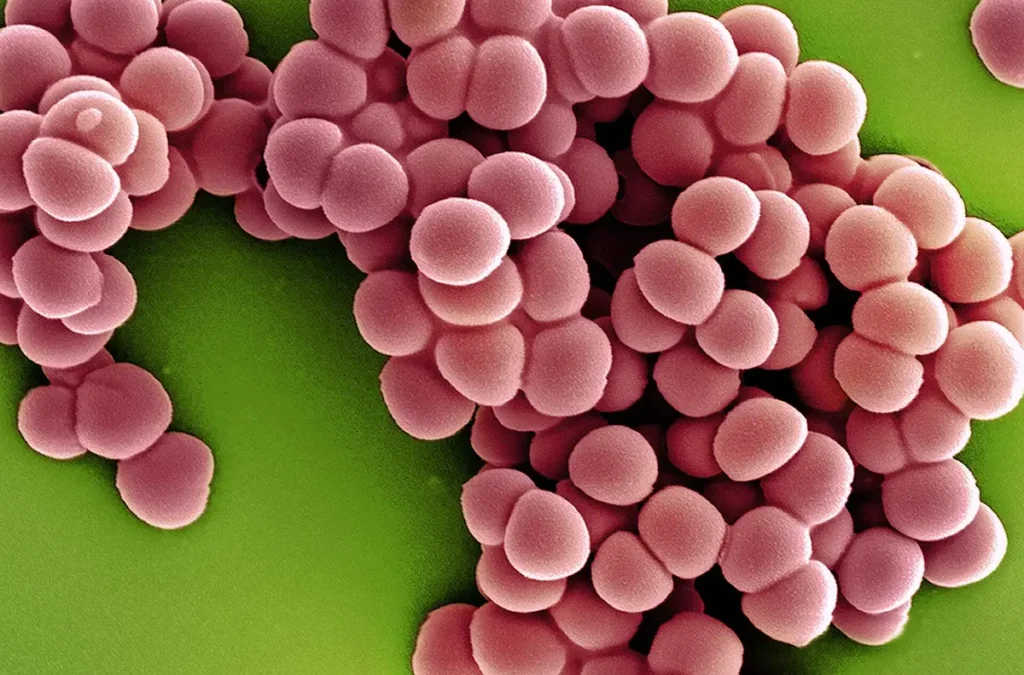
Image: NIAID, Wikimedia Commons, CC BY 2.0
How to use this in Mains
If asked: Antimicrobial resistance is a silent pandemic. Evaluate India's response. (GS-II/III)
Quote: “Red Line campaign (2016): antibiotic packs carry a red vertical line to signal “prescription only”.”
Use it: Use as a concrete example of India's policy response in the body.
In the news

Kufri Jamunia: ICAR-CPRI’s purple potato to fight hidden hunger
A PIB backgrounder of 18 October 2026 puts the spotlight on Kufri Jamunia, a purple-fleshed potato bred by ICAR’s Central Potato Research Institute and released in 2024. It has nearly twice the Vitamin C of a common potato and several times more zinc and iron, along with antioxidants called anthocyanins. The idea is clever: instead of asking people to change what they eat, make the food they already eat more nutritious. That is biofortification.
18 Oct 2026
NPPA caps trade margins on 137 anti-cancer drugs: prices to fall up to 70% from 9 November
On 17 October 2026 the National Pharmaceutical Pricing Authority (NPPA) capped trade margins on 137 non-scheduled anti-cancer drugs at 30%, using its special public-interest power under Paragraph 19 of the Drugs (Prices Control) Order, 2013. The Government expects the retail price of these medicines to fall by up to 70%, and the new prices apply from 9 November 2026. The list includes costly immunotherapy drugs such as pembrolizumab and durvalumab.
18 Oct 2026
TB Mukt Bharat: JOSH campaign and India’s TB decline vs the world
A PIB backgrounder on 13 October 2026 says India's yearly emerging TB cases fell 21% from 2015 to 2024, against a 12% global fall. Treatment coverage is 92% versus 78% worldwide. The same day a JOSH youth campaign began in 11 States and 55 districts to push screening, treatment and stigma reduction.
13 Oct 2026
Hospitals must display rates: Centre writes to States and UTs
On 12 October 2026 the Union Health Secretary asked all States and UTs to make Clinical Establishments display the rates for their services prominently. The Clinical Establishments (Central Government) Rules, 2012 require rates to be shown at a conspicuous place in the local language and in English.
12 Oct 2026