
Uttar Pradesh fines three former officers for RTI delay
A citizen asked a government office a simple question under the Right to Information Act. The law says he should get an answer in 30 days. He got it after two years. Now the Uttar Pradesh State Information Commission has fined three former Sub-Divisional Magistrates, and the money will be cut from their salaries. Read it to revise the RTI Act and the powers of Information Commissions.
- Where
- Sikandra tehsil, Kanpur Dehat
- Delay
- March 2024 to April 2026
- Fine
- ₹25,000 in all
- Law
- Section 20(1), RTI Act, 2005
The RTI delay fine: what happened?
The Right to Information Act works only if officers fear the cost of silence. This case shows that delay can hit an officer’s own pocket.
- A citizen filed a request on 5 March 2024 under Section 6(1) of the RTI Act, about the jobs of two staff members in Sikandra tehsil, Kanpur Dehat district.
- He got the information only in April 2026, about two years late.
- The Uttar Pradesh State Information Commission fined three former Sub-Divisional Magistrates (SDMs) who were in charge in that period.
- The penalty is ₹25,000 in all under Section 20(1): ₹5,000 on one officer and ₹10,000 each on two.
- The fine will be cut from their salaries.
How does the RTI Act work?
The Right to Information Act, 2005 lets any citizen ask a public authority for information. Every office has a Public Information Officer (PIO) who must reply.
Under Section 7(1), the reply must come within 30 days, or within 48 hours if the information concerns a person’s life or liberty.
If there is no reply, the citizen can file a first appeal inside the office, and then a second appeal or complaint to the Information Commission.
Under Section 20(1), the Commission can fine the officer ₹250 for each day of delay, up to ₹25,000. The fine is paid by the officer personally, not by the department. Under Section 20(2), it can also recommend disciplinary action.
What are the key time limits and penalties?
| Step | Rule | Section |
|---|---|---|
| Reply | 30 days (48 hours for life or liberty) | Section 7(1) |
| Appeal | First appeal, then Information Commission | Section 19 |
| Penalty | ₹250 a day, up to ₹25,000 | Section 20(1) |
Which laws and Articles apply?
- Article 19(1)(a): the right to know is part of freedom of speech and expression, as the Supreme Court has held.
- RTI Act, 2005, Section 15: each State has a State Information Commission.
- Section 15(3): the Governor appoints Information Commissioners on the advice of a committee of the Chief Minister, the Leader of the Opposition and a Cabinet Minister.
- RTI (Amendment) Act, 2019: the Centre now sets the term and salary of Information Commissioners.
Why does the RTI delay fine matter?
| Angle | What to note |
|---|---|
| Accountability | A personal fine makes officers take RTI seriously. |
| Citizens’ power | Shows that ordinary people can make the system answer. |
| Commissions | Shows a State Information Commission using its penalty power. |
| Good governance | Timely information reduces corruption and delay. |
What are the problems with the RTI delay fine?
- Many Information Commissions have long lists of pending appeals.
- Penalties are rarely imposed, so delay often goes unpunished.
- Officers move posts, making it hard to fix responsibility.
- Many offices do not publish information on their own as Section 4 requires.
What should be done next on the RTI delay fine?
- Fill vacancies in Information Commissions quickly.
- Impose penalties regularly when delay has no good reason.
- Train officers and put RTI replies online.
- Publish more information on websites on their own (proactive disclosure under Section 4).
What can Prelims ask on the RTI delay fine?
Prelims probability: Expect a question on the Right to Information Act, 2005: reply in 30 days; penalty up to ₹25,000 under Section 20(1).
- RTI Act, 2005: reply within 30 days; 48 hours for life or liberty (Section 7(1)).
- Section 20(1): penalty of ₹250 a day, up to ₹25,000, paid by the officer personally.
- Section 15: State Information Commission; Governor appoints commissioners on a committee’s advice.
- Section 4: proactive disclosure of information.
- RTI (Amendment) Act, 2019: Centre fixes term and salary.
How to write about the RTI delay fine in Mains
Practice question (UP PCS Mains GS-V, 8 marks, 125 words): The Right to Information Act is only as strong as the penalties behind it. Discuss with reference to the recent action of the Uttar Pradesh State Information Commission.
- Intro: Kanpur Dehat case; two-year delay; ₹25,000 fine.
- RTI basics: 30 days, appeals, Section 20(1).
- Why penalties matter: accountability and deterrence.
- Problems: pending appeals, vacancies, rare penalties.
- Conclusion: strong commissions make RTI real.
Ready lines for your answer
- Delay in RTI is not just bad service; it can cost the officer.
- Strong Information Commissions make transparency real.
Quotable data pointRequest filed 5 March 2024; information given April 2026; ₹25,000 penalty in all on three former SDMs.
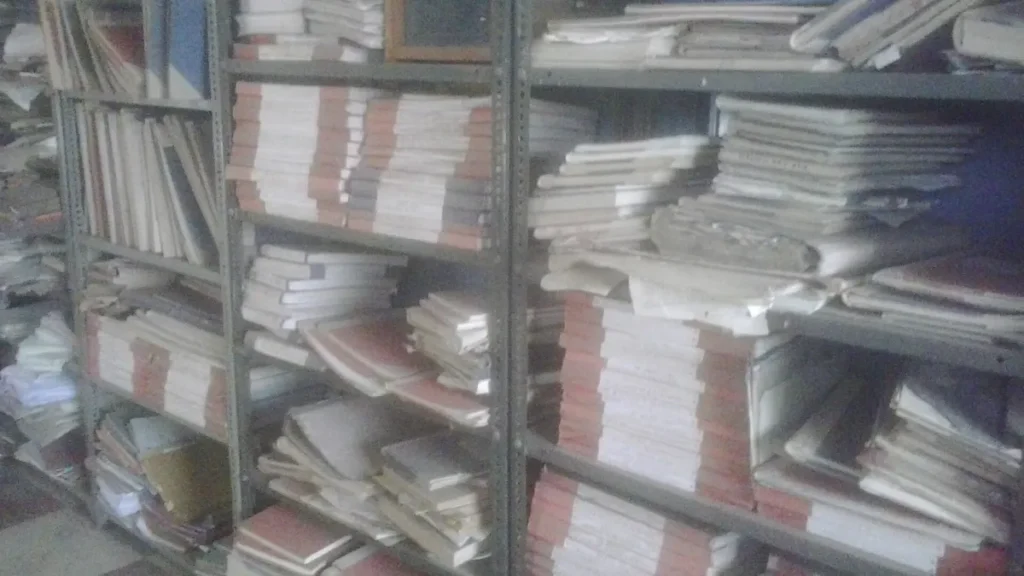
Photo: Ganesh Dhamodkar from Nagpur, India, CC BY 2.0, via Wikimedia Commons
Exam angle
Prelims: RTI time limits, Section 20(1), Information Commissions. · Mains GS-II: transparency and accountability.
Practice MCQs
Original practice questions (not PYQs).
Consider the following statements:
1. Under the Right to Information Act, information must normally be given within 30 days.
2. The maximum penalty under Section 20(1) is ₹25,000.
3. State Information Commissioners are appointed by the Chief Justice of the High Court.
How many of the above statements are correct?
Answer (b) & explanation
Statements 1 and 2 are correct. The Governor appoints them on the advice of a committee led by the Chief Minister.
Under the Right to Information Act, 2005, the penalty imposed by an Information Commission on a Public Information Officer for delay is:
Answer (b) & explanation
Section 20(1) allows ₹250 for each day of delay, up to ₹25,000. The officer pays it personally.
With reference to the Uttar Pradesh State Information Commission, consider the following statements:
1. It is set up under the Right to Information Act, 2005.
2. Its commissioners are appointed by the Governor.
Which of the statements given above is/are correct?
Answer (c) & explanation
Section 15 of the RTI Act sets up State Information Commissions, and the Governor appoints the commissioners on a committee's advice.
Questions students ask about this
Why were the three officers fined?
For a two-year delay in giving information sought under the RTI Act in Sikandra tehsil, Kanpur Dehat.
How much was the fine?
₹25,000 in all under Section 20(1): ₹5,000 on one officer and ₹10,000 each on two, to be cut from their salaries.
Within how many days must RTI information be given?
Within 30 days, or within 48 hours if it concerns a person's life or liberty.
What is the maximum penalty under the RTI Act?
₹25,000, at ₹250 for each day of delay, under Section 20(1).