
Vande Bharat sleeper links Varanasi and Delhi
Vande Bharat trains are India’s home-made semi-high-speed trains, but most so far are chair cars for day trips. Now a sleeper version will run overnight between Varanasi and New Delhi, with Chief Minister Yogi Adityanath and Railway Minister Ashwini Vaishnaw flagging it off from Varanasi. Read it to revise the route, Kavach and how Make in India is changing the railways.
- Route
- Varanasi–New Delhi
- Stops
- Prayagraj, Kanpur, Aligarh, Ghaziabad
- Time saved
- 55 minutes towards Delhi
- Runs
- Six days a week
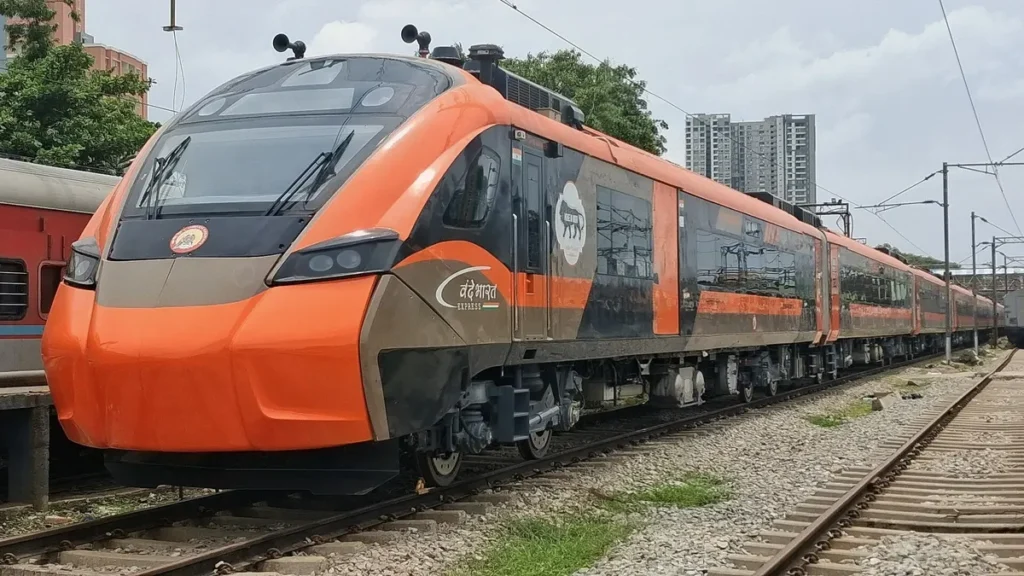
The Vande Bharat sleeper: what happened?
Varanasi and Delhi are linked by some of India’s busiest trains. An overnight Vande Bharat means you can sleep in one city and wake up in the other, a little faster than before.
- A new Vande Bharat Sleeper train will run overnight between Varanasi and New Delhi. It was to be flagged off from Varanasi on Saturday.
- It stops at Prayagraj, Kanpur Central, Aligarh and Ghaziabad.
- It leaves Varanasi at 8:50 PM and reaches New Delhi at 6:10 AM. The return train leaves at 9:40 PM and arrives at 7:10 AM.
- It is 55 minutes faster than the Shiv Ganga Express towards Delhi and 35 minutes faster on the way back.
- It runs six days a week, with no Varanasi run on Fridays and no Delhi run on Saturdays.
What is the Vande Bharat Express?
The Vande Bharat Express is a semi-high-speed train designed and built in India. The first one ran between New Delhi and Varanasi on 15 February 2019.
It is a self-propelled train (no separate engine), which lets it speed up and slow down quickly. It was built at the Integral Coach Factory, Chennai.
The sleeper version has berths for overnight journeys, so it can replace older long-distance trains on busy routes.
Kavach is India’s own automatic train protection system, developed by the Research Designs and Standards Organisation with Indian industry. It applies the brakes if a driver misses a signal or two trains are on a collision course.
How does the new train compare?
| Point | Chair-car Vande Bharat | Vande Bharat Sleeper |
|---|---|---|
| Journey | Day trips | Overnight |
| Seats | Chairs | Berths |
| Varanasi–Delhi time | Daytime run | 8:50 PM to 6:10 AM |
Which laws and Articles apply?
- Railways are in the Union List (Entry 22), so the Centre runs them.
- Railways Act, 1989: the main law for Indian Railways.
- Kavach: automatic train protection developed by the Research Designs and Standards Organisation.
- Make in India: the trains are designed and built in India.
Why does the Vande Bharat sleeper matter?
| Angle | What to note |
|---|---|
| Connectivity | Links Varanasi, Prayagraj and Kanpur to Delhi overnight. |
| Tourism | Helps pilgrims and tourists reach Kashi easily. |
| Make in India | Home-built trains save imports. |
| Safety | Kavach and modern coaches improve safety. |
What are the problems with the Vande Bharat sleeper?
- Fares are higher than older trains, so poorer passengers may not use it.
- Old tracks limit how fast the trains can run.
- Busy routes have many trains, which causes delays.
- Kavach is not yet on all routes.
What should be done next on the Vande Bharat sleeper?
- Upgrade tracks and signals for higher speeds.
- Spread Kavach across the network.
- Keep fares affordable with more coaches.
- Run more sleeper trains on long, busy routes.
What can Prelims ask on the Vande Bharat sleeper?
Prelims probability: Expect a statement question on Kavach (made in India by the Research Designs and Standards Organisation) and the Vande Bharat Express (first run 2019, New Delhi–Varanasi).
- First Vande Bharat Express: New Delhi–Varanasi, 15 February 2019.
- Kavach: India-made automatic train protection by the Research Designs and Standards Organisation.
- Vande Bharat is self-propelled; built at the Integral Coach Factory, Chennai.
- New sleeper route stops: Prayagraj, Kanpur Central, Aligarh, Ghaziabad.
- Railways are in the Union List.
How to write about the Vande Bharat sleeper in Mains
Practice question (UP PCS Mains GS-VI, 8 marks, 125 words): Semi-high-speed trains like the Vande Bharat can transform passenger rail in India. Discuss their benefits and challenges, with reference to Uttar Pradesh.
- Intro: new Varanasi–Delhi sleeper.
- Benefits: speed, comfort, tourism, Make in India.
- Challenges: fares, old tracks, congestion.
- Way forward: track upgrades, Kavach, more trains.
- Conclusion: faster rail for a growing State.
Ready lines for your answer
- Sleep in Kashi, wake up in Delhi.
- Home-built trains carry Make in India on the rails.
Quotable data pointLeaves Varanasi at 8:50 PM and reaches New Delhi at 6:10 AM; 55 minutes faster than the Shiv Ganga Express.
Photo: Sameer2905, CC BY-SA 4.0, via Wikimedia Commons
Exam angle
Prelims: Vande Bharat 2019, Kavach, RDSO, ICF. · Mains GS-III: railway modernisation.
Practice MCQs
Original practice questions (not PYQs).
Consider the following statements:
1. Kavach is an automatic train protection system developed in India.
2. The first Vande Bharat Express ran between New Delhi and Varanasi in 2019.
3. The new Vande Bharat Sleeper runs between Varanasi and New Delhi.
How many of the above statements are correct?
Answer (c) & explanation
All three are correct. Kavach was developed by the Research Designs and Standards Organisation with Indian industry.
Which two Uttar Pradesh cities are covered under the HRIDAY heritage city scheme?
Answer (d) & explanation
The Heritage City Development and Augmentation Yojana (2015) covers Varanasi and Mathura in Uttar Pradesh.
Questions students ask about this
Which cities does the new Vande Bharat Sleeper link?
Varanasi and New Delhi, with stops at Prayagraj, Kanpur Central, Aligarh and Ghaziabad.
What are its timings?
It leaves Varanasi at 8:50 PM and reaches New Delhi at 6:10 AM; the return leaves at 9:40 PM and arrives at 7:10 AM.
When did the first Vande Bharat Express run?
On 15 February 2019, between New Delhi and Varanasi.
What is Kavach?
India's own automatic train protection system that stops trains from passing red signals or colliding.