
Infrastructure in India: Importance, Financing, PPP Models, National Infrastructure Pipeline and PM Gati Shakti (UPSC Notes + PYQs)

UPSC has already asked about this. Read the story with these questions in mind.
- Prelims 2017With reference to 'National Investment and Infrastructure Fund', which of the following statements is/are correct ?Solve it below ↓
- Mains 2024 · GS3India has a long and troubled border with China and Pakistan fraught with contentious issues. Examine the conflicting issues and security challenges along the…See model answer →
See all 5 PYQs
- Prelims 2019With reference to Asian Infrastructure Investment Bank (AIIB), consider the following statementsSolve it below ↓
- Prelims 2019Consider the following statements: Purchasing Power Parity (PPP) exchange rates are calculated by comparing the prices of the same basket of goods and services…Solve with answer →
- Mains 2026 · GS3Discuss how the contradiction between 'rapid infrastructure development' and 'disaster-risk reduction' in ecologically-sensitive areas of India can be managed, with suitable examples.See model answer →
Why it matters
Every rupee of public capex has a larger multiplier than revenue spending, according to RBI estimates. Good roads, ports and power cut logistics costs, which the National Logistics Policy (2022) aims to bring in line with global benchmarks; a 2023 NCAER study put India’s logistics cost at about 7.8-8.9% of GDP.
Plans and platforms
- National Infrastructure Pipeline (2019): over 9,000 projects worth about ₹111 lakh crore for 2020-25.
- PM Gati Shakti National Master Plan (2021): a GIS platform joining 16+ ministries for integrated planning of roads, rail, gas lines and more.
- Bharatmala (roads), Sagarmala (ports), dedicated freight corridors, UDAN (regional air).
- National Monetisation Pipeline (2021): leasing brownfield assets.
Financing models
| Model | How it works |
|---|---|
| EPC | Government pays a contractor to build; owns the asset |
| BOT (toll/annuity) | Private player builds, operates, recovers via tolls or annuities, transfers back |
| Hybrid Annuity Model (HAM) | Government pays 40% during construction; the rest as annuities |
| TOT | Operating assets leased to a private player for an upfront fee |
| InvITs | Trust that holds income-earning assets and raises money from investors |
NaBFID (2021) is the development finance institution for long-term infrastructure lending.
Problems
Land acquisition and clearances, aggressive bidding followed by stressed PPPs (the 2010s highway loans that became NPAs), contract disputes, asset-liability mismatch for banks, and weak urban local body finances. The Kelkar Committee (2015) on PPP called for rebalancing risk and an independent regulator.
Infrastructure: UPSC angle
For UPSC CSE
Prelims: HAM, InvITs, NaBFID, Gati Shakti, NIP. Mains GS-III: infrastructure investment and growth, PPP issues, logistics.
Infrastructure UPSC PYQs (Prelims)
Questions UPSC has actually asked, from the official papers. Pick an option to check yourself.
With reference to 'National Investment and Infrastructure Fund', which of the following statements is/are correct ?
– 1. It is an organ of NITI Aayog.
– 2. It has a corpus of ₹4,00,000 crore at present.
Select the correct answer using the code given below :
NIIF (2015) is a fund manager registered with SEBI as an Alternative Investment Fund, set up by the Ministry of Finance, not NITI Aayog. Its planned corpus was ₹40,000 crore, with the government putting in up to 49% and the rest from investors such as Abu Dhabi’s ADIA. ₹4 lakh crore adds an extra zero. Answer as per the official UPSC key · Battle IAS PYQ bankAnswer (d) & why
With reference to Asian Infrastructure Investment Bank (AIIB), consider the following statements :
– 1. AIIB has more than 80 member nations.
– 2. India is the largest shareholder in AIIB.
– 3. AIIB does not have any members from outside Asia.
Which of the statements given above is/are correct?
The AIIB (Beijing, 2016) had over 90 approved members in 2019 and now has more than 100. China is the largest shareholder; India is second and the biggest borrower. Members include many countries outside Asia, such as the UK, Germany, France and Brazil. Answer as per the official UPSC key · Battle IAS PYQ bankAnswer (a) & why
Mains PYQs on this topic
Questions from the official UPSC Mains papers (2023-2026 in the Battle IAS Mains bank), newest first. Each links to a model answer.
- UPSC Mains 2026 · GS Paper III · Q7 · 10 marks
Discuss how the contradiction between 'rapid infrastructure development' and 'disaster-risk reduction' in ecologically-sensitive areas of India can be managed, with suitable examples.
- UPSC Mains 2024 · GS Paper III · Q6 · 10 marks
What is the technology being employed for electronic toll collection on highways? What are its advantages and limitations? What are the proposed changes that will make this process seamless? Would this transition carry any potential hazards?
- UPSC Mains 2024 · GS Paper III · Q12 · 15 marks
What is the need for expanding the regional air connectivity in India? In this context, discuss the government’s UDAN Scheme and its achievements.
Quick quiz
Under the Hybrid Annuity Model, the government pays during construction about
The rest is paid as annuities.Answer (c)
PM Gati Shakti is
Launched in 2021.Answer (b)
NaBFID is a
Set up by an Act of 2021.Answer (a)
FAQs
What is social infrastructure?
Facilities like schools, hospitals, water supply and sanitation that support human development.
What is an InvIT?
An infrastructure investment trust that pools money to own income-generating infrastructure assets.
What is the National Monetisation Pipeline?
A plan to lease brownfield public assets to private operators to raise funds without selling ownership.
Which committee reviewed PPPs in 2015?
The Vijay Kelkar Committee.
Spotted an error? Tell us. We correct within 48 hours.
Image: Capturedmumbai, Wikimedia Commons, CC BY-SA 4.0
How to use this in Mains
If asked: Infrastructure investment is key to India's growth. Discuss. (GS-III)
Quote: “Every rupee of public capex has a larger multiplier than revenue spending, according to RBI estimates.”
Use it: A strong opening argument with RBI backing.
In the news
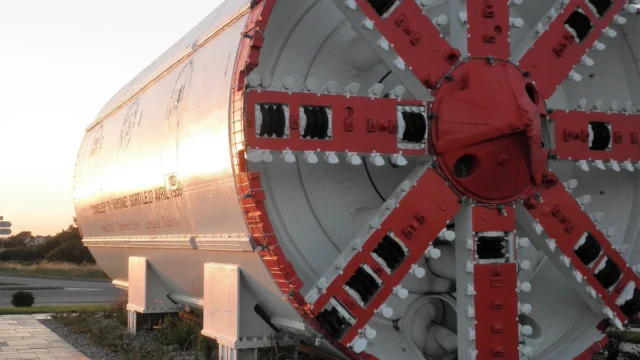
China to impose export controls on tunnel boring machines from 18 November: what it means for India
On 19 October 2026 China’s Commerce Ministry announced export controls on tunnel boring machines (TBMs) and related items from 18 November, calling them clearly dual-use. India imports TBMs for metro, rail and border tunnels and has faced customs delays on Chinese machines since 2024. China also announced controls on some drones.
19 Oct 2026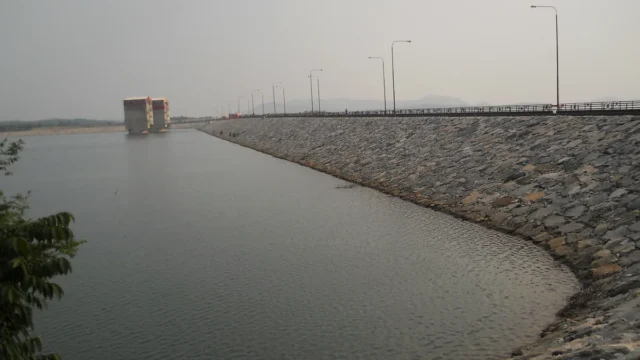
Pumped storage hydropower: India’s roadmap for 100 GW of ‘water batteries’ by 2035-36
A PIB backgrounder of 19 October 2026 explains how pumped storage projects (PSPs) will store solar and wind power for India’s grid. India runs 7.43 GW of pumped storage today, is building 15.87 GW more and has an assessed potential of 345.38 GW. A roadmap aims to add about 100 GW between 2025-26 and 2035-36.
19 Oct 2026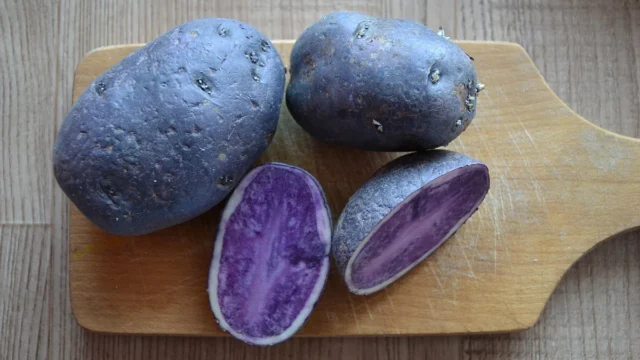
Kufri Jamunia: ICAR-CPRI’s purple potato to fight hidden hunger
A PIB backgrounder of 18 October 2026 puts the spotlight on Kufri Jamunia, a purple-fleshed potato bred by ICAR’s Central Potato Research Institute and released in 2024. It has nearly twice the Vitamin C of a common potato and several times more zinc and iron, along with antioxidants called anthocyanins. The idea is clever: instead of asking people to change what they eat, make the food they already eat more nutritious. That is biofortification.
18 Oct 2026
Oil companies bar sugar-based ethanol for 2026-27; maize incentive cut to ₹2.79 a litre
The oil marketing companies have kept sugar out of India’s ethanol programme for the coming year. The tender issued on 16 October 2026 seeks about 11 billion litres of ethanol for the 2026-27 supply year, but asks for none made from sugarcane juice, sugar syrup or B-heavy molasses, because the Government wants sugar diversion for ethanol cut to zero. Grain must now carry the load, and even the maize incentive has been cut. Read this as a live example of the food-versus-fuel trade-off.
18 Oct 2026