
CM opens ₹82-crore projects for Vantangiya forest villages in Gorakhpur
On Diwali, 8 November 2026, UP Chief Minister Yogi Adityanath inaugurated and laid foundation stones for 52 projects worth over ₹82 crore for the Vantangiya community in Gorakhpur. The Vantangiyas were brought to the forests a century ago to plant trees but lived for decades without land rights or basic services. Read it to revise the Taungya system and forest rights.
- Projects
- 52, worth over ₹82 crore
- Date
- 8 November 2026 (Diwali)
- Revenue villages
- 23 declared in 2017 (5 Gorakhpur, 18 Maharajganj)
- Origin
- Taungya planting, from the 1920s
The Vantangiya projects: what happened?
For 70 years they planted UP’s forests but did not even exist on the government’s map. Their story is a classic UP exam topic.
- The Chief Minister inaugurated and laid foundation stones for 52 projects worth over ₹82 crore in Gorakhpur on 8 November.
- He celebrated Diwali in a Vantangiya village, a tradition he has kept since 2009.
- Kits were given to people under various government schemes.
- He said the villages earlier lacked roads, electricity, water, schools and health care, and residents were not even on the voter list; now they have these services.
Who are the Vantangiyas?
Around the 1920s, the British brought landless labourers into the sal forests of Gorakhpur and Maharajganj to plant trees, partly to replace wood used for railway sleepers.
They used the ‘Taungya’ method from Burma (Myanmar): workers plant forest trees and grow food crops in the gaps until the trees grow. ‘Van’ (forest) + ‘Tangia’ gave the name Vantangiya.
After independence they had no land rights and were later called encroachers. The Forest Rights Act, 2006 helped, and in 2017 the State declared 23 of their settlements revenue villages — official villages that get schemes, schools and roads.
What revenue-village status changed
| Before 2017 | After |
|---|---|
| No official village identity | Recognised revenue villages |
| Left out of schemes | Access to housing, ration, pensions |
| No roads, power, schools | Basic services being built |
| Weak land rights | Titles under the Forest Rights Act |
Which laws and Articles apply?
- Scheduled Tribes and Other Traditional Forest Dwellers (Recognition of Forest Rights) Act, 2006: gives land and use rights to forest dwellers.
- Section 3(1)(h) of the Forest Rights Act: right to convert forest villages into revenue villages.
- Indian Forest Act, 1927: colonial law that made many forest dwellers ‘encroachers’.
- Article 46 (DPSP): promote the welfare of weaker sections.
Why does the Vantangiya villages matter?
| Angle | What to note |
|---|---|
| Social justice | Brings a forgotten community into the mainstream. |
| Forest rights | Shows the Forest Rights Act at work. |
| History | Colonial forestry and the Taungya system. |
| UP exams | Vantangiya, Gorakhpur, Maharajganj, 2017. |
What are the problems with the Vantangiya villages?
- Many other forest villages in UP still await revenue status.
- Forest land rules can slow building roads and houses.
- Livelihoods remain weak, with little land per family.
- Welfare can become a political showcase rather than a right.
What should be done next on the Vantangiya villages?
- Finish Forest Rights Act claims in all forest villages.
- Build skills and forest-based livelihoods like leaf plates.
- Ensure schools and health centres are staffed, not just built.
- Document Vantangiya history and culture.
What can Prelims ask on the Vantangiya villages?
Prelims probability: Medium. Vantangiya, Taungya system and revenue-village status are classic UP Special facts.
- Vantangiyas live mainly in Gorakhpur and Maharajganj forests.
- Taungya: tree planting with food crops in between; came from Burma.
- 2017: 23 Vantangiya settlements made revenue villages.
- Forest Rights Act: 2006.
- Section 3(1)(h) FRA: conversion of forest villages into revenue villages.
How to write about the Vantangiya villages in Mains
Practice question (15 marks, 250 words): Forest dwellers like the Vantangiyas show both the injustice of colonial forest laws and the promise of the Forest Rights Act. Discuss.
- Intro: ₹82-crore projects, 8 Nov 2026.
- History: Taungya, no rights.
- Turning point: FRA 2006, revenue villages 2017.
- Gaps: livelihoods, pending claims.
- Conclusion: rights first, then development.
Ready lines for your answer
- Those who planted the forests deserved a place on the map.
- Recognition is the first step to development.
Quotable data point52 projects, over ₹82 crore (8 Nov 2026); 23 revenue villages declared in 2017.
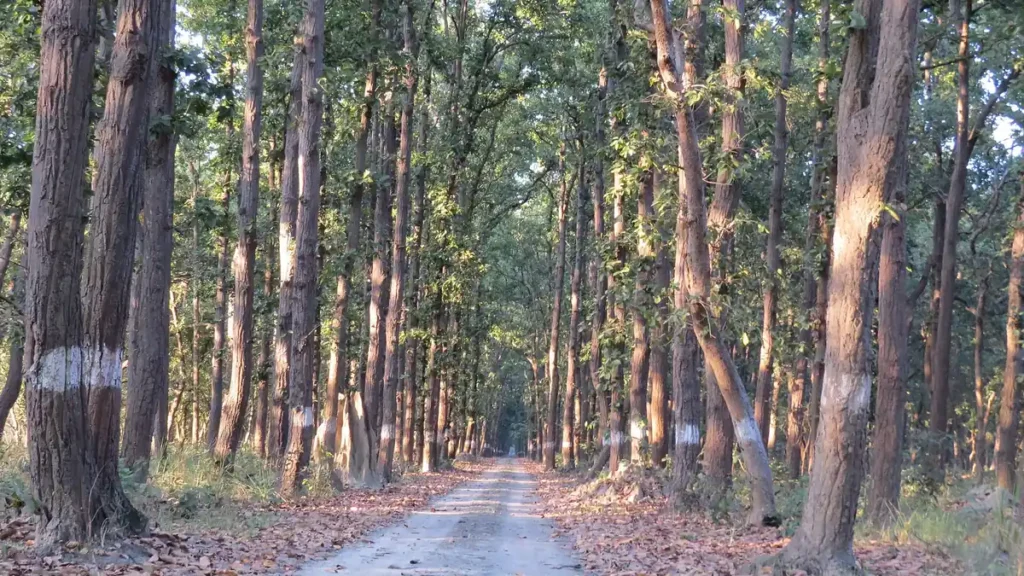
Photo: A. J. T. Johnsingh, WWF-India and NCF, CC BY-SA 3.0, via Wikimedia Commons
Exam angle
Prelims: Forest Rights Act, Taungya. · Mains GS-II: welfare of forest dwellers.
Practice MCQs
Original practice questions (not PYQs).
The term 'Vantangiya' in Uttar Pradesh is associated with:
Answer (b) & explanation
Vantangiyas are forest dwellers of Gorakhpur and Maharajganj whose ancestors planted forests under the Taungya system from the 1920s.
Under which law can forest villages be converted into revenue villages?
Answer (d) & explanation
Section 3(1)(h) of the Forest Rights Act, 2006 gives the right to convert forest villages into revenue villages.
Questions students ask about this
Who are the Vantangiyas?
Forest dwellers of Gorakhpur and Maharajganj whose ancestors were brought around the 1920s to plant forests under the Taungya system.
What is the Taungya system?
A method from Burma where workers plant forest trees and grow food crops between them until the trees grow.
What is a revenue village?
An officially recognised village with defined borders that can receive government schemes and services.
When did Vantangiya settlements become revenue villages?
In 2017, when 23 settlements in Gorakhpur and Maharajganj were declared.
Which law gives forest dwellers land rights?
The Forest Rights Act, 2006.