
Fifth Schedule of the Constitution: Scheduled Areas, Governor’s Powers, Tribes Advisory Council, Samatha Case and Sixth Schedule Compared (UPSC Notes + PYQs)

UPSC has already asked about this. Read the story with these questions in mind.
- Prelims 2022If a particular area is brought under the Fifth Schedule of the Constitution of India, which one of the following statements best reflects the…Solve it below ↓
- Mains 2026 · GS3Ladakh is strategically located between China and Pakistan. As a measure to win hearts and minds of locals, discuss the Border Area Development Programmes…See model answer →
See all 5 PYQs
- Prelims 2023With reference to 'Scheduled Areas' in India, consider the following statementsSolve it below ↓
- Prelims 2025Consider the following statements :With reference to the Constitution of India, if an area in a State is declared as Scheduled Area under the…Solve it below ↓
- Prelims 2013The Government enacted the Panchayat Extension to Scheduled Areas (PESA) Act in 1996. Which one of the following is *not* identified as its objective?Solve it below ↓
Background: “excluded” and “partially excluded” areas
The British treated many tribal regions as places to be kept apart. The Scheduled Districts Act, 1874 and later the Government of India Act, 1919 created “backward tracts”; the 1935 Act turned these into excluded and partially excluded areas, where provincial laws applied only if the Governor said so. The Constituent Assembly set up an Advisory Committee on minorities, Fundamental Rights and tribal and excluded areas, with sub-committees under Gopinath Bardoloi (North-East) and A.V. Thakkar (other areas). Their reports became the Sixth and Fifth Schedules: autonomy through councils in the North-East, and protection through the Governor elsewhere.
Where it applies
Scheduled Areas exist in ten States: Andhra Pradesh, Telangana, Chhattisgarh, Gujarat, Himachal Pradesh, Jharkhand, Madhya Pradesh, Maharashtra, Odisha and Rajasthan. The President notifies them by order after consulting the Governor, and can increase, reduce or rescind them. The usual criteria, from the Dhebar Commission (1960-61), are a majority tribal population, compactness, under-development and marked economic disparity.
Governor’s special role
- Can direct that an Act of Parliament or the State legislature shall not apply, or apply with changes, to a Scheduled Area.
- Can make regulations for peace and good government, in particular to prohibit or restrict transfer of land by or among STs, regulate allotment of land, and regulate money-lending. Regulations need the President’s assent.
- Reports to the President every year on administration of Scheduled Areas; the Union can give directions to the State.
- 1Tribes Advisory Council is consulted
- 2Governor frames a regulation (e.g. ban on land transfer to non-tribals)
- 3President gives assent
- 4Regulation overrides conflicting State or Union laws in the area
Tribes Advisory Council
Every State with Scheduled Areas must have a TAC of up to 20 members, three-fourths of them ST members of the State Assembly. The President may also direct a TAC in States with STs but no Scheduled Areas (Tamil Nadu and West Bengal have one). In practice TACs meet rarely, and some States made the Chief Minister its chair, which critics say weakens the Governor’s protective role.
Samatha and PESA
In Samatha v State of Andhra Pradesh (1997) the Supreme Court held that leasing tribal land in Scheduled Areas to private mining firms violated the Fifth Schedule and the State’s land transfer regulation. PESA, 1996 extended Part IX to these areas and made the Gram Sabha the centre of self-rule. Niyamgiri (2013) let Gram Sabhas decide on bauxite mining affecting Dongria Kondh rights.
Fifth vs Sixth Schedule
| Fifth Schedule | Sixth Schedule |
|---|---|
| Article 244(1) | Article 244(2) and 275(1) |
| Ten States in mainland India | Assam, Meghalaya, Tripura, Mizoram |
| Governor’s regulations, advisory TAC | Autonomous District Councils with law-making, judicial and revenue powers |
Data snapshot
| Indicator | Figure (source) |
|---|---|
| Scheduled Tribe population | 10.4 crore, 8.6% of India (Census 2011) |
| Notified Scheduled Tribes | Over 700 communities |
| States with Scheduled Areas | 10 |
| ST literacy rate | 59% vs 73% for all (Census 2011) |
| PVTGs | 75 groups |
- Article 244(1)
- Ten States in mainland India
- Governor's regulations; TAC advises
- Panchayats via PESA, 1996
- Articles 244(2), 275(1)
- Assam, Meghalaya, Tripura, Mizoram
- Autonomous District Councils make laws
- Councils have judicial and revenue powers
Committees and reports
- Dhebar Commission (1960-61): criteria for Scheduled Areas; the first Scheduled Areas and Scheduled Tribes Commission.
- Bhuria Committee (1995): basis for PESA.
- Bhuria Commission (2002-04): second Scheduled Areas Commission, flagged land alienation and weak TACs.
- Xaxa Committee (2014): high-level committee on the socio-economic, health and educational status of tribes; documented displacement by dams and mines.
Issues
- Governors have rarely used their regulation-making powers; annual reports are often late or formal.
- Land still passes to non-tribals through benami deals, mortgages and acquisition for projects.
- States have been slow to frame PESA rules (some did so only after 2020).
- Conflict between mining revenue and Gram Sabha consent, as in Niyamgiri and Hasdeo Arand.
- Many tribal-majority villages are still not notified as Scheduled Areas.
Way forward
Make TACs meet regularly with published minutes, let Governors use regulation powers proactively, link Forest Rights Act titles to land records, honour Gram Sabha consent, and review notification of left-out tribal villages, as the Xaxa Committee urged.
PYQ trend
UPSC has asked the Fifth Schedule four times in Prelims (2013, 2022, 2023, 2025), mostly on consequences of declaring a Scheduled Area and on who notifies it. Mains asked on tribal development (2025, 2026) and colonial impact on tribals (2023).
Fifth Schedule: UPSC angle
For UPSC CSE
Prelims: who declares Scheduled Areas, Governor’s powers, TAC composition, which States. Mains GS-II: tribal autonomy, land alienation, mining and displacement, PESA implementation.
Fifth Schedule UPSC PYQs (Prelims)
Questions UPSC has actually asked, from the official papers. Pick an option to check yourself.
If a particular area is brought under the Fifth Schedule of the Constitution of India, which one of the following statements best reflects the consequence of it?
Paragraph 5(2) of the Fifth Schedule lets the Governor make rules for Scheduled Areas. These rules can stop or limit transfer of tribal land to non-tribals. Self-governing councils belong to the Sixth Schedule. Scheduled Areas stay part of the State. Answer as per the official UPSC key · Battle IAS PYQ bankAnswer (a) & why
With reference to 'Scheduled Areas' in India, consider the following statements :
– 1. Within a State, the notification of an area as Scheduled Area takes place through an Order of the President.
– 2. The largest administrative unit forming the Scheduled Area is the District and the lowest is the cluster of villages in the Block.
– 3. The Chief Ministers of the concerned States are required to submit annual reports to the Union Home Ministry on the administration of Scheduled Areas in the States.
How many of the above statements are correct?
Under paragraph 6 of the Fifth Schedule, the President declares Scheduled Areas by order. Scheduled Areas range from whole districts down to clusters of villages within a block. The annual report comes from the Governor, and it goes to the President, not from the Chief Minister to the Home Ministry. Two are correct. Answer as per the official UPSC key · Battle IAS PYQ bankAnswer (b) & why
Consider the following statements :
With reference to the Constitution of India, if an area in a State is declared as Scheduled Area under the Fifth Schedule
– I. the State Government loses its executive power in such areas and a local body assumes total administration
– II. the Union Government can take over the total administration of such areas under certain circumstances on the recommendations of the Governor
Which of the statements given above is/are correct?
Under the Fifth Schedule the State’s executive power still covers Scheduled Areas. What changes is that the Governor reports to the President, and the Union can give the State directions on how to run these areas. Nothing lets a local body take over completely, and nothing lets the Union take over the administration. Answer as per the official UPSC key · Battle IAS PYQ bankAnswer (d) & why
The Government enacted the Panchayat Extension to Scheduled Areas (PESA) Act in 1996. Which one of the following is *not* identified as its objective?
PESA extends panchayats to Fifth Schedule areas to give tribal communities self-governance, respect customary rights and protect them from exploitation (land alienation, money-lending). Autonomous district councils are a Sixth Schedule feature, not part of PESA. Answer as per the official UPSC key · Battle IAS PYQ bankAnswer (c) & why
Mains PYQs on this topic
Questions from the official UPSC Mains papers (2023-2026 in the Battle IAS Mains bank), newest first. Each links to a model answer.
- UPSC Mains 2026 · GS Paper II · Q6 · 10 marks
Does India's tribal development policy reflect the aspirations for a socially grounded and equity-based governance? Justify your answer.
- UPSC Mains 2025 · GS Paper I · Q20 · 15 marks
Does tribal development in India centre around two axes, those of displacement and of rehabilitation? Give your opinion.
- UPSC Mains 2023 · GS Paper I · Q13 · 15 marks
How did the colonial rule affect the tribals in India and what was the tribal response to the colonial oppression?
Quick quiz
Scheduled Areas are declared by the
By order, after consulting the Governor.Answer (c)
The Tribes Advisory Council can have at most
Three-fourths ST MLAs.Answer (c)
Which State has Sixth Schedule areas?
Assam, Meghalaya, Tripura, Mizoram.Answer (c)
FAQs
How many States have Scheduled Areas?
Ten.
What did the Samatha judgment say?
Tribal land in Scheduled Areas cannot be leased to private non-tribal mining firms.
Does the Governor act on ministerial advice under the Fifth Schedule?
This is debated; the Constitution gives the Governor a special role, but courts and practice have mostly treated it as acting with advice.
How does PESA relate to the Fifth Schedule?
PESA extends panchayats to Fifth Schedule areas with stronger Gram Sabha powers.
Can the Union give directions on Scheduled Areas?
Yes. The executive power of the Union extends to giving directions to the State on administration of these areas.
Does Uttar Pradesh have Scheduled Areas?
No, although it has Scheduled Tribes such as the Tharu and Gond communities.
Spotted an error? Tell us. We correct within 48 hours.
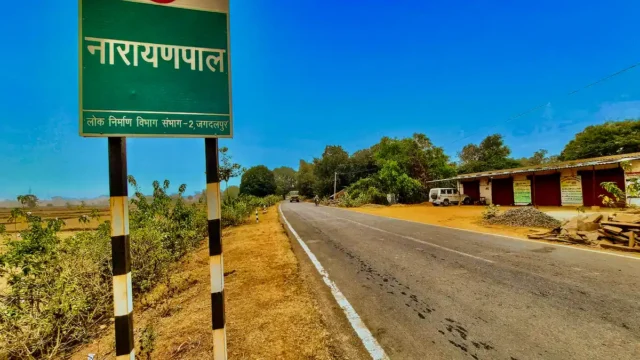
Image: Md Khurshid, Wikimedia Commons, CC BY-SA 4.0
How to use this in Mains
If asked: UPSC Mains 2026, GS-II: Does India's tribal development policy reflect the aspirations for a socially grounded and equity-based governance? Justify your answer.
Quote: “Land still passes to non-tribals through benami deals, mortgages and acquisition for projects.”
Use it: A realistic issue to cite when judging tribal policy outcomes.
In the news
Forest Rights Act: second regional review conference for eight eastern and central States
On 9 October 2026 the Tribal Affairs Ministry held the second regional review of the Forest Rights Act, 2006 in Kolkata with eight States. Nationally, over 54 lakh claims have been filed, about 25 lakh titles given, about 11 lakh are pending and over 18 lakh rejected. The focus is quick disposal, record updating, CFR rights and PVTG habitat rights.
10 Oct 2026
National framework to strengthen ITDAs/ITDPs released
On 15 August 2026 the Ministry of Tribal Affairs and NITI Aayog released the National Framework and the Operational Guidelines for Strengthening of ITDAs and ITDPs. They come from a nationwide consultation and score each agency on 15 parameters. Each ITDA will prepare its own Performance Improvement Roadmap, with quarterly monitoring by States.
15 Aug 2026
FRA digital platform: all SIH finalists brought in
Most FRA disputes come from missing or poor records. Digitisation helps only if claimants can see and track their files.
6 Jan 2026
Constitution published in Santhali for the first time
Reading the Constitution in one's own language is part of legal literacy. Tribal languages have had little official material so far.
25 Dec 2025