
India to join Europe’s flagship research programme
India and the European Union (EU) have finished talks for India to join Horizon Europe, the EU’s biggest research and innovation programme. Indian scientists, universities and companies can then compete for its funding in joint projects and use top European labs. Read it to revise India–EU ties and the Trade and Technology Council.
- Programme
- Horizon Europe (2021–2027)
- Status
- Talks concluded, 7 Nov 2026
- Structure
- Three pillars
- Ministry
- Science and Technology
India and Horizon Europe: what happened?
Imagine an Indian lab winning a share of Europe’s biggest science fund. That door is now opening.
- India and the EU have concluded talks for India to ‘associate’ with Horizon Europe — that means joining as a partner country, almost like a member.
- Indian researchers, institutions and industry can bid for its funding calls through joint projects.
- They can also use top European research facilities.
- The idea took shape at the India–EU Summit of 27 January 2026. Talks began after ministers met in Brussels on 15 July 2026.
- Its focus areas — health, digital, climate, energy and food — match India’s own priorities.
What is Horizon Europe?
Horizon Europe is the EU’s main fund for research and innovation for 2021–2027, worth about €95 billion.
It has three pillars: Excellent Science (basic research), Global Challenges and European Industrial Competitiveness (problem-solving clusters like health and climate), and Innovative Europe (start-ups and new tech).
Non-EU countries can ‘associate’ with it. The United Kingdom, Canada and New Zealand are examples.
India–EU science and tech ties
| Platform | What it does |
|---|---|
| India–EU Science and Technology Agreement | Base for joint research |
| Trade and Technology Council (TTC) | Links trade, trusted tech and security |
| Horizon Europe association | Access to EU research funding and labs |
Which agreements apply?
- India–EU Agreement for Scientific and Technological Cooperation: the base for joint science work.
- India–EU Trade and Technology Council: a high-level forum on tech, trade and resilient supply chains.
- Association deals are international agreements, signed by the Union under its power over foreign affairs (Union List).
- India–EU Strategic Partnership since 2004.
Why does Horizon Europe matter?
| Angle | What to note |
|---|---|
| Science | Bigger funding and global labs for Indian researchers. |
| Economy | Joint innovation in clean energy, health, AI. |
| Diplomacy | Deepens the India–EU strategic partnership. |
| Prelims | Horizon Europe, TTC, pillars. |
What are the problems with Horizon Europe?
- Indian partners may need to share costs or contribute to the programme.
- Paperwork and rules for EU funding are complex for smaller institutions.
- Data, intellectual property and security rules must be agreed carefully.
- Brain drain risk if top talent moves to Europe.
What should be done next on Horizon Europe?
- Sign and ratify the agreement quickly.
- Train Indian institutions to write winning proposals.
- Fair rules on sharing patents and data.
- Link it with India’s own Anusandhan National Research Foundation.
What can Prelims ask on Horizon Europe?
Prelims probability: Medium. Past-question trend: European Union groupings, the Trade and Technology Council (2023) and the Broad-based Trade and Investment Agreement (2017) are asked. Freshness: India’s first association with Horizon Europe. Static link: India–European Union Summit 2026. Testable fact: Horizon Europe is the European Union’s research and innovation programme with three pillars.
- Horizon Europe: EU research and innovation programme, 2021–2027.
- Three pillars: Excellent Science; Global Challenges and Industrial Competitiveness; Innovative Europe.
- India–EU Trade and Technology Council: India’s first such council with any partner (launched 2022).
- India–EU Summit: 27 January 2026.
- Association lets non-EU countries take part almost like members.
How to write about Horizon Europe in Mains
Practice question (15 marks, 250 words): How does India’s association with Horizon Europe strengthen the India–EU partnership?
- Intro: talks concluded November 2026.
- What Horizon Europe is.
- Gains: funding, labs, joint innovation.
- Challenges: costs, IP, brain drain.
- Conclusion: science as a pillar of strategy.
Ready lines for your answer
- Science diplomacy turns partnership into shared discovery.
- Access to Horizon Europe matches India's research ambition with European scale.
Quotable data pointHorizon Europe 2021–2027, about €95 billion; talks concluded 7 November 2026.
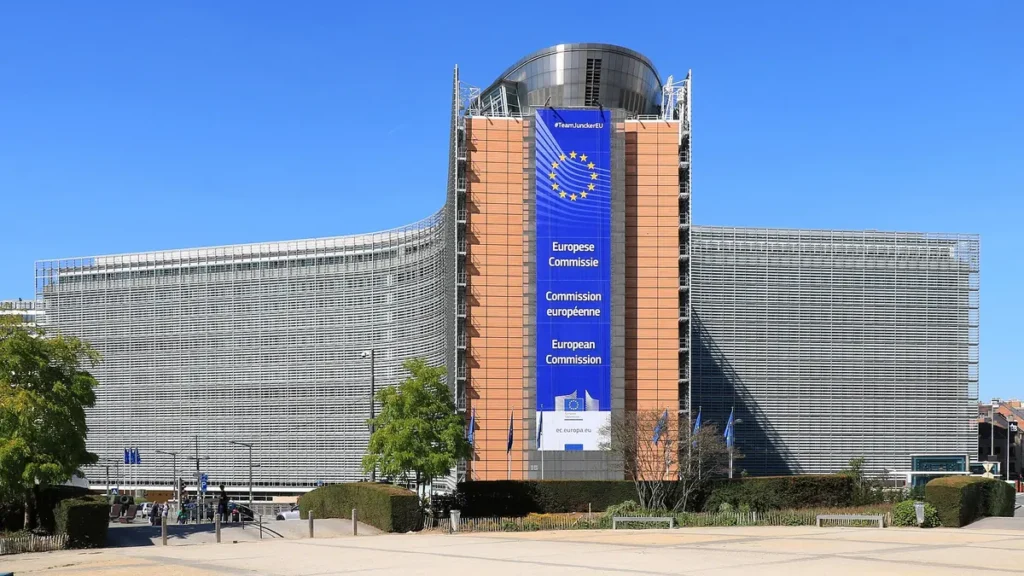
Photo: EmDee, CC BY-SA 4.0, via Wikimedia Commons
Exam angle
Prelims: Horizon Europe, TTC. · Mains GS-II: India–EU relations, science diplomacy.
Practice MCQs
Original practice questions (not PYQs).
Horizon Europe, with which India has concluded association negotiations, is:
Answer (a) & explanation
Horizon Europe (2021–2027) is the European Union's main research and innovation programme; association lets Indian researchers and institutions bid for its funding calls.
Consider the following statements:
1. The India–European Union Trade and Technology Council is the European Union's second such council after the one with the United States.
2. Horizon Europe covers the period 2021 to 2027.
3. Association to Horizon Europe will let Indian institutions take part in its funding calls through joint projects.
How many of the above statements are correct?
Answer (c) & explanation
All three are correct.
Questions students ask about this
What is Horizon Europe?
The EU's flagship research and innovation programme for 2021–2027, worth about €95 billion.
What does 'associate' mean?
India joins as a partner country, so its researchers can apply for funding almost like EU members.
Has India signed already?
Talks are concluded; the formal agreement still has to be signed.
Which other non-EU countries are associated?
Examples include the United Kingdom, Canada and New Zealand.
Who gains in India?
Researchers, universities, labs and companies that partner with European teams.