
Court frees Assam activist held under security law
Land rights activist Pranab Doley, who protested a luxury hotel near Kaziranga National Park, was detained under the National Security Act a day after he got bail. The Gauhati High Court has quashed that detention, and he walked out of Golaghat jail on 6 November after about 115 days. Read it to revise preventive detention and Article 22.
- Law
- National Security Act, 1980
- Max detention
- Up to 12 months
- Released
- 6 November 2026, Golaghat jail
- Days in custody
- About 115
The Assam NSA case: what happened?
He got bail on 29 July. A day later the State locked him up again under a security law. A High Court has now said no.
- Pranab Doley led protests against a luxury hotel project near Kaziranga National Park in Assam.
- He was arrested on 12 July and got bail from a local court on 29 July.
- A day later, the Assam government detained him under the National Security Act, saying his activities harmed public order and the security of the State.
- The Gauhati High Court has quashed that detention.
- He walked out of Golaghat jail on 6 November after about 115 days in custody.
What is preventive detention?
Under preventive detention, the State can hold a person without trial to prevent a future act that may harm public order or security.
Article 22(3) to (7) allows this with fewer safeguards than an ordinary arrest.
Holding someone beyond three months needs the opinion of an Advisory Board of persons qualified to be High Court judges.
The right to a lawyer of one’s choice under Article 22(1) does not apply to preventive detention.
NSA at a glance
| Point | Rule |
|---|---|
| Maximum period | 12 months |
| Who can order | Centre, State, or DM / Police Commissioner with approval |
| Beyond 3 months | Advisory Board opinion needed |
| Court’s role | Can quash illegal or mala fide orders |
Which Articles and laws apply?
- National Security Act, 1980: preventive detention for public order and security of the State.
- Article 22: safeguards on arrest and rules for preventive detention.
- Article 21: life and personal liberty only by a fair procedure of law.
- Habeas corpus under Articles 32 and 226: courts can free a person held unlawfully.
Why does the NSA detention case matter?
| Angle | What to note |
|---|---|
| Liberty | Stops security laws from undoing ordinary bail. |
| Dissent | Protects peaceful protest over land and forests. |
| Checks | High Courts as guardians of personal liberty. |
| Prelims | NSA, Advisory Board, Article 22(3)–(7). |
What are the problems with the NSA detention case?
- Detention a day after bail can defeat the criminal process.
- Vague grounds of ‘public order’ are easy to misuse.
- Advisory Board review can be slow.
- Activists may self-censor out of fear.
What should be done next on the NSA detention case?
- Use preventive detention only in clear, exceptional cases.
- Give written grounds early and ensure fast Advisory Board review.
- Do not use NSA to get around bail.
- Strengthen ordinary criminal investigation instead.
What can Prelims ask on the NSA detention case?
Prelims probability: Medium. Past-question trend: preventive detention (2023) and Article 21 (2018); writs in Uttar Pradesh papers (2023). Freshness: a High Court quashing a security-law detention. Static link: Article 22, Advisory Board. Testable fact: maximum detention under the Act is 12 months; Advisory Board needed beyond three months.
- NSA, 1980: max 12 months.
- Advisory Board needed beyond three months.
- Article 22(3): lawyer-of-choice right does not apply.
- Kaziranga National Park: Assam.
- Habeas corpus: ‘you may have the body’.
How to write about the NSA detention case in Mains
Practice question (15 marks, 250 words): Preventive detention is a sharp tool that can cut liberty. Discuss with reference to a recent High Court ruling.
- Intro: Gauhati HC frees Doley.
- NSA and Article 22 framework.
- Why bail + NSA is worrying.
- Safeguards and reforms.
- Conclusion: security within the Constitution.
Ready lines for your answer
- A bail order should not be undone by a fresh detention on the same facts.
- Security laws must serve the Constitution, not silence it.
Quotable data pointArrested 12 July; bail 29 July; NSA next day; freed 6 Nov after ~115 days.
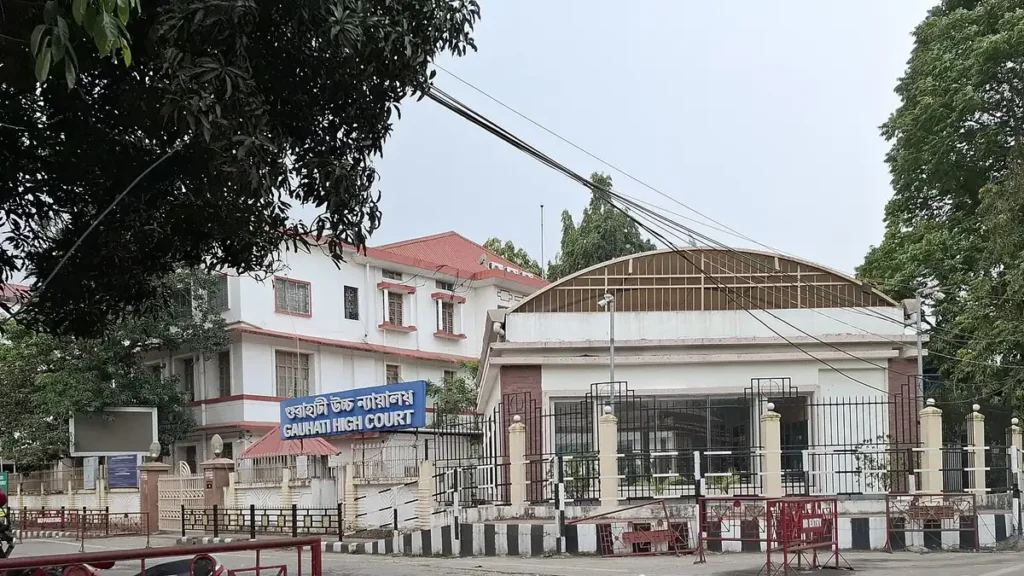
Photo: Pinakpani, CC BY 4.0, via Wikimedia Commons
Exam angle
Prelims: NSA, Article 22. · Mains GS-II: rights and security laws.
Practice MCQs
Original practice questions (not PYQs).
Consider the following statements:
1. Under the National Security Act, 1980, a person can be detained for a maximum of 12 months.
2. Detention beyond three months under a preventive detention law needs the opinion of an Advisory Board.
3. A person under preventive detention has the right to consult a lawyer of his choice under Article 22(1).
How many of the above statements are correct?
Answer (b) & explanation
Statements 1 and 2 are correct. Article 22(3) says the protections of clauses (1) and (2), including the right to a lawyer, do not apply to preventive detention.
Kaziranga National Park, near which a hotel project led to protests, is located in which State?
Answer (d) & explanation
Kaziranga National Park is in Assam, on the Brahmaputra floodplain; it is known for the one-horned rhinoceros.
Questions students ask about this
What is the National Security Act?
A 1980 law that lets the government detain a person without trial for up to 12 months to prevent harm to public order or State security.
Why was the detention quashed?
The Gauhati High Court found the NSA detention unlawful after he had already got bail.
Does a detainee get a lawyer of choice under NSA?
No. Article 22(3) says that protection does not apply to preventive detention.
What is an Advisory Board?
A panel of persons qualified to be High Court judges; its opinion is needed to hold someone beyond three months.
Where is Kaziranga?
In Assam, on the Brahmaputra floodplain; famous for the one-horned rhinoceros.