
India to make 100 key goods as China tightens exports
From 18 November, Chinese firms will need a licence to export tunnel boring machines under China’s dual-use rules. In response, India has begun a push to make 100 critical items at home, from plastics and chemicals to capital goods. The gap is widest in solar wafers. Read it to revise export controls and supply-chain security.
- China licence rule
- Tunnel boring machines from 18 Nov 2026
- India’s push
- Make 100 critical items at home
- Solar modules
- About 233 GW a year
- Solar wafers
- Only about 2 GW a year
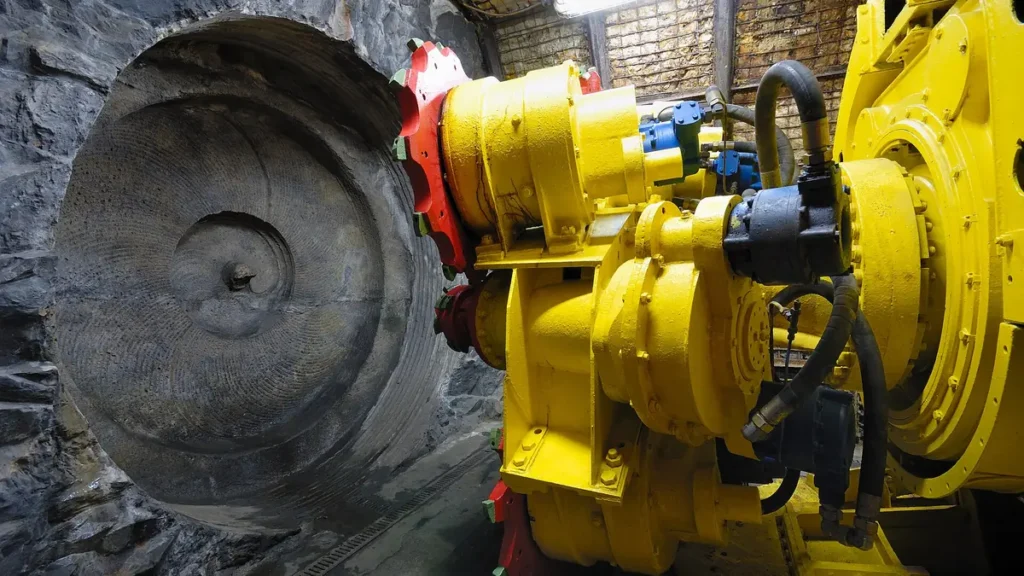
China’s export licences: what happened?
A machine that digs metro tunnels suddenly needs a Chinese licence. India’s answer: make more of what it imports.
- From 18 November, Chinese firms will need a licence to export tunnel boring machines, used to dig metro and rail tunnels, under China’s rules for dual-use items.
- Curbs on solar-making machines are also proposed.
- The Department for Promotion of Industry and Internal Trade has begun a push to make 100 critical items in India, from plastics such as PVC and polypropylene to ammonia, phosphoric acid and capital goods.
- A tunnel boring machine plant in Tamil Nadu should start soon.
- India makes about 233 gigawatts of solar modules a year, but only about 2 gigawatts of ingots and wafers. India’s trade deficit with China has crossed $100 billion this financial year.
What are dual-use goods?
Dual-use goods have both civilian and military uses, so countries control their export.
The Wassenaar Arrangement (1996) is a voluntary group of 42 countries that controls exports of conventional arms and dual-use goods; India joined in 2017.
The Australia Group stops exports that could help make chemical or biological weapons; India joined in 2018.
In solar manufacturing, polysilicon becomes ingots, then wafers, then cells, and finally modules.
Where India stands
| Item | Status |
|---|---|
| Tunnel boring machines | Mostly imported; TN plant planned |
| Solar modules | About 233 GW capacity |
| Solar wafers / ingots | Only about 2 GW |
| Trade deficit with China | Over $100 billion this FY |
Which policies apply?
- Production-linked incentives for solar manufacturing and capital goods.
- National Critical Mineral Mission and a ₹7,280-crore scheme for rare earth permanent magnets.
- World Trade Organization rules on trade defence against dumping.
- Make in India and Atmanirbhar Bharat goals for strategic goods.
Why does China’s export curbs matter?
| Angle | What to note |
|---|---|
| Security | No single country should be able to cut critical supplies. |
| Economy | Trade deficit and project costs rise with import shocks. |
| Industry | PLI and local plants for machines and solar. |
| Prelims | Dual-use, Wassenaar, rare earths, solar chain. |
What are the problems with China’s export curbs?
- Shifting to Europe or Japan can raise costs by 20–40%.
- Solar wafer gap is huge compared with module capacity.
- Rare earth processing is still China-heavy.
- Building capital-goods plants takes years.
What should be done next on China’s export curbs?
- Scale PLI for polysilicon, wafers and capital goods.
- Diversify sources through Japan, the EU, the US and the Quad.
- Build stockpiles of critical inputs.
- Invest in research and skills for precision machinery.
What can Prelims ask on China’s export curbs?
Prelims probability: High. Past-question trend: export control groups (2011), rare earths (2012, 2026) and solar wafers (2018). Freshness: China’s licence rule starts on 18 November. Static link: dual-use goods, production-linked incentives. Testable fact: India makes about 233 gigawatts of modules but only about 2 gigawatts of wafers a year. Upcoming hook: final Chinese rules on solar equipment by end-November.
- Dual-use: civilian and military uses.
- Wassenaar Arrangement: India joined 2017.
- Australia Group: India joined 2018.
- Rare earths: 17 elements.
- China TBM licence rule: from 18 November 2026.
How to write about China’s export curbs in Mains
Practice question (15 marks, 250 words): China’s export licences on capital goods have exposed India’s import dependence. Examine the risks and suggest a strategy for resilient supply chains.
- Intro: TBM licence rule from 18 Nov.
- Risks: project delays, solar gap, costs, deficit.
- Strategy: make at home, diversify, stockpile.
- Trade defence within WTO rules.
- Conclusion: options, not isolation.
Ready lines for your answer
- Self-reliance means options, not isolation.
- A licence abroad can delay a metro at home.
Quotable data pointTBM licences from 18 Nov; modules ~233 GW vs wafers ~2 GW; China deficit over $100 bn.
Photo: Jochen Teufel, CC BY-SA 3.0, via Wikimedia Commons
Exam angle
Prelims: dual-use, Wassenaar, rare earths, solar. · Mains GS-III: supply chains.
Practice MCQs
Original practice questions (not PYQs).
‘Dual-use’ items, recently in the news in the context of China's export licences on tunnel boring machines, refer to goods that:
Answer (a) & explanation
Dual-use goods have both civilian and military uses, so countries control their export.
Consider the following statements:
1. India is a member of both the Wassenaar Arrangement and the Australia Group.
2. Rare earth elements are a group of 13 metallic elements.
3. In solar manufacturing, wafers are made from ingots of polysilicon.
How many of the above statements are correct?
Answer (b) & explanation
Statements 1 and 3 are correct. India joined the Wassenaar Arrangement in 2017 and the Australia Group in 2018. Rare earths are 17 elements (15 lanthanides plus scandium and yttrium).
India's merchandise trade deficit with China this financial year has:
Answer (d) & explanation
The report says the deficit with China has crossed $100 billion this financial year.
Questions students ask about this
What are dual-use items?
Goods that can be used for both civilian and military purposes.
When do China's TBM export licences start?
From 18 November 2026.
How big is India's solar wafer gap?
About 233 GW of modules a year versus only about 2 GW of wafers.
Which Indian department is leading the 100-item push?
The Department for Promotion of Industry and Internal Trade.
What is the Wassenaar Arrangement?
A voluntary group that controls exports of conventional arms and dual-use goods; India joined in 2017.