
More women work, but in informal and low-paid jobs
A study by the Indian Council for Research on International Economic Relations shows that working women nearly doubled between 2017-18 and 2025, from 104 million to 201 million, and the female worker population ratio rose from 22% to 38%. Most of the rise is rural farm work and unpaid family work, hours have fallen, and a rural woman now earns about 45% of a rural man’s pay. Official data released on 10 November show the labour force participation rate at 55.5% in July–September 2026. Read it to revise Periodic Labour Force Survey terms, the care burden and the Constitution on women’s work.
- Working women
- 104 million (2017-18) to 201 million (2025)
- Female worker ratio
- 22% to 38%
- Rural pay gap
- A rural woman earns about 45% of a rural man’s pay
- Latest PLFS
- LFPR 55.5%; rural unemployment 4.3% (Jul–Sep 2026)
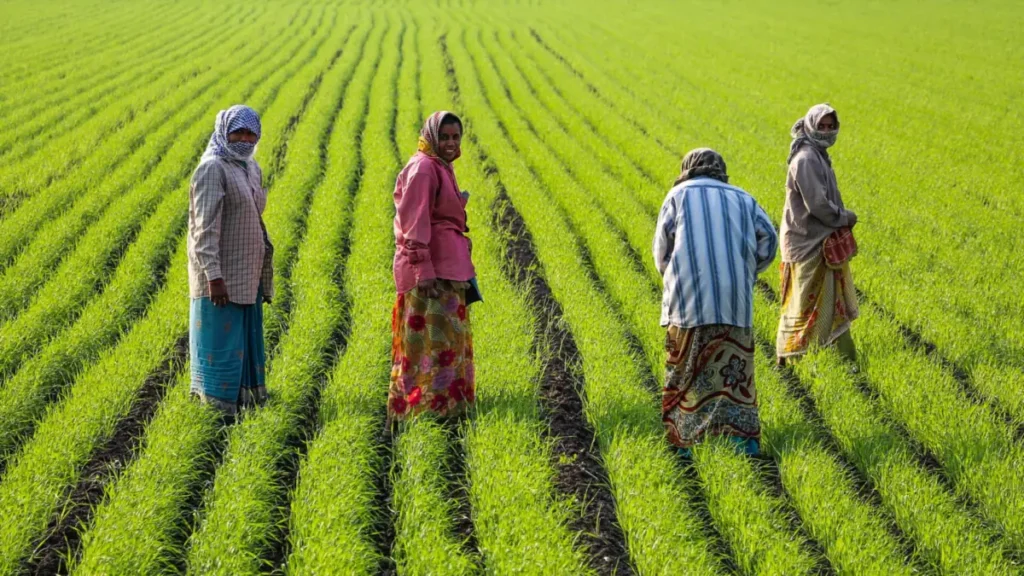
Women’s work: what happened?
More women are counted as workers than a decade ago — but the new work is often unpaid, informal and poorly paid.
- Between 2017-18 and 2025, working women nearly doubled, from 104 million to 201 million, and the female worker population ratio rose from 22% to 38%, an ICRIER study shows.
- Most of the rise is rural farm work and unpaid family work, while rural men moved out of farming; hours fell, and a rural woman now earns about 45% of a rural man’s pay, down from 53%.
- The main reason women stay out of paid work is unpaid care: 60% of women outside the labour force cite childcare and housework, and women spend 3.7 hours a day more than men on domestic work.
- Official data out on 10 November show the same trend: in July–September 2026 the labour force participation rate rose to 55.5% and rural unemployment fell to 4.3%.
What do labour force terms mean?
The Periodic Labour Force Survey is India’s official measure of work and joblessness. The labour force participation rate counts people who are working or seeking work; the worker population ratio counts only those actually employed.
Usual Status uses the last 365 days as the reference period; Current Weekly Status uses the last seven days. A rise in the worker ratio can still hide disguised unemployment, short hours and unpaid family work.
Directive Principles ask the State to secure the right to work, just and humane conditions, maternity relief and equal pay. Article 42 covers just and humane conditions of work and maternity relief; Article 39(d) is equal pay for equal work; Article 43A, added by the 42nd Amendment, is workers’ participation in management.
The Maternity Benefit (Amendment) Act, 2017 extended paid leave, and the Code on Social Security, 2020 seeks to cover gig and informal workers, but enforcement on the farm and in family enterprises remains weak.
What the data show
| Marker | Figure |
|---|---|
| Working women, 2017-18 to 2025 | 104 million to 201 million |
| Female worker population ratio | 22% to 38% |
| Rural woman’s pay vs rural man’s | About 45%, down from 53% |
| Women outside work citing care | 60% |
Which laws and Articles apply?
- Article 42: just and humane conditions of work and maternity relief.
- Article 39(d): equal pay for equal work; Article 43A: workers’ participation in management.
- Periodic Labour Force Survey of the National Statistical Office.
- Maternity Benefit law and the Code on Social Security, 2020.
Why does women’s work and the care burden matter?
| Angle | What to note |
|---|---|
| Society | Shows why a higher worker ratio need not mean better jobs for women. |
| Economy | Unpaid care and informal work limit productivity and pay. |
| Constitution | Directive Principles on work, maternity and equal pay come alive. |
| Prelims | LFPR, worker ratio, Usual Status vs Current Weekly Status, Article 42. |
What are the problems with women’s work and the care burden?
- Most new work is in agriculture and own-account activity, not regular salaried jobs.
- Hours are falling and the rural gender pay gap has widened.
- Childcare, hostels and safe transport are still scarce near workplaces.
- Time-use data are collected, but care work is still weakly reflected in policy.
What should be done next on women’s work and the care burden?
- Expand affordable crèches, shared parental leave and nearby non-farm jobs.
- Link skilling, credit and producer organisations to regular work for women.
- Extend social security to informal and gig workers in practice, not only on paper.
- Use time-use data so unpaid care is counted in planning and budgets.
What can Prelims ask on women’s work and the care burden?
Prelims probability: High. Trend: disguised unemployment (2013), maternity law (2019), Directive Principles on work (2017); the State asked the unemployment trend (2024). Freshness: new quarterly survey data. Testable facts: participation rate 55.5%, rural unemployment 4.3%, female worker ratio 38%.
- Working women: 104 million to 201 million; female worker ratio 22% to 38%.
- LFPR 55.5% and rural unemployment 4.3% in July–September 2026.
- Article 42: just and humane conditions of work and maternity relief.
- Usual Status: last 365 days; Current Weekly Status: last seven days.
- 60% of women outside the labour force cite childcare and housework.
How to write about women’s work and the care burden in Mains
Practice question (15 marks, 250 words): India’s female worker population ratio has risen sharply, yet much of women’s new work is informal, low-paid and marginal. Examine the reasons and suggest measures to improve the quality of women’s employment.
- Intro: 104 to 201 million workers; ratio 22% to 38%.
- Nature of the rise: rural, farm and unpaid family work.
- Care burden and the pay-and-hours gap.
- Laws: Articles 39(d) and 42, maternity and social security.
- Way forward: crèches, regular jobs, social security, time-use data.
Ready lines for your answer
- A higher worker ratio is not the same as better work.
- Unpaid care is the silent tax on women’s time.
Quotable data point104 to 201 million; WPR 22% to 38%; LFPR 55.5%; rural pay 45%.
Photo: Bernard Gagnon, CC BY-SA 3.0, via Wikimedia Commons
Exam angle
Prelims: PLFS terms, Article 42, 55.5% LFPR. · Mains GS-I: quality of women’s employment.
Practice MCQs
Original practice questions (not PYQs).
Consider the following statements:
1. The labour force participation rate includes people who are working as well as those seeking work.
2. The worker population ratio counts only those who are actually employed.
3. Under the Current Weekly Status approach, the reference period is the last 365 days.
How many of the above statements are correct?
Answer (b) & explanation
Statements 1 and 2 are correct. Current Weekly Status uses the last seven days; Usual Status uses the last 365 days.
Which Article of the Constitution directs the State to make provision for securing just and humane conditions of work and for maternity relief?
Answer (d) & explanation
Article 42 covers just and humane conditions of work and maternity relief. Article 39(d) is equal pay for equal work, and Article 43A, added by the 42nd Amendment, is workers' participation in management.
Questions students ask about this
How much did women’s work rise?
From 104 million working women in 2017-18 to 201 million in 2025; the female worker population ratio rose from 22% to 38%.
What is the labour force participation rate?
It includes people who are working as well as those seeking work. In July–September 2026 it was 55.5%.
Which Article covers maternity relief?
Article 42, which also covers just and humane conditions of work.
Why do many women stay out of paid work?
60% of women outside the labour force cite childcare and housework; women spend 3.7 hours a day more than men on domestic work.
What is the rural pay gap in the study?
A rural woman now earns about 45% of a rural man's pay, down from 53%.