
US PERM freeze on Indian IT firms: what the skilled-migrant crackdown means for India
Next story · 21 OctUDAN turns 10: 687 routes, 1.72 crore flyers and a Rs 28,840 crore next phase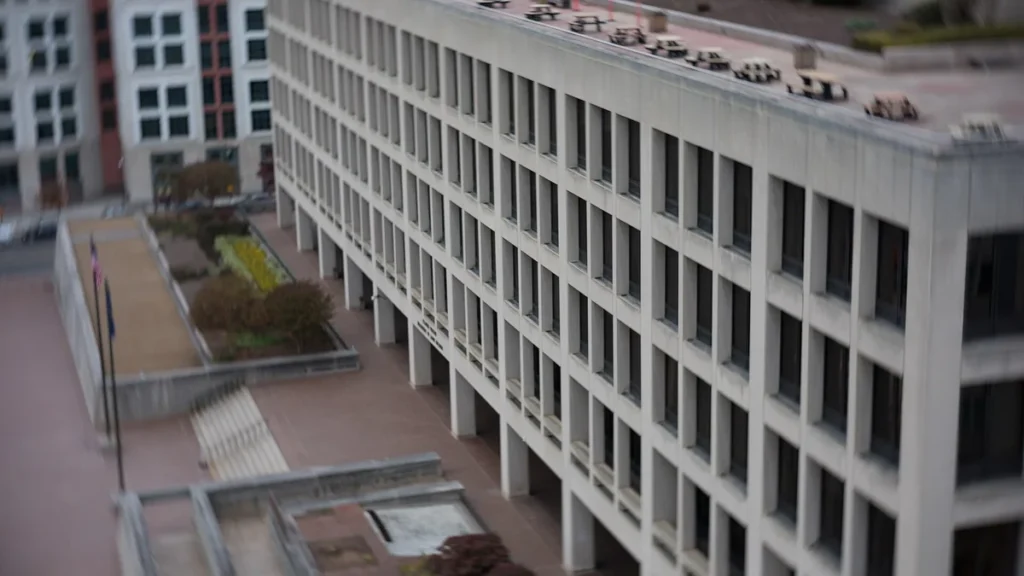
On 8 October 2026 the US Labor Department suspended Microsoft, Adobe, Infosys, TCS, Wipro, HCL, Cognizant and Capgemini from the PERM programme, the labour-certification step for most employment-based green cards. A Hindu data analysis on 21 October shows these firms filed only about 2,000 PERM applications this year, under 2% of the total. The direct hit is small, but the message to Indian talent is large.
- Suspension
- 8 Oct 2026
- Firms suspended
- Eight, incl. Infosys, TCS
- Their PERM share (2026)
- Under 2%
- Indians’ PERM share
- Over half
US PERM freeze: what happened?
Think of an Indian engineer in Texas who has worked on an H-1B for six years and is waiting for her employer to file for a green card. Her visa is still valid. But the door to permanent residency through her company has just been shut, with no end date announced.
- 8 Oct 2026: Labor Secretary Keith Sonderling said the department will not accept new or process pending PERM applications from the eight firms, citing active federal investigations.
- 9 Oct 2026: MEA said PERM is distinct from H-1B; existing H-1B visas are not affected by itself, but green card processes of some employees may be.
- MEA added that the steps ‘do not advance the shared ambitions of both countries’.
- 21 Oct 2026: The Hindu’s analysis says the firms’ share of PERM filings fell from under 10% to 4% in 2025 and under 2% this year.
What are PERM, H-1B and I-140?
- H-1B: a temporary work visa for skilled workers.
- PERM: the employer proves that hiring a foreigner will not hurt US workers’ wages or jobs; most job-based green cards need it.
- I-140: the next step, an immigrant petition filed with USCIS.
- A $1,00,000 H-1B fee imposed in September 2025 was struck down by federal courts in June 2026.
How big is the direct impact?
| Measure | Figure |
|---|---|
| Eight firms’ share of PERM filings, earlier years | Under 10% |
| Their share in 2025 | About 4% |
| Their filings in 2026 so far | About 2,000 (under 2%) |
| Indian advanced-degree I-140 applicants | Over 20,000 a year since 2014 |
Which legal provisions apply?
- US Immigration and Nationality Act: labour certification is a condition for most employment-based green cards.
- GATS Mode 4 covers temporary movement of service suppliers; green cards are outside trade rules.
- Emigration Act, 1983 governs Indian workers going abroad; a new Overseas Mobility Bill has been discussed.
- Article 51: promoting friendly relations and respect for international law.
What are the risks for India?
- Longer uncertainty may push skilled Indians to leave the US or not go at all.
- Indian IT firms may shift more work offshore or to Canada, Mexico and Europe.
- Remittances and the diaspora’s role in India–US ties could suffer.
- Frictions add to the H-1B fee row and the stalled trade deal.
What should India do?
- Seek a mobility and services chapter in the India–US trade deal.
- Diversify destinations through migration pacts with Germany, Japan, the UK and others.
- Grow Global Capability Centres (GCCs) so high-value work comes to India.
- Use returning talent for India’s own R&D and start-ups.
What can Prelims ask on skilled migration?
- PERM = Permanent Labor Certification (US Department of Labor).
- H-1B is temporary; a green card is permanent residency.
- GATS Mode 4: movement of natural persons.
- CBO (2024): immigration surge adds $1.2 trillion in federal revenue over 2024–2034.
- India is the world’s largest recipient of remittances (World Bank).
How to write about skilled migration in Mains
Practice question (10 marks, 150 words): Recent US curbs on skilled migration hurt both countries. Discuss the implications for India and suggest a response. (GS-II)
- Intro: PERM suspension of eight firms, 8 Oct 2026.
- Impact: limited direct share, large signal; green card queues.
- For India: IT, remittances, students, diaspora.
- For US: CBO revenue estimate, innovation loss.
- Response: mobility chapter, diversification, GCCs.
Image: Frances Perkins Building of the US Department of Labor, Washington, D.C. US Department of Labor, Wikimedia Commons, CC BY 2.0
How to use this in Mains
If asked: Discuss the role of the Indian diaspora in India–US relations. (GS-II)
Quote: “The suspension of PERM applications does not, by itself, affect the validity of existing H-1B visas or the status of H-1B visa holders and their dependents.”
Use it: Use MEA’s line to show measured diplomacy, then discuss green card queues.
If asked: Examine whether restrictions on skilled migration serve the host country’s interests. (GS-II)
Quote: “The immigration surge was estimated to add $1.2 trillion in federal revenues over the 2024-2034 period.”
Use it: Quote the CBO estimate to argue that curbs carry costs for the US too.
Exam angle
Prelims: PERM, H-1B, I-140, GATS Mode 4. · Mains GS-II: skilled migration and India–US ties; diaspora.
Practice MCQs
Original practice questions (not PYQs).
In the context of US immigration, PERM refers to
Answer (b) & explanation
PERM is the Labor Department’s labour certification needed for most employment-based green cards.
‘Mode 4’ under the WTO’s GATS refers to
Answer (d) & explanation
Mode 4 covers temporary movement of individuals to supply services abroad.
Consider the following statements:
1. The US PERM suspension of October 2026 by itself cancels existing H-1B visas.
2. Indians account for more than half of PERM applications.
Which of the statements given above is/are correct?
Answer (b) & explanation
MEA said existing H-1B visas are not affected by the suspension by itself. Indians file over half of PERM applications (The Hindu).
Questions students ask about this
What is PERM?
The US labour certification step that most employment-based green cards require.
Which firms were suspended?
Microsoft, Adobe, Infosys, TCS, Wipro, HCL, Cognizant and Capgemini.
Are H-1B visas cancelled?
No. MEA said existing H-1B visas are not affected by the suspension itself.
How big is the direct impact?
Small: the firms filed under 2% of PERM applications this year.
Keep studying
Go deeper
facts from cited sources only; faculty review pending