
Election Commissioners’ letters to the Cabinet Secretary: what the RTI reply reveals about the ECI
Next story · 23 OctColour-coded driving licences: draft CMVR amendments for Indian and foreign nationals explained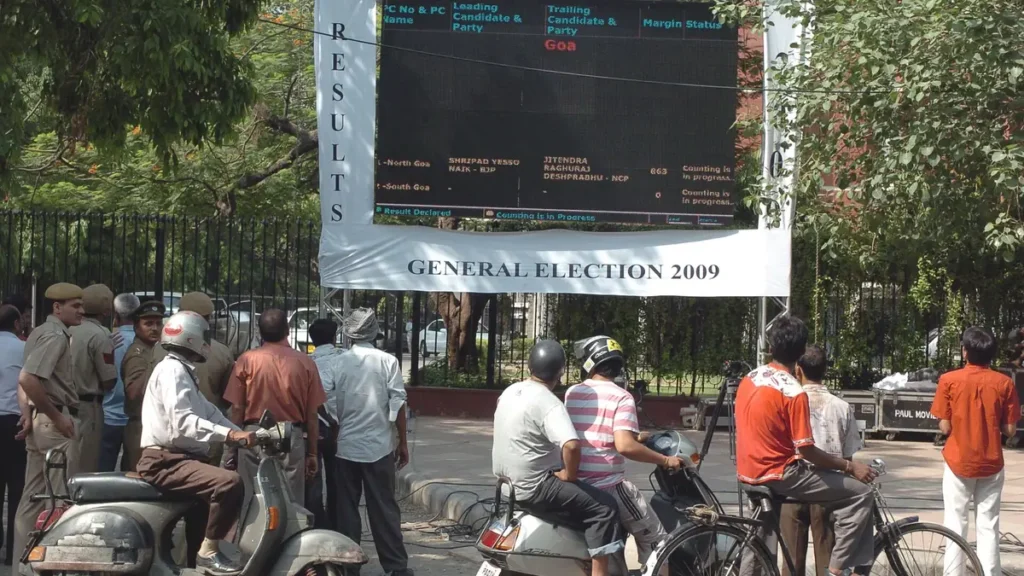
An RTI reply reported on 22 October 2026 shows that Election Commissioners S.S. Sandhu and Vivek Joshi wrote to Cabinet Secretary T.V. Somanathan on 29 July, complaining that Senior Deputy Election Commissioner Maneesh Garg changed the work of officers without consulting the Commission. The Cabinet Secretariat chose only to acknowledge the letters, saying that acting on them could be seen as interference in a constitutional body. The episode shows why the Commission needs clear internal rules for a multi-member body.
- Letters
- 29 July 2026
- Reply
- 5 August 2026
- Body
- Election Commission
- Article
- 324
EC letters: what happened?
When two members of a three-member constitutional body write to the government about their own secretariat, it tells you something about how the body runs inside.
- 29 Jul 2026: ECs Sandhu and Joshi wrote to the Cabinet Secretary about Senior DEC Maneesh Garg’s order on work allocation of ‘equivalent and senior officers’.
- 3–4 Aug: the Cabinet Secretariat first considered seeking the CEC’s opinion, then noted the letters were in an ‘individual capacity’, not from the Commission as a whole.
- 5 Aug: the Cabinet Secretary only acknowledged the letters, with a copy to CEC Gyanesh Kumar ‘for information’, and a copy to DoPT.
- The RTI was filed by Commodore (retd) Lokesh Batra; it is unclear whether the CEC responded.
What is the Election Commission of India?
- A permanent constitutional body under Article 324 that superintends, directs and controls elections to Parliament, State legislatures, President and Vice-President.
- Single-member till 1989; multi-member since 1993, with a CEC and two ECs.
- Decisions are by majority, as upheld in T.N. Seshan v. Union of India (1995).
- Its secretariat has Deputy Election Commissioners and Directors General; senior officers are often IAS officers on deputation.
How are the CEC and ECs protected?
| Safeguard | CEC | Election Commissioners |
|---|---|---|
| Removal | Like a Supreme Court judge (Art. 324(5)) | On the CEC’s recommendation |
| Service conditions | Cannot be varied to disadvantage | Set by the 2023 Act |
| Selection | Committee: PM, LoP, a Union Minister | Same committee |
| Decisions | One of three votes | Equal vote |
What is the constitutional angle?
- Article 324(2): the President appoints the CEC and ECs, subject to law made by Parliament.
- Anoop Baranwal v. Union of India (2023): the Court asked for a selection panel till Parliament made a law.
- The Chief Election Commissioner and Other Election Commissioners (Appointment, Conditions of Service and Term of Office) Act, 2023 now governs appointments.
- The Cabinet Secretariat’s note says the Commission is ‘insulated from executive interference by design’.
What are the challenges?
- No public rules on how work is divided among the CEC, ECs and the secretariat.
- ECs’ weaker removal protection can make them hesitant to dissent.
- Members writing to the executive blurs the line the Constitution draws.
- Public trust suffers when internal disagreements surface through RTI.
What should be done?
- Frame written rules of business for the Commission, including work allocation.
- Give ECs the same removal protection as the CEC, as many committees have suggested.
- Record dissent in Commission decisions.
- Give the Commission its own secretariat cadre, as the Goswami Committee and others proposed.
What can Prelims ask on the Election Commission?
- Article 324: superintendence, direction and control of elections.
- Multi-member Commission since 1 October 1993.
- T.N. Seshan v. Union of India (1995): majority decisions.
- Anoop Baranwal (2023) and the 2023 Act on appointments.
- The ECI does not conduct panchayat and municipal polls; State Election Commissions (Article 243K) do.
How to write about ECI independence in Mains
Practice question (15 marks, 250 words): Examine the safeguards for the independence of the Election Commission of India and suggest reforms to strengthen its collective functioning. (GS-II)
- Intro: the July 2026 letters and the RTI reply.
- Safeguards: Article 324, removal protection, Seshan (1995).
- Gaps: no rules of business; unequal protection for ECs.
- Reforms: written rules, equal protection, own secretariat.
- Conclusion: credibility rests on both independence and internal clarity.
Image: Results display board at Nirvachan Sadan, the Election Commission of India’s office in New Delhi, 16 May 2009. Election Commission of India, Wikimedia Commons, GODL-India
How to use this in Mains
If asked: Discuss the safeguards for the independence of the Election Commission. (GS-II)
Quote: “The commission is a constitutional body and is insulated from executive interference by design to ensure that it functions independently and in a transparent manner.”
Use it: Use it as the government’s own statement of the principle.
If asked: Examine issues in the internal functioning of multi-member constitutional bodies. (GS-II)
Quote: “They cannot be seen as a formal communication from the commission as a whole.”
Use it: Quote it to show why collective decision rules matter.
Exam angle
Prelims: Article 324, 2023 Act, Seshan (1995), Article 243K. · Mains GS-II: independence and functioning of constitutional bodies.
Practice MCQs
Original practice questions (not PYQs).
Consider the following statements about the Election Commission of India:
1. The Chief Election Commissioner can be removed only in the manner of a Supreme Court judge.
2. Election Commissioners can be removed only on the recommendation of the Chief Election Commissioner.
3. The Commission conducts elections to panchayats.
Which of the statements given above are correct?
Answer (a) & explanation
Article 324(5) gives these protections. Panchayat polls are run by State Election Commissions under Article 243K.
In which case did the Supreme Court uphold majority decision-making in a multi-member Election Commission?
Answer (b) & explanation
In T.N. Seshan v. Union of India (1995) the Court upheld the multi-member Commission deciding by majority.
Under the 2023 Act, the selection committee for the CEC and ECs consists of
Answer (b) & explanation
The committee has the Prime Minister, the Leader of Opposition (or leader of the largest Opposition party) and a Union Cabinet Minister nominated by the PM.
Questions students ask about this
Who wrote the letters?
Election Commissioners S.S. Sandhu and Vivek Joshi, on 29 July 2026.
What was the complaint?
That Senior DEC Maneesh Garg changed work allocation of officers without discussing it with the Commission.
What did the Cabinet Secretariat do?
It only acknowledged the letters, with a copy to the CEC, to avoid interference.
How did this become public?
Through an RTI reply to Commodore (retd) Lokesh Batra.
Keep studying
Go deeper
facts from cited sources only; faculty review pending