
One Nation One Election: History, the Kovind Committee, the 129th Amendment Bill and the Arguments For and Against (UPSC Notes)
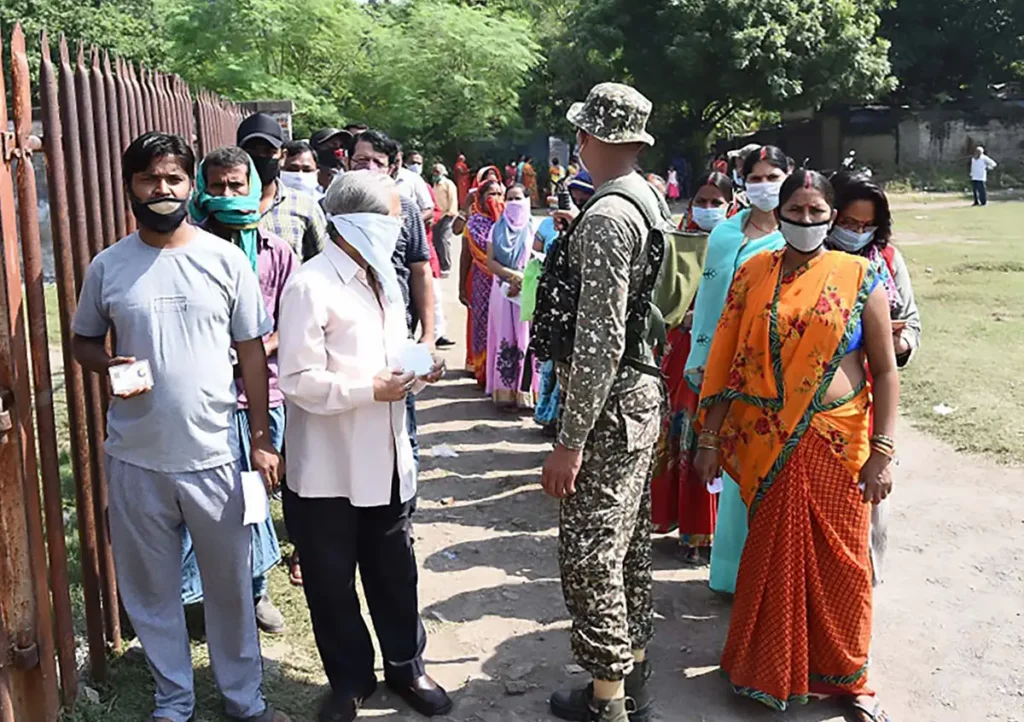
UPSC has already asked about this. Read the story with these questions in mind.
Background: what simultaneous elections mean
Simultaneous elections mean holding polls to the Lok Sabha and all State Legislative Assemblies at the same time, so that voters cast both votes on the same day or in the same phase. India did this in the first four general elections of 1951-52, 1957, 1962 and 1967. The cycle broke when several State governments fell after 1967 and Assemblies were dissolved early, and when the Lok Sabha itself was dissolved a year early in 1970. Since then, some election or other is held almost every year, often several times. Supporters of the idea, now called One Nation, One Election, argue that constant campaigning costs money, diverts officials and security forces and keeps governments in election mode. Critics fear it would weaken federalism and blur State and national issues.
How the cycle broke
The first four general elections were simultaneous. Early dissolution of some Assemblies in 1968-69 and of the Lok Sabha in 1970 broke the pattern. Since then India is almost always in election mode somewhere: in a typical five-year cycle, more than 25 State polls follow the general election.
- 1951-52First general and State elections together
- 1957Second simultaneous election
- 1962Third simultaneous election
- 1967Fourth; several State governments fall soon after
- 1970Lok Sabha dissolved a year early
- 1971First separate Lok Sabha election
The reports
- Election Commission (1983) first suggested going back to simultaneous polls.
- Law Commission, 170th Report (1999) on electoral reform.
- Parliamentary Standing Committee (2015) and NITI Aayog discussion paper (2017).
- Law Commission draft report (2018).
- High Level Committee chaired by former President Ram Nath Kovind, report in March 2024: Lok Sabha and Assemblies together first, then municipalities and panchayats within 100 days; a single electoral roll; if a House is dissolved early, fresh elections only for the “unexpired term”.
The Bill
Introduced in the Lok Sabha in December 2024 and referred to a Joint Parliamentary Committee. It would add Article 82A (an “appointed date” after a general election from which all Assembly terms end with the Lok Sabha’s) and amend Articles 83, 172 and 327. Synchronising local bodies needs a separate amendment ratified by half the States, since it touches State List subjects.
- Fresh election if government falls
- New House serves only the remaining term
- Keeps the common cycle
- Recommended by the 2024 high level committee
- Motion must name an alternative leader
- Government falls only if successor has majority
- Used in Germany
- Suggested by Law Commission (1999)
Arguments for and against
| For | Against |
|---|---|
| Lower cost to the exchequer and parties | Cost of elections is small relative to the budget; EVM and VVPAT needs would rise sharply |
| Model Code of Conduct freezes new schemes less often | Mid-term dissolution leads to short “unexpired term” Assemblies, weakening accountability |
| Security forces and teachers not diverted repeatedly | National issues may drown out State issues; risk to federal diversity |
| Governments can focus on governance | Frequent elections keep governments answerable; no democracy is designed for convenience |
Arguments at a glance
| For | Against |
|---|---|
| Lower cost of conducting elections | Cost of elections is small compared with the budget |
| Model Code of Conduct would apply less often, so less policy paralysis | Frequent elections keep governments accountable |
| Security forces and teachers freed from repeated poll duty | National issues may overshadow State issues |
| Higher turnout from a single, focused poll | Curtailing an Assembly’s term weakens federalism |
| Less money power and black money in repeated campaigns | Logistics: large numbers of EVMs and VVPATs needed at once |
How to write it in Mains
Avoid a for-or-against speech. Show the problem (constant campaigning), the design questions (no-confidence, hung House, unexpired terms), and the safeguards needed: a constructive vote of no-confidence like Germany’s, a phased start, and consensus with States. Germany and South Africa hold national and provincial elections together; Sweden fixes its election date.
Constitutional changes involved
| Provision | Subject | Why it matters |
|---|---|---|
| Article 83 | Duration of Houses of Parliament | Term of the Lok Sabha would need to be linked to a common cycle |
| Article 85 | Dissolution of the Lok Sabha | Early dissolution would break synchronisation |
| Article 172 | Duration of State Legislatures | Assembly terms must end with the Lok Sabha |
| Article 174 | Dissolution of Assemblies | Same issue as Article 85 at State level |
| Article 356 | President’s Rule | Interacts with mid-term breakdown |
| Article 327 | Parliament’s power over elections | Proposed to cover simultaneous elections |
Lessons from other democracies
Few large democracies hold all levels of elections together. South Africa elects its national and provincial legislatures on the same day every five years, and Sweden holds national, county and municipal elections together on a fixed date every four years. Both have fixed terms. The United Kingdom tried a Fixed-term Parliaments Act in 2011 but repealed it in 2022, restoring the power to call early elections. These examples show that synchronisation works best where terms are fixed and early dissolution is rare. In India, with its parliamentary system, coalitions and frequent use of no-confidence motions in the past, the hardest question is what to do when a government falls mid-term, which is why the debate focuses on unexpired-term elections and constructive no-confidence ideas.
What the 2024 Bill proposes
The Constitution (129th Amendment) Bill, 2024 follows the main lines of the High Level Committee. It proposes a new Article 82A. After a general election, the President would notify an appointed date at the first sitting of the new Lok Sabha. All State Assemblies elected after that date would have their terms end together with the full term of the Lok Sabha, so that the next round of elections is simultaneous. If the Lok Sabha or an Assembly is dissolved early, fresh elections would be held only for the unexpired term, keeping the common cycle intact. The Election Commission could recommend that elections to a particular Assembly be deferred if they cannot be held together, subject to the Assembly’s term ending with the common cycle. Amendments to Articles 83, 172 and 327 support these changes. A companion Bill makes matching changes for the Union Territories of Delhi, Puducherry and Jammu and Kashmir. Elections to panchayats and municipalities are not part of this Bill; the committee had suggested synchronising them in a second stage.
For a balanced answer, note that the debate is not only about cost, but about how accountability and federal autonomy can be preserved inside a fixed calendar.
Practical questions for the Election Commission
Holding every Lok Sabha and Assembly poll together would need a very large stock of electronic voting machines and VVPAT units, since each voter would use two sets of machines, as well as storage, transport, first-level checks and trained staff. The Election Commission has in the past estimated that machines would have to be bought in large numbers and replaced every fifteen years or so. A single electoral roll and a single photo identity card for all three tiers of elections is another proposal, since State Election Commissions now prepare separate rolls for local bodies in many States. Security forces would have to be deployed across the country in fewer phases, which raises its own planning challenge.
The Commission would also need a clear legal basis for deferring a particular State’s poll, and clear rules for by-elections and unexpired-term elections, so that the common calendar does not create long gaps without an elected government.
One Nation One Election: UPSC angle
For UPSC CSE
Prelims: years of simultaneous polls, committee chair, Article 82A, Law Commission report number. Mains GS-II: electoral reform, federalism, governance cost.
One Nation One Election UPSC PYQs (Prelims)
Questions UPSC has actually asked, from the official papers. Pick an option to check yourself.
No Prelims question in the Battle IAS bank is directly on this topic yet.
Mains PYQs on this topic
No UPSC Mains question from 2023-2026 is directly on this topic. Older papers (2013-2022) will be added as the Mains bank grows.
Quick quiz
Simultaneous elections to the Lok Sabha and State Assemblies were held until
The cycle broke in 1968-70.Answer (c)
The High Level Committee on simultaneous elections was chaired by
Report in March 2024.Answer (a)
The 2024 Bill on simultaneous elections proposes a new
For an appointed date.Answer (a)
FAQs
Are local body elections part of the 2024 Bill?
No. The Kovind Committee proposed them as a second step requiring ratification by States.
What happens if a government falls mid-term?
Under the proposal, fresh elections are held only for the remaining (unexpired) term.
Did India ever hold simultaneous elections?
Yes, in 1951-52, 1957, 1962 and 1967.
Which body examines the 2024 Bill?
A Joint Parliamentary Committee.
Who chaired the High Level Committee on simultaneous elections?
Former President Ram Nath Kovind. The committee submitted its report in March 2024.
Which Articles deal with the duration of Parliament and State Legislatures?
Article 83 for the Houses of Parliament and Article 172 for State Legislatures.
Does any other country hold simultaneous elections?
Yes. South Africa and Sweden hold national and provincial or local elections together on fixed dates.
Spotted an error? Tell us. We correct within 48 hours.
Image: Election Commission of India, Wikimedia Commons, GODL-India
How to use this in Mains
If asked: Examine the feasibility of One Nation One Election. (GS-II)
Quote: “Few large democracies hold all levels of elections together.”
Use it: Use as a comparative-world point in the counter-view.
In the news

Supreme Court: no prior approval under Section 17A needed to probe a bribe demand
In a judgment of 16 October 2026, a Supreme Court Bench of Justices S.V.N. Bhatti and N.V. Anjaria held that investigating a bribe demand by a public servant does not need prior approval under Section 17A of the Prevention of Corruption Act. Asking for a bribe, the court said, is not part of discharging official duties.
19 Oct 2026
CCPA acts against online sale of explosives: 3,940 sellers delisted from seven platforms
The Central Consumer Protection Authority (CCPA) said on 19 October 2026 that 3,940 sellers of regulated explosives such as ammonium nitrate, picric acid and PETN have been delisted from seven online platforms after its action. It has fined Dial4Trade and ExportersIndia ₹10 lakh per order, and other cases are under hearing or investigation.
19 Oct 2026
India to host 61st CIML meeting on legal metrology in New Delhi, 26–28 October
India will host the 61st meeting of the International Committee of Legal Metrology (CIML) for the first time, in New Delhi from 26 to 28 October 2026. The Department of Consumer Affairs is organising it with the International Organization of Legal Metrology (OIML), and more than 100 delegates are expected, PIB said on 19 October.
19 Oct 2026
NMC withdraws MSMER-2023: medical colleges lose the fixed penalty rulebook, annual disclosure stays
The National Medical Commission (NMC) has de-notified the Maintenance of Standards of Medical Education Regulations, 2023 (MSMER-2023) by a notification dated 14 October 2026, published in the Gazette on 16 October. Its fixed penalties, including seat cuts and fines of up to ₹5 lakh for false records, go with it. The Annual Disclosure Report stays.
19 Oct 2026