
North India is drying: IMD–IITM study on shifting climate zones and the Pacific ‘Victoria Mode’
The climate map in your school atlas may already be out of date. IMD and IITM scientists find that northwest India’s hot, dry ‘steppe’ zone grew from a quarter of the area to a third between 1951–80 and 1991–2020. They blame a Pacific pattern called the Victoria Mode. For you, it is a fresh way to revise Köppen’s climate types.
- Steppe (NW India)
- 25.7% → 33.1%
- Temperate (NW)
- 25.8% → 18.7%
- Driver
- Victoria Mode, North Pacific
- Journal
- MAUSAM (IMD)
Climate zones study: what happened?
- The study appears in MAUSAM, IMD’s journal. It compares 1951–80 with 1991–2020.
- Northwest India: the hot semi-arid steppe zone (dry grassland, not desert) grew from 25.7% to 33.1%; the milder temperate zone shrank from 25.8% to 18.7%.
- The steppe’s eastern edge moved from west Uttar Pradesh to the eastern part of the State.
- New dry belts: West Vidarbha and Marathwada became steppe; Saurashtra and Kutch moved from arid to semi-arid; Gangetic West Bengal from savannah to temperate.
What is the Victoria Mode?
Picture the North Pacific as a giant bathtub whose warm and cool patches keep shifting.
- The Victoria Mode is the second main pattern of sea-surface temperature change in the North Pacific, after the Pacific Decadal Oscillation.
- It is a recurring pattern of warm and cool surface water, separate from El Niño.
- The study links drying in Uttar Pradesh, Bihar and Gangetic West Bengal to its negative phase, which cut the moisture reaching the north.
- In the paper’s words, shrinking zones “will cause numerous problems related to food safety [security] and local population displacement”.
1951–80 vs 1991–2020: what changed?
| Region and zone | 1951–80 | 1991–2020 |
|---|---|---|
| NW India: steppe | 25.7% | 33.1% |
| NW India: temperate | 25.8% | 18.7% |
| NE India: tropical savannah | 18.4% | 11.8% |
| NE India: temperate | 74.8% | 82.5% |
| Peninsula: steppe | 30.3% | 16.4% |
| Peninsula: tropical savannah | 61.6% | 75.7% |
How are climate zones classified?
- Wladimir Köppen grouped climates by temperature and rainfall, using vegetation (what grows there) as the index of climate.
- Main groups: A (tropical), B (dry), C (warm temperate), D (cold), E (polar).
- Dry climates: BS is steppe (semi-arid), BW is desert (arid).
- Tropical savannah (Aw): coldest month 18°C or above, with clear wet and dry seasons. Temperate: coldest month between 0 and 18°C.
- India has Aw, Am, BS, BW and Cw types.
Memory trick and how the study was done
Walk from equator to pole: A tropical, B dry, C mild, D cold, E ice. For dry lands, S = Steppe, W = Wüste (German for desert). The scientists applied this to IMD records in squares about 25 km wide, across five 30-year windows.
How can the Pacific dry north India?
From the North Pacific to the Gangetic plains
- North Pacific sea temperatures shift into the negative Victoria Mode.
- Large-scale winds and moisture flow over Asia change.
- Less moisture reaches India’s northern plains.
- Rain falls, heat rises: temperate areas turn steppe.
- Crops, groundwater and livelihoods come under stress.
What should you note for the exam?
| Angle | What to note |
|---|---|
| Concept | Köppen types; steppe (BS) vs desert (BW); savannah (Aw) |
| Map | Marathwada, West Vidarbha, Saurashtra, Kutch, east UP |
| Drivers | Victoria Mode, Pacific Decadal Oscillation, El Niño |
| Mains | Desertification, food security, migration |
What are the concerns?
- Food belt at risk: the drying covers Uttar Pradesh, Bihar and West Bengal, major rice and wheat areas.
- Little-known driver: the Victoria Mode is far less studied than El Niño, so forecasts may miss it.
- Crop and water plans still follow old climate maps.
- Drier land may push people to migrate.
What should be done?
- Update farm plans and crop choices to the 1991–2020 zones.
- Watershed works, drip irrigation and drought-tolerant seeds in new semi-arid belts.
- Fund Victoria Mode research alongside El Niño and the IOD.
- Use district-level climate risk maps.
What can Prelims ask on climate types?
- Köppen: vegetation as the index of climate.
- Steppe = semi-arid grassland; scanty rain, extreme temperatures; Central Asian steppe.
- Tropical savannah: definite wet and dry season; ‘land of big games’ in Africa.
- Gujarat: northern part arid and semi-arid.
- New steppe: Marathwada and West Vidarbha.
Probability in Prelims: Expect a match-the-pair question on climate types: steppe (semi-arid, Köppen BS), tropical savannah (a definite wet and dry season) and new semi-arid areas such as Marathwada and West Vidarbha.
How to write about shifting climate zones in Mains
Practice question (15 marks, 250 words): The process of desertification does not have climatic boundaries. Justify with examples. (GS-I, 2020)
- Intro: the IMD–IITM finding: steppe up from 25.7% to 33.1% in NW India.
- Body 1: what desertification and semi-aridity mean.
- Body 2: examples: Marathwada, West Vidarbha, east UP, Saurashtra–Kutch.
- Body 3: drivers: Victoria Mode, warming, land use, groundwater.
- Way forward: watershed works, crop shifts, updated agro-climatic zoning.
Ready lines for your answer
If asked: The process of desertification does not have climatic boundaries. Justify with examples. (GS-I, 2020)
Quote: “Will cause numerous problems related to food safety [security] and local population displacement.”
Use it: Quote the study to link drying to food security and migration.
If asked: How do micro-watershed projects help in drought-prone and semi-arid regions? (GS-I, 2016)
Quote: “In northwest India, the hot, semi-arid steppe zone grew from 25.7% of the region's area in 1951-80 to 33.1% in 1991-2020.”
Use it: Use the figure to show why new semi-arid areas need watershed work.
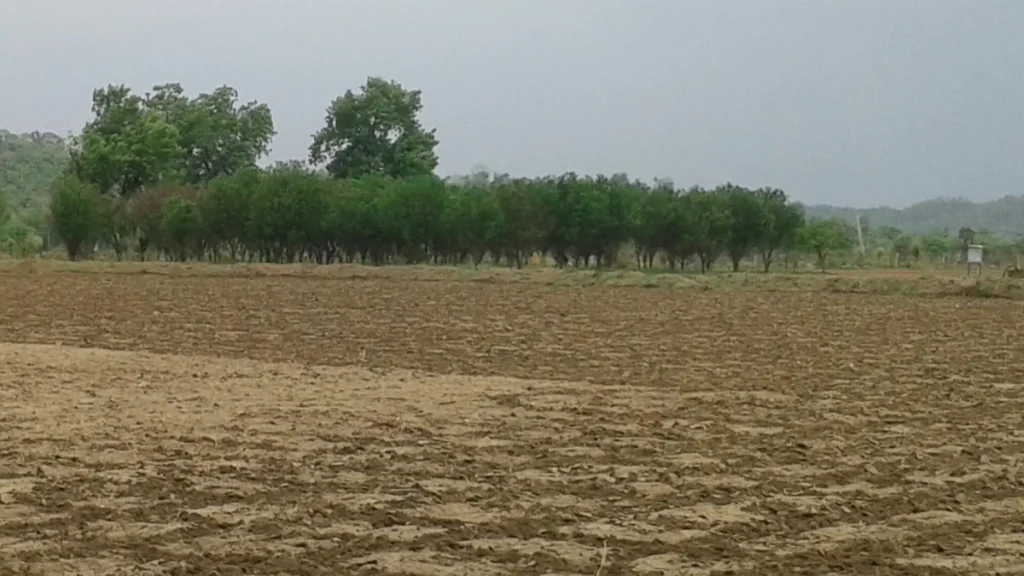
Image: Dry, ploughed farmland in a village in the Vidarbha region of Maharashtra. bk kartik21, via Wikimedia Commons, Public domain
Exam angle
Prelims: Köppen types, steppe vs savannah, Victoria Mode. · Mains GS-I: desertification; climate change and agriculture.
Practice MCQs
Original practice questions (not PYQs).
Consider the following statements:
1. The study says the steppe zone in northwest India shrank between 1951–80 and 1991–2020.
2. The Victoria Mode is a pattern in the North Pacific Ocean.
3. A tropical savannah climate has a definite wet and dry season.
Which of the statements given above are correct?
Answer (b) & explanation
The steppe zone grew from 25.7% to 33.1%.
“Vegetation is the true index of climate.” This idea is associated with:
Answer (b) & explanation
Köppen’s classification uses vegetation as the index of climate.
In the Köppen classification, the letters ‘BS’ denote:
Answer (b) & explanation
BS is steppe; BW is desert; Aw is tropical savannah.
Questions students ask about this
Is north India turning into a desert?
No. Parts are turning semi-arid (steppe): dry grassland, not desert.
What is the Victoria Mode?
A recurring pattern of warm and cool water in the North Pacific, the second main one after the Pacific Decadal Oscillation.
Which new areas became steppe?
West Vidarbha and Marathwada; Saurashtra and Kutch moved from arid to semi-arid.
Is all of India drying?
No. The peninsula got wetter: steppe fell from 30.3% to 16.4% and savannah rose from 61.6% to 75.7%.
What is the difference between steppe and desert?
Steppe (BS) is semi-arid with some grass; desert (BW) is arid, with very little rain.
Official source: MAUSAM (IMD journal): Identifying the climate zones shifts of Indian meteorological subdivisions