
Two national boards to plan welfare for gig workers
The rider who brings your food or drives your cab has no fixed employer, and most such workers have no pension or health cover. The Labour Ministry has now set up two national boards under the Code on Social Security to plan schemes for gig, platform and other unorganised workers. Read it to revise who gig workers are and what the law promises them.
- Boards
- 2 national boards
- Members
- 40 (unorganised) and 22 (gig and platform)
- Chair
- Labour Minister Mansukh Mandaviya
- Law
- Code on Social Security, 2020
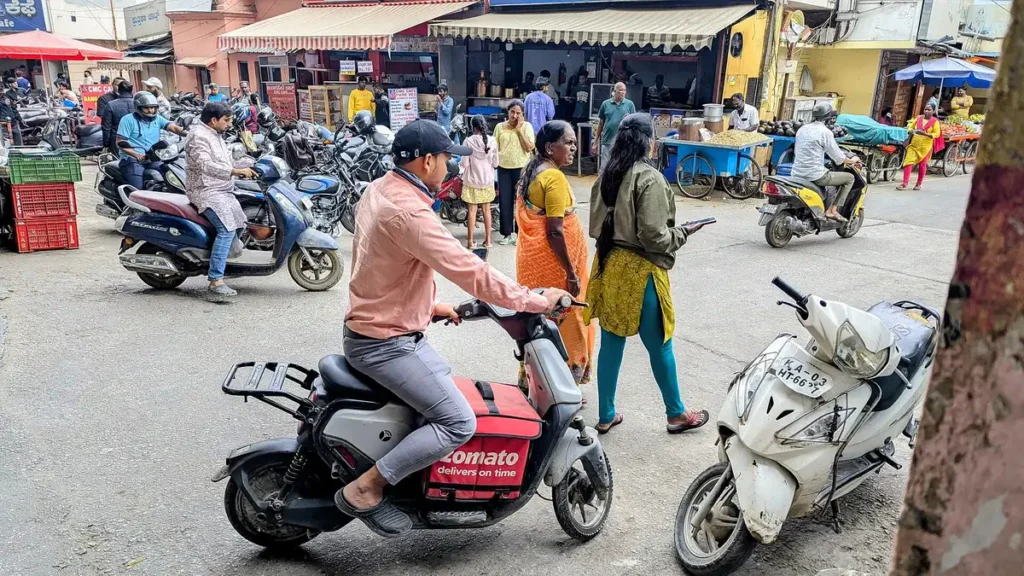
The gig worker boards: what happened?
India’s delivery and cab apps run on millions of workers who are paid per task. Until recently, the law did not even have a name for them.
- The Union Labour Ministry has set up two boards under the Code on Social Security, 2020.
- The National Social Security Board for Unorganised Workers has 40 members. The National Social Security Board for Gig and Platform Workers has 22 members.
- Labour Minister Mansukh Mandaviya chairs both. The Union Labour Secretary is vice-chairman.
- Members include the Centre, States, trade unions and app companies such as Eternal (Zomato), Swiggy, Zepto, Urban Company and Rapido.
- The boards will recommend schemes, advise the Centre, monitor welfare schemes, and review State records and fund spending.
Who are gig and platform workers?
A gig worker earns outside a regular employer–employee relationship, often per task. A platform worker is a gig worker who finds work through an online app, such as a delivery or cab app.
The Code on Social Security, 2020 was the first Indian law to define gig and platform workers. It merges nine older social security laws.
Under the Code, ‘aggregators’ (app companies) can be asked to pay 1–2% of their annual turnover into a social security fund for these workers, capped at 5% of what they pay the workers.
Unorganised workers can register on the e-Shram portal, launched in 2021, which works as a national database for welfare schemes.
What changes for gig workers?
| Point | Before | Under the Code |
|---|---|---|
| Legal status | Not defined in law | Defined as gig and platform workers |
| Welfare body | None at national level | National board with app companies as members |
| Funding | No fixed source | Aggregators pay 1–2% of turnover |
Which laws and Articles apply?
- Code on Social Security, 2020: defines gig and platform workers and sets up national boards.
- Article 41: the State shall give public help in unemployment, old age and sickness (Directive Principle).
- Article 43: the State shall try to secure a living wage and a decent life for workers.
- Labour is in the Concurrent List, so both the Centre and States make labour laws.
Why does the gig worker boards matter?
| Angle | What to note |
|---|---|
| Social security | Brings app workers into the welfare system. |
| Future of work | Gig work is growing fast in cities. |
| Federalism | Labour is a Concurrent subject; boards include States. |
| Business role | App companies share the cost of welfare. |
What are the problems with the gig worker boards?
- Many gig workers still do not know about e-Shram or the boards.
- Workers often use many apps, so tracking their work is hard.
- App companies may pass the cost on to customers or workers.
- Boards can only advise; real benefits depend on schemes and money.
What should be done next on the gig worker boards?
- Register all gig workers on e-Shram with simple steps.
- Give portable benefits that move with the worker across apps.
- Set clear rules for pay, safety and fair account deactivation.
- Let worker unions have a real voice on the boards.
What can Prelims ask on the gig worker boards?
Prelims probability: Expect a question on the Code on Social Security, 2020: the first law to define gig and platform workers; app companies pay 1–2% of turnover into a fund.
- Code on Social Security, 2020: first law to define gig and platform workers.
- Aggregators pay 1–2% of annual turnover, capped at 5% of payments to workers.
- National boards: 40 members (unorganised) and 22 members (gig and platform); chaired by the Labour Minister.
- e-Shram portal (2021): national database of unorganised workers.
- Labour is in the Concurrent List.
How to write about the gig worker boards in Mains
Practice question (15 marks, 250 words): Gig and platform workers form a growing part of India’s workforce but lack social security. Discuss how the Code on Social Security, 2020 and the new national boards seek to address this.
- Intro: two national boards set up under the Code.
- Who gig and platform workers are; their problems.
- What the Code offers: definition, fund, boards, e-Shram.
- Gaps: awareness, multi-app work, advisory role.
- Conclusion: portable, funded benefits for the new workforce.
Ready lines for your answer
- The law now names gig workers; the next step is to protect them.
- Benefits must move with the worker, not stay with the app.
Quotable data pointTwo boards with 40 and 22 members; aggregators pay 1–2% of turnover into a fund.
Photo: SerChevalerie, CC0, via Wikimedia Commons
Exam angle
Prelims: Code on Social Security 2020, aggregator contribution, e-Shram. · Mains GS-II and GS-III: social security, future of work.
Practice MCQs
Original practice questions (not PYQs).
Which law first defined 'gig workers' and 'platform workers' in India?
Answer (d) & explanation
The Code on Social Security, 2020 was the first law to define them. The new national boards are set up under it.
Consider the following statements:
1. The Union Labour Minister chairs both new national social security boards.
2. App companies have no seat on either board.
3. The boards must meet at least once a month.
How many of the above statements are correct?
Answer (a) & explanation
Only statement 1 is correct. App companies such as Swiggy and Zepto are members, and the boards must meet at least three times a year.
Questions students ask about this
Which law set up the new boards?
The Code on Social Security, 2020.
Who chairs the boards?
Labour Minister Mansukh Mandaviya chairs both; the Union Labour Secretary is vice-chairman.
Do app companies sit on the boards?
Yes. Companies such as Eternal (Zomato), Swiggy, Zepto, Urban Company and Rapido are members.
How much must app companies pay for gig workers' welfare?
1–2% of their annual turnover, capped at 5% of the amount they pay to gig and platform workers.