
Soured relationship is not rape: Supreme Court
When a long relationship ends, can one partner later call it rape? The Supreme Court has said a consensual relationship cannot be turned into a rape case just because it ended badly. Rape must be kept for real force, pressure or tricked consent. Read it to revise consent, Section 69 of the Bharatiya Nyaya Sanhita and Article 21.
- Bench led by
- Justice B.V. Nagarathna
- Case
- From Keralam
- Relationship
- Seven years
- Key law
- Section 69, Bharatiya Nyaya Sanhita
The consent ruling: what happened?
Courts have to protect women from real abuse and also stop criminal law being used to settle personal scores. This judgment tries to draw that line.
- A woman in Keralam accused a man of repeated rape over a seven-year relationship after it ended.
- She said he had hidden that he was married and a father of two.
- A Bench led by Justice B.V. Nagarathna said consensual acts cannot become rape after a relationship “turns sour”.
- The Court said consent got by deception is different from regret after a relationship ends.
What does the law say about consent?
Under the Bharatiya Nyaya Sanhita, 2023 (BNS), which replaced the Indian Penal Code from 1 July 2024, rape is defined in Section 63 and punished under Section 64. Sex without free and willing consent is rape.
Section 69 of the BNS is a new, separate offence. It punishes sex by deceitful means or by a false promise of marriage with no intention to keep it, with up to 10 years in jail and a fine.
Courts have long said a broken promise is not the same as a false promise. If the man meant to marry but later could not, it is not a crime. If he never meant to marry and lied to get consent, it can be.
The Supreme Court has also held that choosing one’s partner is part of personal liberty under Article 21.
When is it a crime?
| Situation | Crime? | Why |
|---|---|---|
| Sex without consent | Yes, rape (Section 63) | No free consent |
| Consent got by a false promise of marriage | Yes, Section 69 | Consent was tricked |
| Consensual relationship that later ends | No | Regret is not lack of consent |
Which laws and Articles apply?
- Bharatiya Nyaya Sanhita, 2023: Section 63 (rape), Section 64 (punishment), Section 69 (sex by deceit or false promise of marriage).
- Article 21: life and personal liberty, including choice of partner.
- Article 14: equality before law; false cases harm the accused unfairly.
- Article 15(3): the State can make special provisions for women.
Why does the consent ruling matter?
| Angle | What to note |
|---|---|
| Women’s safety | Real victims must get justice quickly. |
| Misuse | Stops criminal law being used for personal disputes. |
| New criminal laws | Section 69 is a new offence under the BNS. |
| Personal liberty | Adults’ choices in relationships are protected. |
What are the problems with the consent ruling?
- Genuine victims of deceit may fear their cases will not be believed.
- It is hard to prove what a person intended years ago.
- False cases clog courts and harm reputations.
- Police often register cases without a careful first check.
What should be done next on the consent ruling?
- Train police and judges to tell deceit from a failed relationship.
- Decide such cases quickly to protect both sides.
- Support survivors with legal aid and counselling.
- Act against clearly false complaints, while protecting real victims.
What can Prelims ask on the consent ruling?
Prelims probability: Expect a question on Section 69 of the Bharatiya Nyaya Sanhita, 2023: sex by deceit or a false promise of marriage is a separate offence, up to 10 years.
- BNS Section 69: sex by deceit or false promise of marriage; up to 10 years.
- BNS Section 63 defines rape; Section 64 punishes it.
- BNS replaced the IPC from 1 July 2024.
- Right to choose a partner is part of Article 21.
- Bench led by Justice B.V. Nagarathna.
How to write about the consent ruling in Mains
Practice question (15 marks, 250 words): The criminal law must protect women from sexual violence without being misused in failed relationships. Discuss in the light of the Supreme Court’s recent ruling.
- Intro: Keralam case; Court’s line between deceit and regret.
- Law: BNS Sections 63, 64 and 69.
- Need: protect real victims; stop misuse.
- Challenges: proving intent, slow trials, social pressure.
- Conclusion: careful, quick justice for all sides.
Ready lines for your answer
- Regret is not the same as lack of consent.
- Criminal law must protect victims without becoming a weapon.
Quotable data pointSection 69 of the BNS carries up to 10 years in jail for sex by deceit or a false promise of marriage.
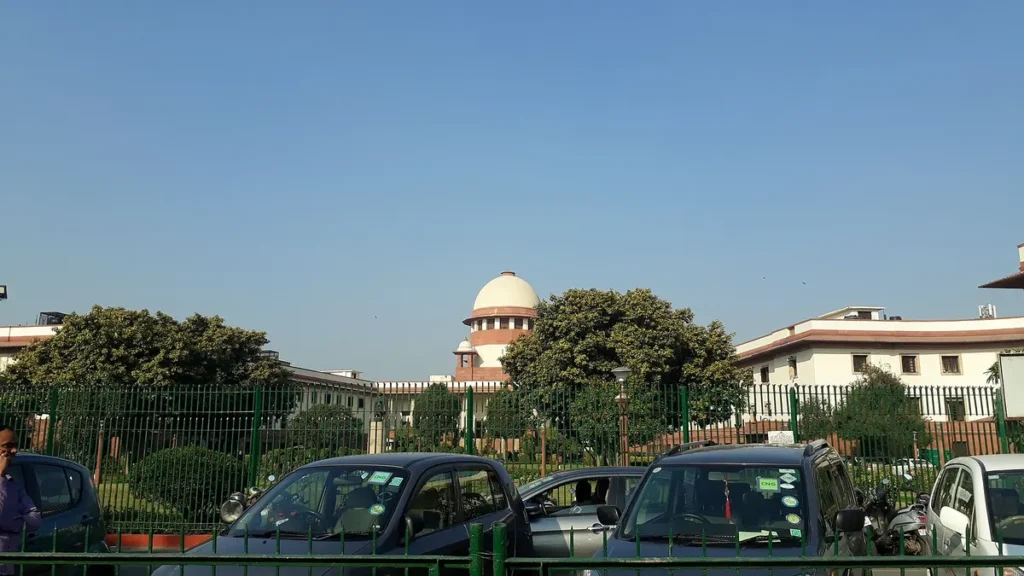
Photo: Pinakpani, CC BY-SA 4.0, via Wikimedia Commons
Exam angle
Prelims: BNS Sections 63, 64, 69; Article 21. · Mains GS-II and GS-I: women's safety, misuse of law, judiciary.
Practice MCQs
Original practice questions (not PYQs).
Which Article of the Constitution protects a person's right to marry someone of their choice?
Answer (b) & explanation
The Supreme Court has held that the right to marry a person of one's choice is part of Article 21.
Consider the following statements:
1. Under Section 69 of the Bharatiya Nyaya Sanhita, sex by a false promise of marriage is a separate offence.
2. The Supreme Court said every relationship that ends badly can be treated as rape.
3. The Bench in the recent ruling was led by Justice B.V. Nagarathna.
How many of the above statements are correct?
Answer (b) & explanation
Statements 1 and 3 are correct. The Court said a consensual relationship cannot be called rape just because it turned sour.
Questions students ask about this
What did the Supreme Court rule?
That a consensual relationship cannot be called rape just because it later ended badly.
What is Section 69 of the Bharatiya Nyaya Sanhita?
A separate offence for sex obtained by deceit or a false promise of marriage, with up to 10 years in jail.
Is a broken promise of marriage always a crime?
No. It is a crime only if the promise was false from the start and used to get consent.
Who led the Bench?
Justice B.V. Nagarathna.