
Arrest begins at detention; must reach court in 24 hours: SC
The Supreme Court has said that an arrest begins the moment police detain a person and cut their liberty. The 24-hour clock under Article 22(2) starts then — not when a formal arrest is written later. Any artificial gap between detention and arrest is unconstitutional. Read it to revise Article 22, remand and personal liberty.
- Clock starts
- At detention, not formal arrest
- Only exclusion
- Travel time to the magistrate
- Bench
- Justices Ujjal Bhuyan and Atul S. Chandurkar
- Case
- Four men in a Tripura NDPS matter
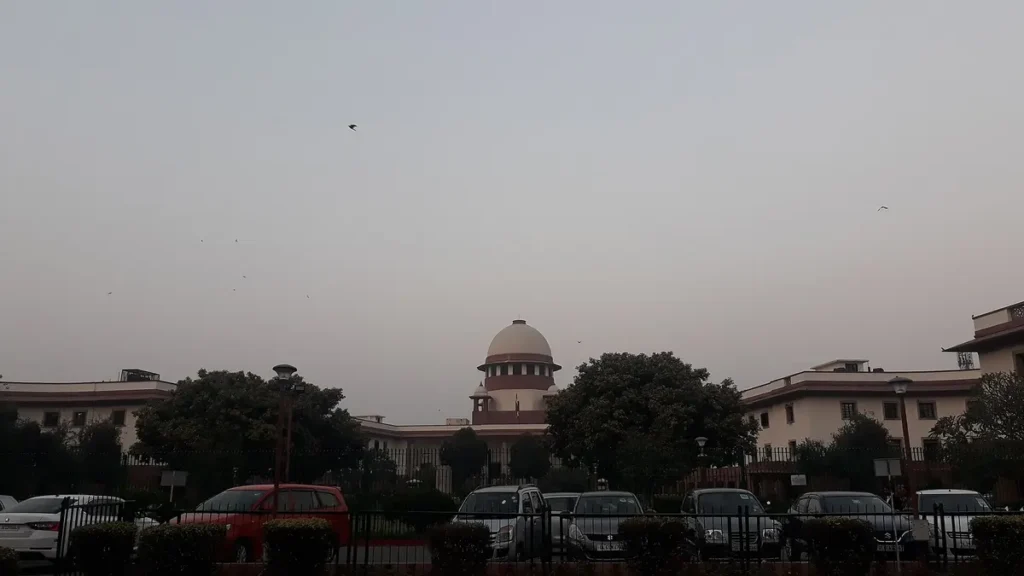
The 24-hour rule: what happened?
Police held four men first and wrote the arrest later. The Supreme Court said that gap breaks the Constitution.
- A Bench of Justices Ujjal Bhuyan and Atul S. Chandurkar held that arrest begins when liberty is first cut.
- The 24-hour clock under Article 22(2) starts then, not when a formal arrest is written later.
- Any artificial buffer between detention and arrest is unconstitutional.
- In the Tripura drug case, four men were detained around 2:30 pm on 29 September 2025; arrest was recorded only next morning; they reached a magistrate after more than 24 hours.
- The Court ordered their release and said even the strict bail bar in Section 37 of the NDPS Act cannot override Article 21 once the timeline is broken.
What does Article 22 say?
Article 22 protects a person who is arrested. Clause (2) says the person must be produced before the nearest magistrate within 24 hours of arrest.
Only the time needed to travel to the court is excluded from that 24 hours. Nothing else.
A magistrate decides whether the person stays in custody (remand) or is released. The Court said magistrates must record the actual date and time of detention.
Article 22(2) clock
| Point | Rule |
|---|---|
| When does the clock start? | When liberty is first cut (detention) |
| What is excluded? | Only journey time to the magistrate |
| If the limit is broken? | The person must be released |
| Magistrate’s duty | Record actual detention time; refuse unreasonable remand |
Which laws and Articles apply?
- Article 22(2): produce an arrested person before a magistrate within 24 hours, excluding journey time.
- Article 21: right to life and personal liberty.
- Section 58, Bharatiya Nagarik Suraksha Sanhita (BNSS): detention must also be for a reasonable period within 24 hours.
- Section 37, NDPS Act: stricter bail for some drug offences — but it cannot override Article 21 once the constitutional clock is broken.
Why does the 24-hour arrest rule matter?
| Angle | What to note |
|---|---|
| Liberty | Stops police from holding people without a court. |
| Rule of law | Formal paperwork cannot hide illegal custody. |
| Magistrates | They are the first check on police power. |
| Special laws | Even NDPS must yield to the Constitution. |
What are the problems with the 24-hour arrest rule?
- Police may still delay writing the arrest on the ground.
- Magistrates need clear records to check the clock.
- Custodial abuse often happens before formal arrest.
- Awareness of Article 22 among ordinary people is low.
What should be done next on the 24-hour arrest rule?
- Train police and magistrates on the detention clock.
- Keep digital logs of detention time.
- Punish wilful delay in recording arrest.
- Spread basic rights awareness in local languages.
What can Prelims ask on the 24-hour arrest rule?
Prelims probability: High: a clear Supreme Court reading of Article 22(2) and the 24-hour rule — classic Prelims and Mains material on personal liberty.
- Article 22(2): 24-hour production rule.
- Only journey time is excluded.
- Arrest and detention are treated as the same for this clock.
- NDPS Section 37 cannot override Article 21 once the limit is broken.
- Magistrates must record actual detention time.
How to write about the 24-hour arrest rule in Mains
Practice question (15 marks, 250 words): Discuss how the Supreme Court’s reading of Article 22(2) strengthens personal liberty against prolonged detention without a formal arrest.
- Intro: the Tripura case and the ruling.
- Text of Article 22(2).
- Why a buffer zone is unconstitutional.
- Magistrate’s duty and NDPS point.
- Conclusion: liberty clocks start at first restraint.
Ready lines for your answer
- Liberty clocks start when freedom is first cut.
- Paperwork cannot create a constitutional buffer zone.
Quotable data pointFour men detained at about 2:30 pm; produced after more than 24 hours.
Photo: Pinakpani, CC BY-SA 4.0, via Wikimedia Commons
Exam angle
Prelims: Article 22(2), remand, NDPS Section 37. · Mains GS-II: personal liberty and police powers.
Practice MCQs
Original practice questions (not PYQs).
Consider the following statements:
1. Article 22(2) requires production before a magistrate within 24 hours of arrest, excluding journey time.
2. The Supreme Court held that detention for investigation without formal arrest creates a lawful buffer zone.
3. Magistrates must record the actual date and time of detention when a person is produced.
How many of the above statements are correct?
Answer (d) & explanation
Statements 1 and 3 are correct. The Court held that an artificial buffer between detention and arrest is unconstitutional.
Under Article 22(2), which period can be excluded from the 24-hour production deadline?
Answer (d) & explanation
Only the time necessary for the journey to the magistrate is excluded.
Questions students ask about this
When does the 24-hour clock start?
When police first cut a person's liberty through detention, not when they write a formal arrest later.
What time can be excluded from the 24 hours?
Only the time needed to travel from the place of arrest to the magistrate.
What must the magistrate do?
Record the actual date and time of detention and refuse remand if custody has already been unreasonably long.
Does the NDPS Act change this rule?
No. Even Section 37 of the NDPS Act cannot override Article 21 once the 24-hour limit is broken.