
₹3,230-crore museum for North and South Blocks
The Cabinet Committee on Economic Affairs has approved ₹3,230 crore to build the Yuge Yugeen Bharat Museum in the North and South Blocks of New Delhi, now that government offices have moved out. The museum will tell the story of India’s civilisation, its monuments and its living traditions, over about 1.78 lakh square metres — set to be the largest museum display area in the world — with around 1.8 million objects identified from the National Museum, 52 Archaeological Survey of India site museums, State museums and private collections. Work runs from 2026-27 to 2030-31. Read it to revise adaptive reuse, tangible and intangible heritage and the role of the Archaeological Survey of India.
- Outlay
- ₹3,230 crore, approved by the Cabinet Committee on Economic Affairs
- Site
- North and South Blocks, New Delhi, after government offices moved out
- Scale
- About 1.78 lakh square metres; around 1.8 million objects identified
- Timeline
- 2026-27 to 2030-31; first gallery, on adornment, in North Block in the second half of 2027
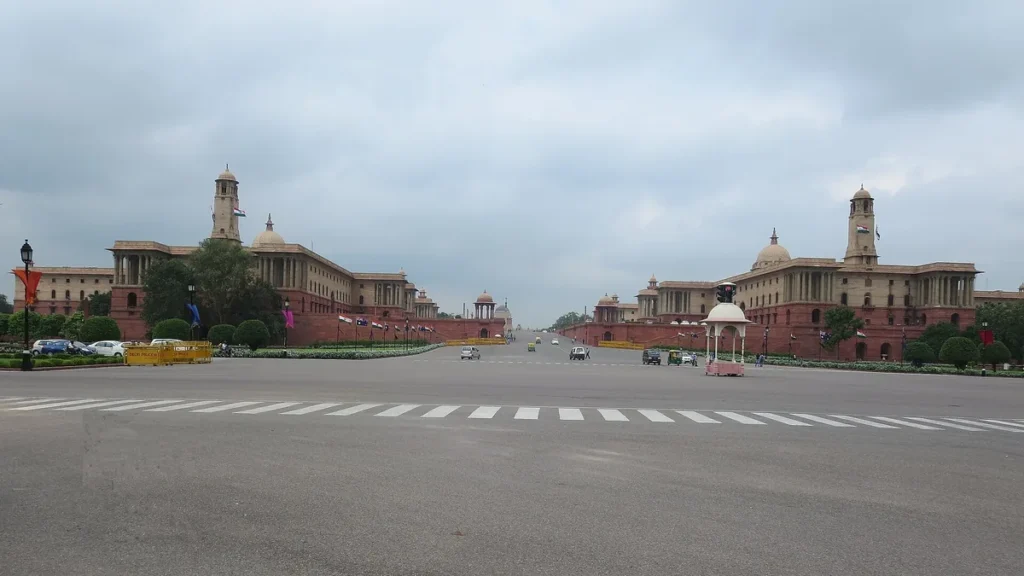
Yuge Yugeen Bharat Museum: what happened?
The two secretariat blocks on Raisina Hill are to become a museum of Indian civilisation, not only a backdrop for state ceremony.
- The Cabinet Committee on Economic Affairs has approved ₹3,230 crore to build the Yuge Yugeen Bharat Museum in the North and South Blocks of New Delhi, now that government offices have moved out.
- The museum will tell the story of India’s civilisation, its monuments and its living traditions. Spread over about 1.78 lakh square metres, it is set to be the largest museum display area in the world.
- Around 1.8 million objects have been identified from the National Museum, 52 Archaeological Survey of India site museums, State museums and private collections.
- Work runs from 2026-27 to 2030-31. The first gallery, on adornment, should open in North Block in the second half of 2027; others will cover architecture, mathematics and astronomy, languages and scripts, and trade.
What is adaptive reuse of a heritage secretariat?
North and South Blocks are the colonial-era secretariat buildings on Raisina Hill, part of the planned capital associated with Edwin Lutyens and Herbert Baker. For decades they housed key Union ministries. Their stone façades are among the most recognised government buildings in India.
Adaptive reuse means giving a historic building a new public purpose without erasing its fabric. Here, offices have already moved out, and the blocks are to be fitted as galleries rather than demolished or left idle.
Heritage has two sides: tangible — monuments, objects, buildings — and intangible — languages, living traditions, knowledge systems. The planned galleries on adornment, architecture, mathematics and astronomy, languages and scripts, and trade try to hold both.
The Archaeological Survey of India protects monuments and holds site museums. Pulling objects from 52 of those museums, plus the National Museum, State collections and private holdings, is a curatorial project as much as a construction one.
What has been approved
| Item | Detail |
|---|---|
| Name | Yuge Yugeen Bharat Museum |
| Outlay and site | ₹3,230 crore; North and South Blocks, New Delhi |
| Display area and objects | About 1.78 lakh square metres; around 1.8 million objects |
| First opening | Adornment gallery, North Block, second half of 2027 |
Which bodies and ideas apply?
- Cabinet Committee on Economic Affairs, which cleared the ₹3,230-crore outlay.
- Archaeological Survey of India and the National Museum, as source collections.
- Adaptive reuse of a historic government complex.
- Tangible and intangible heritage, including living traditions, languages and scripts.
Why does the Yuge Yugeen Bharat Museum matter?
| Angle | What to note |
|---|---|
| Culture | A national museum in the old secretariat is a statement about how India tells its own story. |
| Architecture | Adaptive reuse keeps Raisina Hill’s fabric in public use. |
| Governance | A multi-year, multi-collection project will test curation, conservation and access. |
| Prelims | Name of the museum, North and South Blocks, ₹3,230 crore, 1.8 million objects. |
What are the problems with the Yuge Yugeen Bharat Museum?
- Moving 1.8 million objects from many museums is a conservation risk if storage, climate and cataloguing lag behind the building work.
- A “largest display area” claim will be judged by what visitors actually see, not only by floor space.
- Private collections and State museums will need clear loan and ownership terms.
- The site is still a high-security precinct; public access has to be designed, not assumed.
What should be done next on the Yuge Yugeen Bharat Museum?
- Open the adornment gallery on time in 2027 and publish a gallery-by-gallery timetable.
- Set conservation standards before objects leave their present museums.
- Keep ASI site museums viable even after loans, so heritage is not drained from the districts.
- Plan ticketing, education and access so the complex is a public museum, not only a ceremonial address.
What can Prelims ask on the Yuge Yugeen Bharat Museum?
Prelims probability: Medium. The State exam asked the Prime Ministers’ Museum in 2022, and new national museums make crisp questions. Testable facts: name of the museum, North and South Blocks, ₹3,230 crore, 1.8 million objects.
- Yuge Yugeen Bharat Museum; ₹3,230 crore, cleared by the CCEA.
- Site: North and South Blocks, New Delhi; about 1.78 lakh square metres.
- Around 1.8 million objects, including from 52 ASI site museums.
- Work: 2026-27 to 2030-31; first gallery on adornment, North Block, second half of 2027.
- Other galleries: architecture, mathematics and astronomy, languages and scripts, and trade.
How to write about the Yuge Yugeen Bharat Museum in Mains
Practice question (15 marks, 250 words): The Cabinet has approved a large museum in the North and South Blocks of New Delhi. Discuss the idea of adaptive reuse of heritage public buildings and the challenges of creating a national museum from many scattered collections.
- Intro: ₹3,230-crore Yuge Yugeen Bharat Museum in the old secretariat.
- Raisina Hill, Lutyens’s capital and adaptive reuse.
- Tangible and intangible heritage; ASI and the National Museum.
- Scale: 1.78 lakh square metres and 1.8 million objects.
- Way forward: conservation, access and a credible opening timetable.
Ready lines for your answer
- A secretariat can become a museum if the building is treated as heritage, not only as office space.
- A million objects are a collection only if they are conserved and explained.
Quotable data point₹3,230 crore; 1.78 lakh sq m; 1.8 million objects; first gallery H2 2027 in North Block.
Photo: Nikhilb239, CC BY-SA 4.0, via Wikimedia Commons
Exam angle
Prelims: museum name, North and South Blocks, ₹3,230 crore, 1.8 million objects. · Mains GS-I: art, culture and heritage.
Practice MCQs
Original practice questions (not PYQs).
The Yuge Yugeen Bharat Museum, approved by the Union Cabinet in November 2026, will come up in:
Answer (d) & explanation
The ₹3,230-crore museum will adaptively reuse the North and South Block complex in New Delhi. Teen Murti Bhavan houses the Prime Ministers' Museum.
Which one of the following best describes 'adaptive reuse' of a heritage building?
Answer (d) & explanation
Adaptive reuse gives a heritage building a new function, such as a museum, while preserving its architectural character.
Questions students ask about this
What has the Cabinet approved?
₹3,230 crore, through the Cabinet Committee on Economic Affairs, for the Yuge Yugeen Bharat Museum in the North and South Blocks of New Delhi.
How large will it be?
About 1.78 lakh square metres of display area, described as set to be the largest museum display area in the world, with around 1.8 million objects identified.
Where will the objects come from?
The National Museum, 52 Archaeological Survey of India site museums, State museums and private collections.
When will it open?
Work runs from 2026-27 to 2030-31. The first gallery, on adornment, is due in North Block in the second half of 2027.
What is adaptive reuse here?
Giving the historic secretariat buildings a new public use as a museum, now that government offices have moved out, rather than demolishing them or leaving them idle.