
New deep-sea shark species found off Kerala
Scientists of the Zoological Survey of India and the Central Marine Fisheries Research Institute have described a new deep-sea shark from the Indian Ocean. Named Echinorhinus roinee, or the Indian Bramble Shark, it was mistaken for decades for the Atlantic bramble shark. Samples came from Sakthikulangara fishing harbour in Kollam, Kerala, where deep-sea shrimp trawlers landed them as bycatch. The shark lives 350 to 450 metres deep on the continental slope and grows up to three metres. Read it to revise genetic barcoding, bycatch and deep-sea biodiversity.
- Name
- Echinorhinus roinee, the Indian Bramble Shark
- Who described it
- Zoological Survey of India and the Central Marine Fisheries Research Institute
- Where
- Sakthikulangara harbour, Kollam, Kerala; depth 350 to 450 metres
- Size
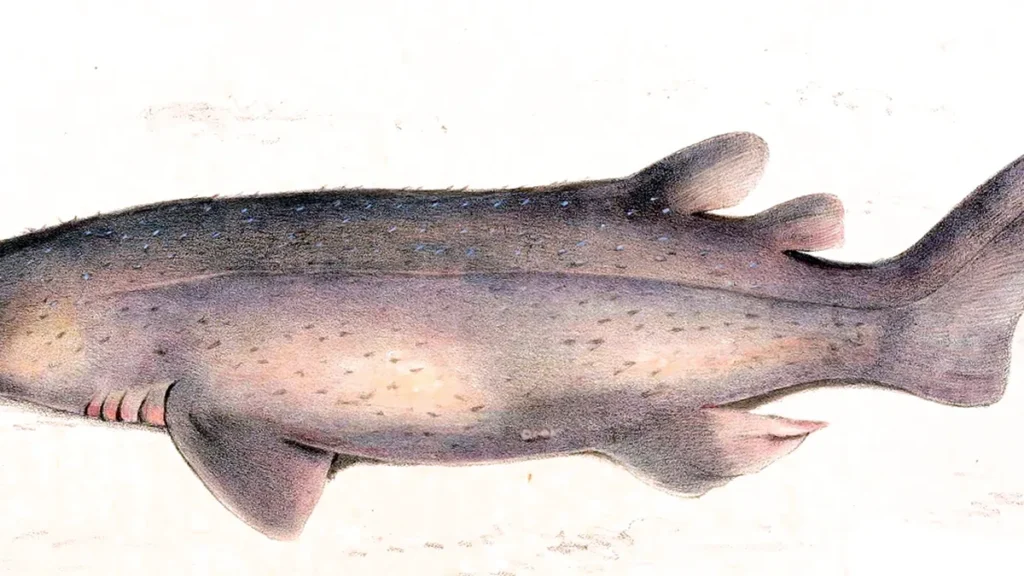
- Grows up to three metres; body covered with thorn-like scales
New deep-sea shark: what happened?
A shark that Indian trawlers had been hauling up for years has turned out to be a species of its own, hidden in plain sight.
- Scientists of the Zoological Survey of India and the Central Marine Fisheries Research Institute have described a new deep-sea shark from the Indian Ocean.
- Named Echinorhinus roinee, or the Indian Bramble Shark, it was mistaken for decades for the Atlantic bramble shark.
- Samples came from Sakthikulangara fishing harbour in Kollam, Kerala, where deep-sea shrimp trawlers landed them as bycatch. The shark lives 350 to 450 metres deep on the continental slope and grows up to three metres.
- Its body is covered with thorn-like scales. Genetic barcodes from its mitochondria show it is a separate Indian Ocean species, and it may also live off Oman, Sri Lanka and Thailand.
What is genetic barcoding, and why does bycatch matter?
Species that look alike can still be different in their DNA. Genetic barcoding uses a short, standard stretch of DNA — here, from the mitochondria — as a unique identifier, the way a supermarket barcode identifies a product. The method has already been asked about in the Civil Services Examination.
The Atlantic bramble shark, Echinorhinus brucus, was the name applied to these Indian specimens for decades. The new barcodes show a separate Indian Ocean lineage, now named Echinorhinus roinee.
Bycatch is the living catch that fishers did not set out to take. Deep-sea shrimp trawls, working on the continental slope, often bring up sharks and other slope species. That is how these specimens reached the harbour at Sakthikulangara.
The Zoological Survey of India is the national faunal survey organisation; the Central Marine Fisheries Research Institute studies marine living resources. Together they sit at the junction of taxonomy and fisheries.
What is now on the record
| Fact | Detail |
|---|---|
| Scientific and common name | Echinorhinus roinee, Indian Bramble Shark |
| Look-alike | Long mistaken for the Atlantic bramble shark, Echinorhinus brucus |
| Habitat | Continental slope, 350 to 450 metres deep |
| Range hint | Kollam, and possibly Oman, Sri Lanka and Thailand |
Which ideas and bodies apply?
- Zoological Survey of India and the Central Marine Fisheries Research Institute.
- Genetic barcoding from mitochondrial DNA, to separate look-alike species.
- Bycatch from deep-sea shrimp trawls on the continental slope.
- Marine biodiversity and the duty to record species before they are lost to overfishing.
Why does the Indian Bramble Shark matter?
| Angle | What to note |
|---|---|
| Environment | A new shark species is a reminder that the deep Indian Ocean is still incompletely known. |
| Science | Barcoding can correct a decades-old misidentification. |
| Fisheries | Bycatch is both a scientific source and a conservation problem. |
| Prelims | Indian Bramble Shark, Kollam, 350 to 450 metres, ZSI, genetic barcoding. |
What are the problems with the Indian Bramble Shark?
- A species known mainly from bycatch may already be under pressure before it is fully studied.
- Deep-sea trawling is hard to watch, and landings may not reflect true abundance.
- Naming a species is only the first step; habitat, breeding and threat status are still to be worked out.
- Look-alike sharks will still be misreported in fishery data unless field staff are trained.
What should be done next on the Indian Bramble Shark?
- Assess the species under wildlife and fisheries rules once more specimens and range data are in.
- Record slope bycatch more carefully at harbours such as Sakthikulangara.
- Share barcodes and specimens with regional partners, given possible records off Oman, Sri Lanka and Thailand.
- Use the finding to explain barcoding and deep-sea biodiversity in classrooms and in the field.
What can Prelims ask on the Indian Bramble Shark?
Prelims probability: Medium. New species often appear in Prelims, and genetic barcoding was asked in 2022. Testable facts: Indian Bramble Shark, Kollam, 350 to 450 metres depth, Zoological Survey of India.
- New species: Echinorhinus roinee, the Indian Bramble Shark.
- Described by the Zoological Survey of India and CMFRI.
- Samples from Sakthikulangara, Kollam; depth 350 to 450 metres; up to three metres long.
- Separated from the Atlantic bramble shark by mitochondrial genetic barcodes.
- May also occur off Oman, Sri Lanka and Thailand.
How to write about the Indian Bramble Shark in Mains
Practice question (15 marks, 250 words): A new deep-sea shark has been identified off Kerala with the help of genetic barcoding, after years of being landed as bycatch. Discuss the value of taxonomy and DNA methods for marine conservation in the Indian Ocean.
- Intro: Indian Bramble Shark, mistaken for an Atlantic species.
- ZSI, CMFRI and the Kollam landings.
- What genetic barcoding can and cannot do.
- Bycatch, the continental slope and data gaps.
- Way forward: assessment, harbour records and regional science.
Ready lines for your answer
- A species can hide for decades inside a familiar name.
- Bycatch is often how science first meets the deep sea.
Quotable data pointEchinorhinus roinee; Kollam; 350–450 m; up to 3 m; ZSI and CMFRI; mitochondrial barcodes.
Photo: Unknown author, Public domain, via Wikimedia Commons
Exam angle
Prelims: Indian Bramble Shark, Kollam, 350–450 m, ZSI, barcoding. · Mains GS-III: biodiversity and fisheries.
Practice MCQs
Original practice questions (not PYQs).
The newly described Indian Bramble Shark (Echinorhinus roinee) was identified from specimens landed at a fishing harbour in:
Answer (a) & explanation
The specimens came from Sakthikulangara Fishing Harbour in Kollam district, Kerala, landed as bycatch by deep-sea shrimp trawlers.
Consider the following statements:
1. Deoxyribonucleic acid (DNA) barcoding can help distinguish among species that look alike.
2. The Indian Bramble Shark lives in shallow coral reefs.
3. The Zoological Survey of India is headquartered in Kolkata.
How many of the above statements are correct?
Answer (b) & explanation
Statements 1 and 3 are correct. The shark lives on the continental slope at 350 to 450 metres depth.
Questions students ask about this
What is the new species called?
Echinorhinus roinee, or the Indian Bramble Shark. It was long mistaken for the Atlantic bramble shark, Echinorhinus brucus.
Who described it, and from where?
Scientists of the Zoological Survey of India and the Central Marine Fisheries Research Institute, from samples landed at Sakthikulangara fishing harbour in Kollam, Kerala.
Where does it live, and how large is it?
On the continental slope, 350 to 450 metres deep. It grows up to three metres and has thorn-like scales.
What is genetic barcoding here?
A short stretch of mitochondrial DNA used as a unique identifier, which showed that the Indian Ocean form is a separate species.
What is bycatch?
The catch that fishers did not target. These sharks were landed by deep-sea shrimp trawlers.