
Visa categories cut to nine, forms made shorter
The Ministry of Home Affairs has cut India’s main visa categories from 13 to nine and sub-categories from 49 to 23, and reduced the fields to fill in the application by 65 to 70%. The “Tourist Visa” is now the “Visitor Visa”: V-1 covers short stays of 30 days with many entries, and V-2 is valid for one, five or ten years. A new Production Investment Business Visa covers foreign engineers and experts who install machines or train workers, and the e-visa is open to nationals of 172 countries. Read it to revise who controls entry, the Overseas Citizen of India card and the Immigration and Foreigners Act, 2025.
- Main categories
- Cut from 13 to nine; sub-categories from 49 to 23
- Forms
- Fields to fill reduced by 65 to 70%
- Visitor Visa
- Replaces the Tourist Visa; V-1 for 30 days, V-2 for 1, 5 or 10 years
- e-visa
- Open to nationals of 172 countries
Visa categories cut: what happened?
India has folded a cluttered visa menu into nine main types, and the familiar Tourist Visa has a new name.
- The Ministry of Home Affairs has cut India’s main visa categories from 13 to nine and sub-categories from 49 to 23. The fields to fill in the application are down by 65 to 70%.
- The “Tourist Visa” is now the “Visitor Visa”. V-1 covers short stays of 30 days with many entries, for tourism, business meetings, wellness, short treatment or short courses in Indian languages, music and arts. V-2 is valid for one, five or ten years and also covers mountaineering.
- A new Production Investment Business Visa covers foreign engineers and experts who install machines, check quality or train workers. Medical visas stay separate for modern treatment and for traditional systems such as Ayurveda, Yoga, Unani, Siddha and Homoeopathy, valid one year with many entries.
- In October 2025 categories had already been cut from 22 to 13. The e-visa is open to nationals of 172 countries, and visas will follow the new system by the end of the year.
Who controls entry into India?
Entry of foreigners is a Union subject. The Ministry of Home Affairs sets visa policy; missions, the Bureau of Immigration and the e-visa system administer it at the counter and at the airport.
The Immigration and Foreigners Act, 2025 is the new umbrella law on the entry, stay and exit of foreigners. It sits alongside older categories such as the Overseas Citizen of India card, which is a long-term residency and travel facility, not a second citizenship and not a visa in the ordinary sense.
This is the second round of simplification in a little over a year: categories were already reduced from 22 to 13 in October 2025, and have now been cut again to nine.
A shorter form and fewer labels are meant to make legitimate travel easier — tourism, business, treatment and short study — without loosening the state’s control over who may enter and for what purpose.
How the main changes look
| Visa | What it covers |
|---|---|
| Visitor Visa V-1 | 30 days, many entries: tourism, business meetings, wellness, short treatment, short courses |
| Visitor Visa V-2 | One, five or ten years; also covers mountaineering |
| Production Investment Business Visa | Foreign engineers and experts who install machines, check quality or train workers |
| Medical visa | Modern treatment and AYUSH systems; one year, many entries |
Which laws and bodies apply?
- Ministry of Home Affairs: visa policy and categories.
- Immigration and Foreigners Act, 2025, on entry, stay and exit.
- Bureau of Immigration and the e-visa system, open to 172 countries.
- Overseas Citizen of India card, distinct from an ordinary visa.
Why does the new Indian visa categories matter?
| Angle | What to note |
|---|---|
| Governance | Shows how the Union uses visa design as a tool of facilitation and control. |
| Economy | A simpler Visitor Visa and a new business visa are aimed at tourism and investment. |
| International relations | Entry rules are part of how India presents itself to the world. |
| Prelims | 13 to nine categories, Tourist Visa renamed Visitor Visa, 172 e-visa countries, 2025 Act. |
What are the problems with the new Indian visa categories?
- Renaming and merging categories will work only if consulates and the e-visa portal are updated together.
- A 30-day V-1 may still be tight for travellers who combine tourism with a short course or treatment.
- Medical visas remain separate, so patients must still choose the right label.
- Simpler forms do not, by themselves, shorten the time taken to decide a visa.
What should be done next on the new Indian visa categories?
- Move all visa types to the new system by the year-end, as announced.
- Publish a plain-language guide to V-1, V-2, the new business visa and medical visas.
- Keep the Overseas Citizen of India card clearly distinct from the Visitor Visa.
- Watch processing times and refusal reasons so that shorter forms actually mean faster travel.
What can Prelims ask on the new Indian visa categories?
Prelims probability: Medium. No direct past Prelims question on visas, but a fresh rule change with crisp facts: 13 to nine categories, Tourist Visa renamed Visitor Visa, 172 e-visa countries. The new Immigration and Foreigners Act, 2025 adds a law angle.
- Main visa categories cut from 13 to nine; sub-categories from 49 to 23.
- Tourist Visa renamed Visitor Visa: V-1 (30 days) and V-2 (1, 5 or 10 years).
- New Production Investment Business Visa for installing machines and training workers.
- e-visa open to nationals of 172 countries.
- Immigration and Foreigners Act, 2025.
How to write about the new Indian visa categories in Mains
Practice question (15 marks, 250 words): India has rationalised its visa regime by cutting categories and renaming the Tourist Visa as the Visitor Visa. Discuss the aims of this reform and the legal framework that governs the entry of foreigners.
- Intro: 13 to nine categories; Tourist Visa becomes Visitor Visa.
- What V-1, V-2, the new business visa and medical visas cover.
- MHA, the Bureau of Immigration and the 2025 Act.
- Tourism, investment and the e-visa net of 172 countries.
- Way forward: a clean portal, clear labels and faster decisions.
Ready lines for your answer
- A shorter visa form is a governance reform, not only a tourism slogan.
- Who may enter, and under what label, is still a Union power.
Quotable data point13 to nine categories; 49 to 23 sub-categories; 172 e-visa countries; Tourist Visa renamed Visitor Visa.
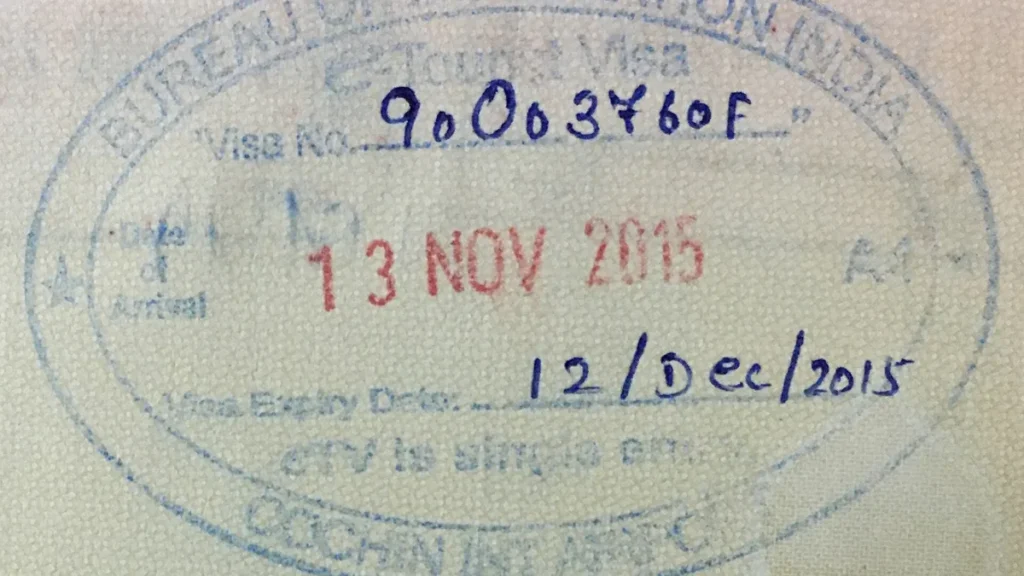
Photo: Slleong, CC0, via Wikimedia Commons
Exam angle
Prelims: 13 to nine categories, Visitor Visa, 172 e-visa countries, 2025 Act. · Mains GS-II: visa policy and tourism.
Practice MCQs
Original practice questions (not PYQs).
Under India's revised visa regime announced in November 2026, the 'Tourist Visa' has been renamed as:
Answer (d) & explanation
The Ministry of Home Affairs renamed the Tourist Visa as the Visitor Visa, with V-1 (30 days) and V-2 (one, five or ten years) sub-categories.
Consider the following statements:
1. The Overseas Citizen of India card is a lifelong, multiple-entry visa for people of Indian origin.
2. Visa policy in India is framed by the Ministry of Home Affairs.
3. The Immigration and Foreigners Act, 2025 replaced the Foreigners Act, 1946.
How many of the above statements are correct?
Answer (c) & explanation
All three are correct. The Overseas Citizen of India card does not give dual citizenship but works as a lifelong visa.
Questions students ask about this
How many visa categories remain?
Nine main categories, down from 13, and 23 sub-categories, down from 49. Application fields are down by 65 to 70%.
What is the Visitor Visa?
It replaces the Tourist Visa. V-1 is for 30-day stays with many entries; V-2 is valid for one, five or ten years and also covers mountaineering.
What is the new business visa for?
The Production Investment Business Visa is for foreign engineers and experts who install machines, check quality or train workers.
Is the medical visa still separate?
Yes. It covers modern treatment and traditional systems such as Ayurveda, Yoga, Unani, Siddha and Homoeopathy, and is valid for one year with many entries.
How many countries can use the e-visa?
Nationals of 172 countries. Visas are to follow the new system by the end of the year.