
World court finds Myanmar guilty of genocide against Rohingya
On Thursday, 19 November, the International Court of Justice in The Hague ruled that Myanmar committed genocide against the Rohingya in northern Rakhine State. It is the first time in the court’s 80-year history that it has found a state guilty of genocide. The case covers the 2017 military crackdown. Evidence pointed to around 10,000 people killed in so-called “clearance operations”. Villages were systematically destroyed and resettled with non-Rohingya people. The court ordered Myanmar to allow the safe, voluntary and dignified return of those who fled, punish those responsible and pay compensation, to be fixed later. The Gambia brought the case under the 1948 Genocide Convention. Britain said it would expel Myanmar’s defence attaché. The ruling is binding and cannot be appealed, but the court has no way to enforce it. Read it to revise the International Court of Justice, the International Criminal Court and the Genocide Convention.
- The ruling
- Myanmar committed genocide against the Rohingya in northern Rakhine State
- A first
- The first time in the court’s 80-year history that it found a state guilty of genocide
- Who sued
- The Gambia, under the 1948 Genocide Convention
- The catch
- The ruling is binding and cannot be appealed, but the court cannot enforce it
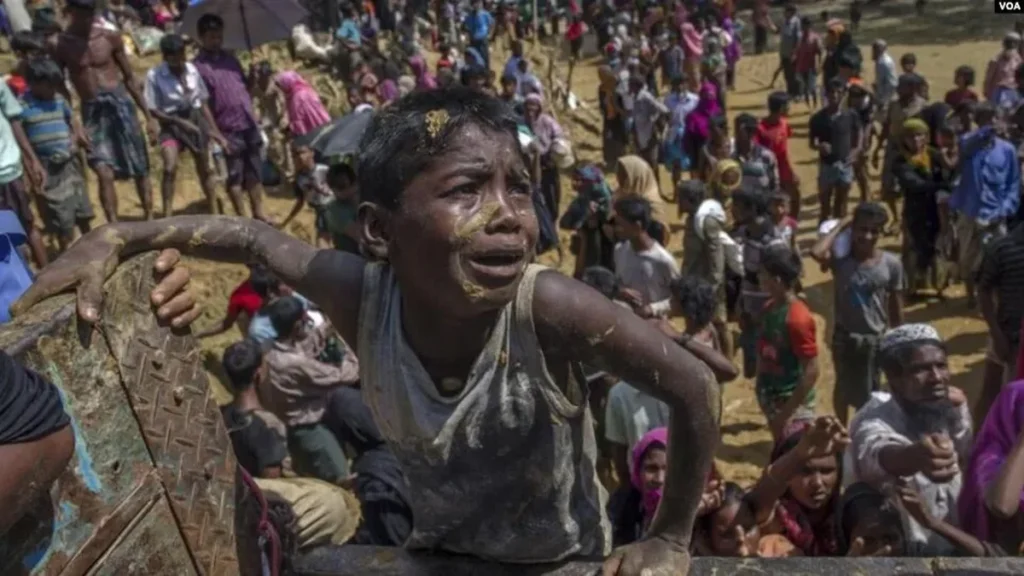
What did the world court rule on Myanmar?
Nine years after the Rohingya fled in their hundreds of thousands, the United Nations’ top court has called what happened to them by its legal name: genocide.
- The International Court of Justice in The Hague ruled that Myanmar committed genocide against the Rohingya in northern Rakhine State.
- It is the first time in the court’s 80-year history that it has found a state guilty of genocide.
- The case covers the 2017 military crackdown. Evidence pointed to around 10,000 people killed in so-called “clearance operations”. Villages were destroyed and resettled with non-Rohingya people.
- The court ordered Myanmar to allow the safe, voluntary and dignified return of those who fled, punish those responsible and pay compensation, to be fixed later.
- The Gambia brought the case under the 1948 Genocide Convention. Britain said it would expel Myanmar’s defence attaché.
- Cox’s Bazar in Bangladesh holds the world’s biggest refugee camp.
Which court is this, and how could The Gambia sue Myanmar?
The International Court of Justice is the main judicial organ of the United Nations. It was set up in 1945 and sits at the Peace Palace in The Hague. It hears disputes between states.
The International Criminal Court is a different body. It tries individuals.
Under the Genocide Convention, 1948, any party state can bring a case against another party. That is how The Gambia, not a neighbour, could sue Myanmar.
Genocide needs intent to destroy a group “in whole or in part”. The court found that intent was the “only reasonable inference”.
What are the limits of this ruling?
- No enforcement power: compliance depends on Myanmar’s military rulers, who took power in a 2021 coup.
- Wider impact: experts are watching the ruling for clues on the separate genocide case against Israel over Gaza.
- Backlash risk: Rohingya activists fear backlash against those still inside Myanmar.
Previous year questions linked to this story
UPSC Prelims 2016
Consider the following pairs :
Community sometimes mentioned in the news — In the affairs of
1. Kurd — Bangladesh
2. Madhesi — Nepal
3. Rohingya — Myanmar
Which of the pairs given above is/are correctly matched?
Answer: (c)
UPSC Mains 2021 (General Studies Paper 4)
“Refugees should not be turned back to the country where they would face persecution or human right violation.” Examine the statement with reference to ethical dimension being violated by the nation claiming to be democratic with open society.
Use in your answer: “The ruling is binding and cannot be appealed, but the court has no way to enforce it.”
What can Prelims ask on this story?
Prelims probability: High. The first-ever genocide finding is a big, new fact; the International Court of Justice versus the International Criminal Court is a classic trap; Cox’s Bazar and Rakhine are map-ready.
- First state found guilty of genocide in the court’s 80-year history.
- International Court of Justice: disputes between states; International Criminal Court: individuals.
- The Gambia sued under the Genocide Convention, 1948; Rakhine State and Cox’s Bazar on the map.
How to write about this story in Mains
Practice question (15 marks, 250 words): The International Court of Justice has found Myanmar guilty of genocide against the Rohingya, but it has no way to enforce its ruling. Discuss the role and limits of international courts in protecting minorities, with reference to India’s neighbourhood.
- Open with the ruling and why it is a first.
- Explain the court’s jurisdiction and how it differs from the International Criminal Court.
- Discuss enforcement: the Security Council route and the reality of military rule since 2021.
- Bring in the refugee burden on Bangladesh and India’s interest in a stable, inclusive Myanmar.
Ready lines for your answer
- A binding ruling without enforcement is a moral victory that waits for politics.
- The Gambia's case shows that any party to the Genocide Convention can act for a persecuted group.
Quotable data pointThe Hindu, 20 November 2026: first genocide finding against a state in 80 years; about 10,000 killed in the 2017 crackdown; case brought by The Gambia under the 1948 convention.
Photo: Voice of America, Public domain, via Wikimedia Commons
Exam angle
Prelims: International Court of Justice versus International Criminal Court, the Genocide Convention, Rakhine and Cox's Bazar. · Mains GS-II: international institutions, refugees and India's neighbourhood.
Practice MCQs
Original practice questions (not PYQs).
Consider the following statements:
1. The International Court of Justice tries individuals accused of genocide and war crimes.
2. The case against Myanmar was brought by The Gambia under the Genocide Convention, 1948.
3. The ruling of 19 November 2026 can be appealed before the United Nations General Assembly.
How many of the above statements are correct?
Answer (a) & explanation
Only statement 2 is correct. The International Court of Justice hears disputes between states; individuals are tried by the International Criminal Court. Its ruling is binding and cannot be appealed.
The Rohingya, in whose case the International Court of Justice gave its ruling in November 2026, live mainly in which state of Myanmar?
Answer (d) & explanation
The case covers the 2017 military crackdown in northern Rakhine State. Many Rohingya fled to Cox's Bazar in Bangladesh, home to the world's biggest refugee camp.